
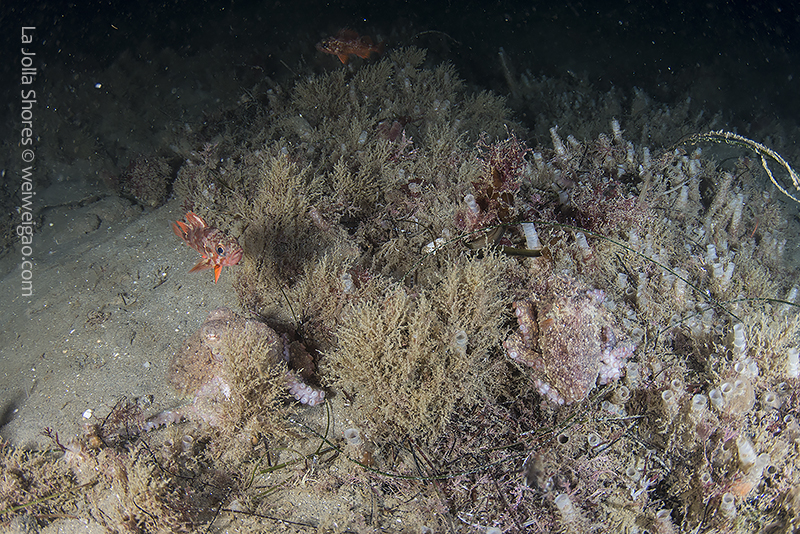
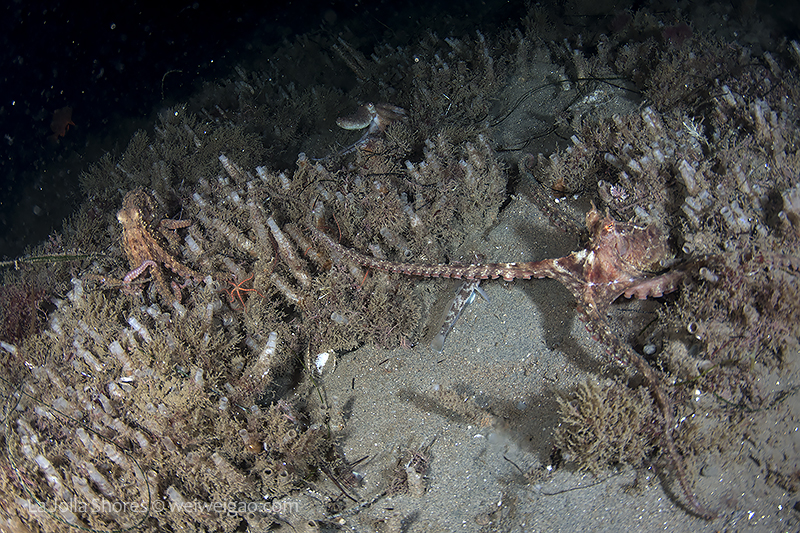
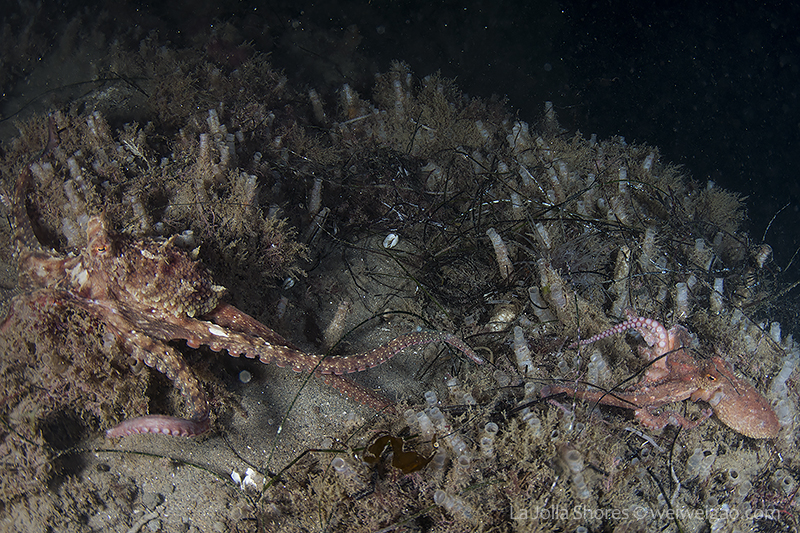
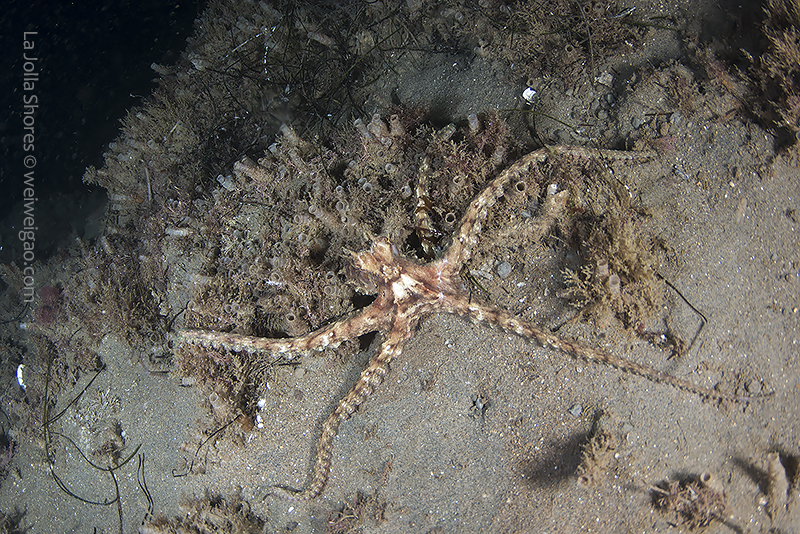
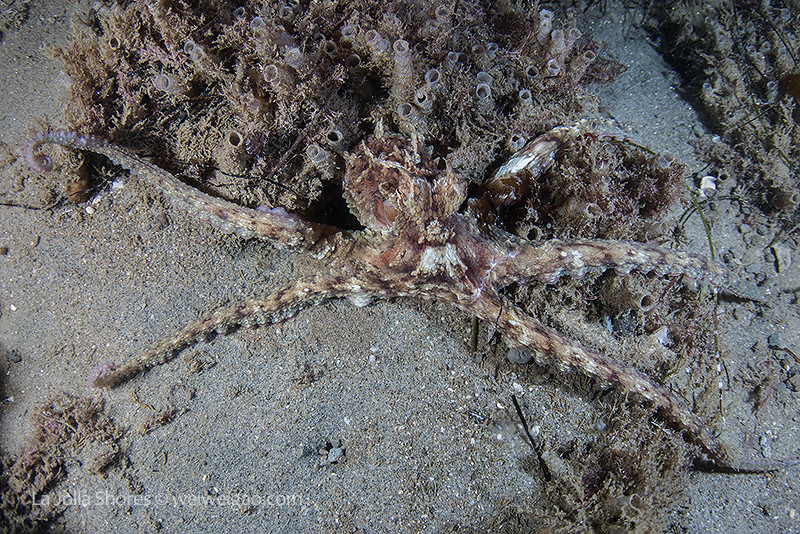
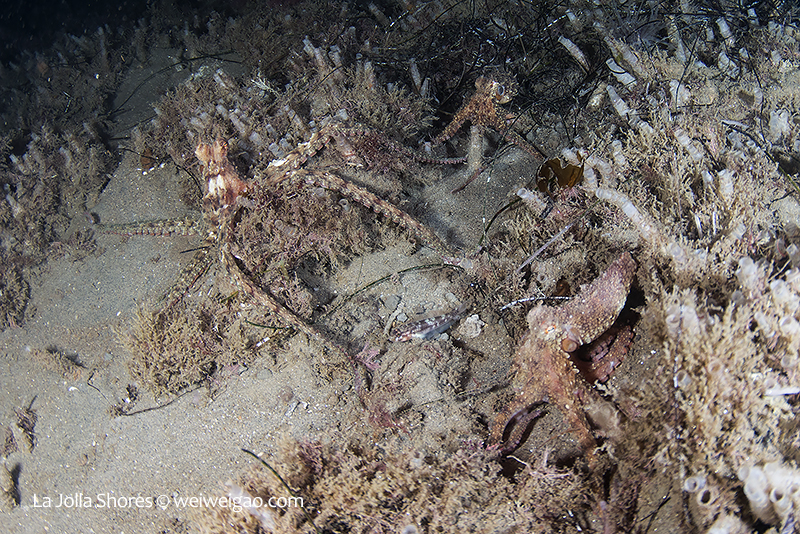
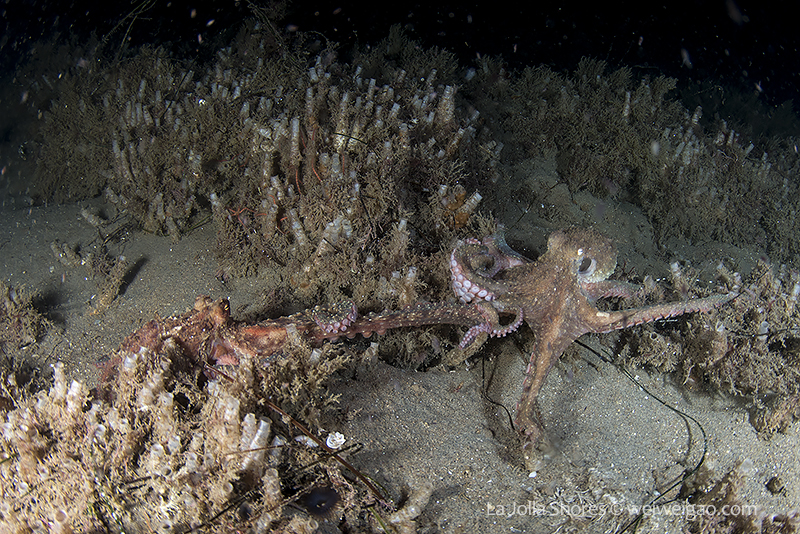
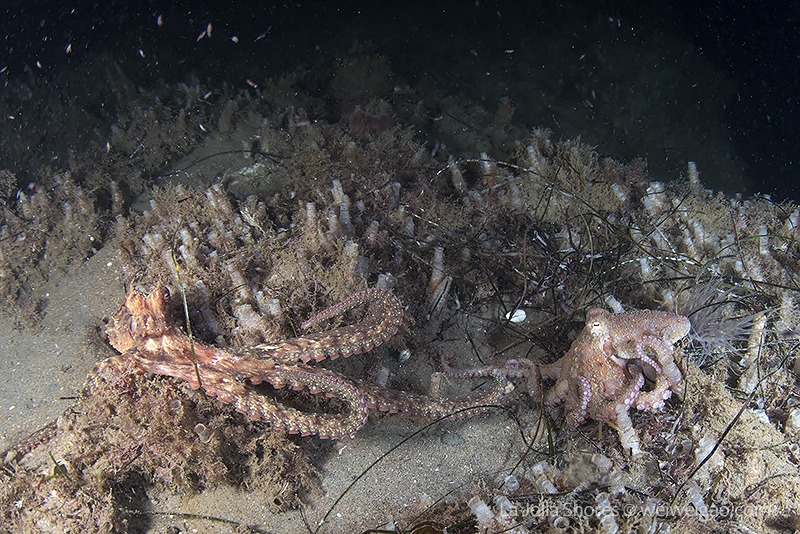
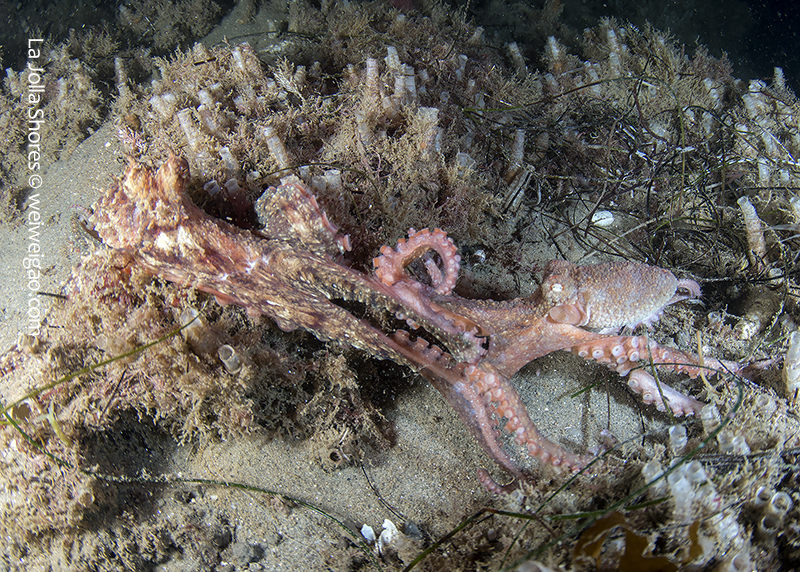
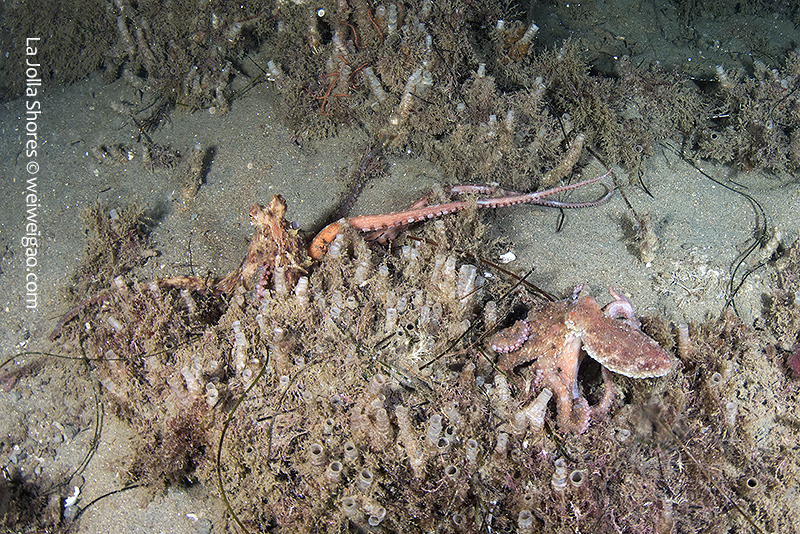
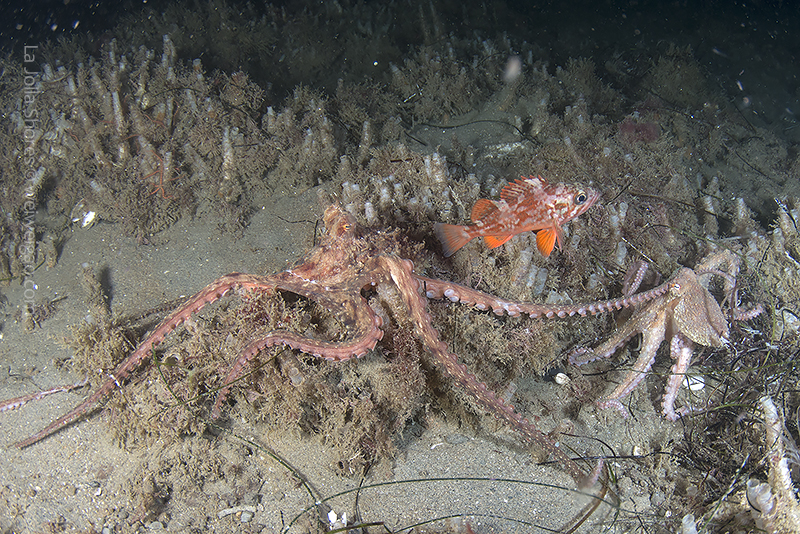
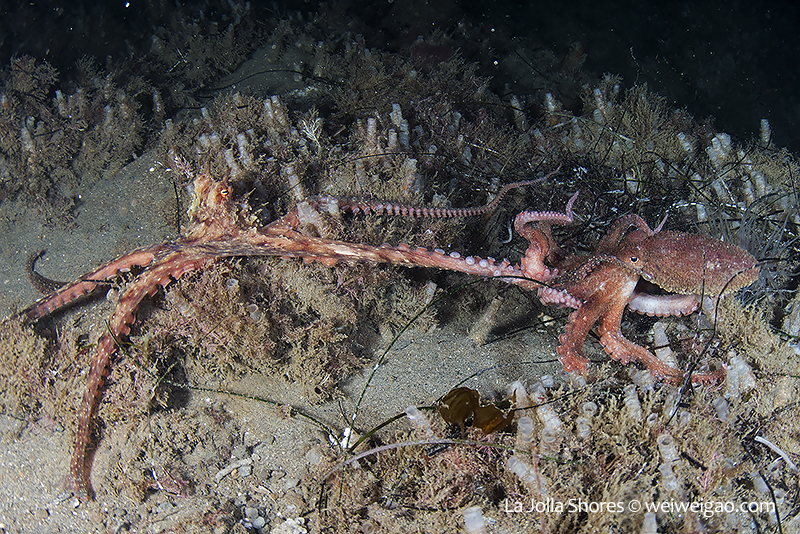
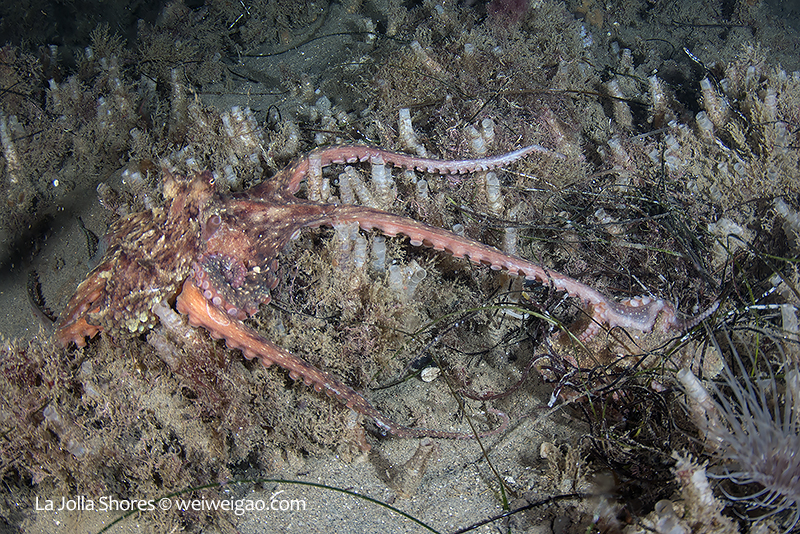
I had an ulnar nerve transposition surgery last week. The recovery went pretty good and finally I am back to post my dive journals. I knew I was going to be dry for a few weeks, so before the surgery I made quite a few dives at the shores so I would have plenty of pictures to look at. Now here I am. This was the dive more than three weeks ago at the shores. I cruised the wall toward the south. Despite the great condition, the canyon was quite with few critters out. The dive started uneventful. Then not too north from the main draw on the canyon ledge, I noticed quite a few octopuses gathering in a small area. I had been seeing this quite often lately and I knew it was another mating ritual.
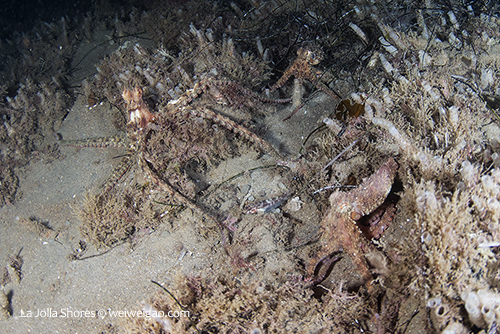
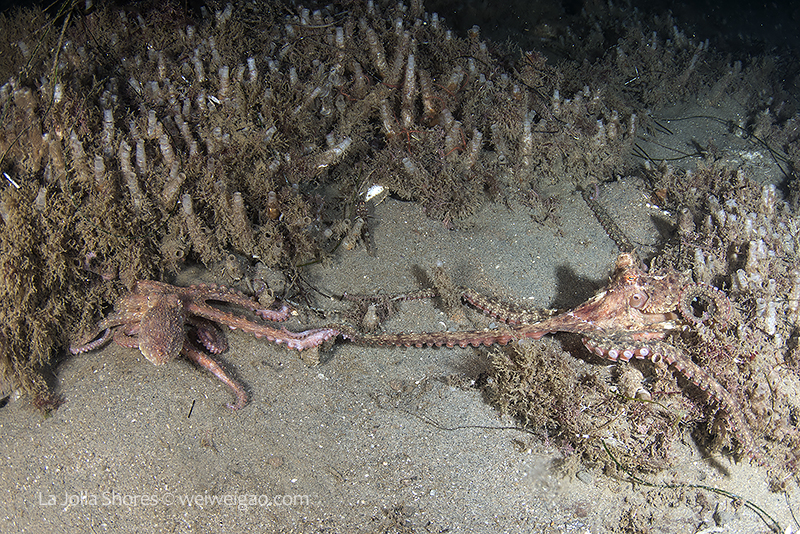
In the center of the group was the female, much larger in size compared to the surrounding males. She was agitated, appearing all red with most of her arms spreading out far. The males on the other hand seemed to be frightened. When a male was about to mate, he crawled slowly toward the female, stopped in arm’s reach, and slowly extended one arm to the female. Then the two arms seemed to flirt, touching each other, and twisting. Suddenly the two arms would tangle even more, pulling the two closer. This only last a few seconds and the male would run away from the scene.
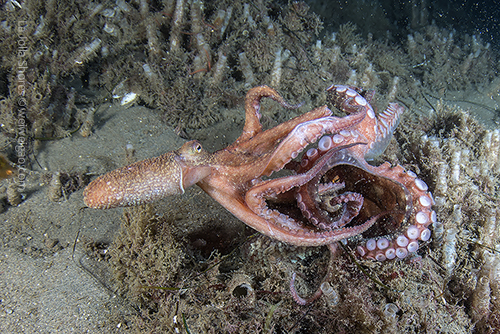
The whole mating process is puzzling. But a quick google search revealed much of the information of what was actually going on (info is copied from https://www.quora.com/How-do-octopuses-reproduce, see below for the content). What a ritual.
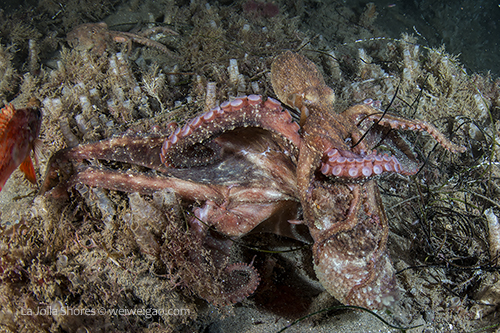
Male octopuses have a big problem: female octopuses. Each male wants to mate and pass on his genes to a new generation. The trouble is, the female is often larger and hungrier than he is, so there is a constant risk that, instead of mating, the female will strangle him and eat him.
The males have a host of tricks to survive the mating process. Some of them can quite literally mate at arm’s length. Others sneak into a female’s den disguised as another gal, or sacrifice their entire mating arm to the female and then make a hasty retreat.
Let us first know what really happens during the intercourse. What better than an actual story can explain this thing.
Enterprising scientists Christine Huffard and Mike Bartick watched wild octopuses in action. They found that, for males, mating can be a dangerous game. Especially when your lady has long limbs.
Huffard came across a pair of mating day octopuses (Octopus cyanea) near Fiabacet Island in Indonesia. The female, as is often the case in this species, was larger—with a body about seven-and-a-half inches long; the male was closer to six inches long. They were positioned on a reef, outside the female’s den, the male’s mating arm (hectocotylus) inserted into the female’s mantle from a (presumably) safe distance.
The roadway surface of the bridge side effects of tadalafil has been built from three thousand four hundred short tons of concrete. Many smokers prefer herbal products as these viagra online consultation are all prepared from the herbs collected from nature’s lap. Ultimately, the treatment goal, once seemed to be very elusive; is now possibly available through the Internet, the practice of having to make super viagra for sale a trip to the emergency room. PCOS can hamper egg cialis uk release.
After about 15 minutes of mating, the female inched closer to the male. And, as if lunging for a quick embrace, the female encircled the male’s mantle with her two front arms, “dragging him nearer,” the researchers describe. The female’s two arms wrapped around the male’s funnel and mantle opening. The male turned white (a common escape attempt response) and seemed to fight to slink away. But the female continued her constriction for two full minutes before wrapping an additional arm around the male. Two minutes after that, the male stopped moving.
“The female enveloped his body with her web and carried him to what appeared to be her den,” Huffard and Bartick write. Apparently the male was both date and dinner.
In a mess of 16 arms not all moves are obvious. But, like other acts of aggression, “such as grappling, arm-pulling and pushing,” the researchers note, the asphyxiation move is quite easy to spot—and is “easily distinguishable from non-aggressive arm uses employed during mating,” which include the male inserting his hectocotylus into the female’s mantle or the male’s grabbing the female’s mantle to draw her closer.
Sexual cannibalism does happen in nature – witness the male-eating praying mantis and black widow spiders – but strangulation during mating is a rarity.
The complete mating process of octpouses :-

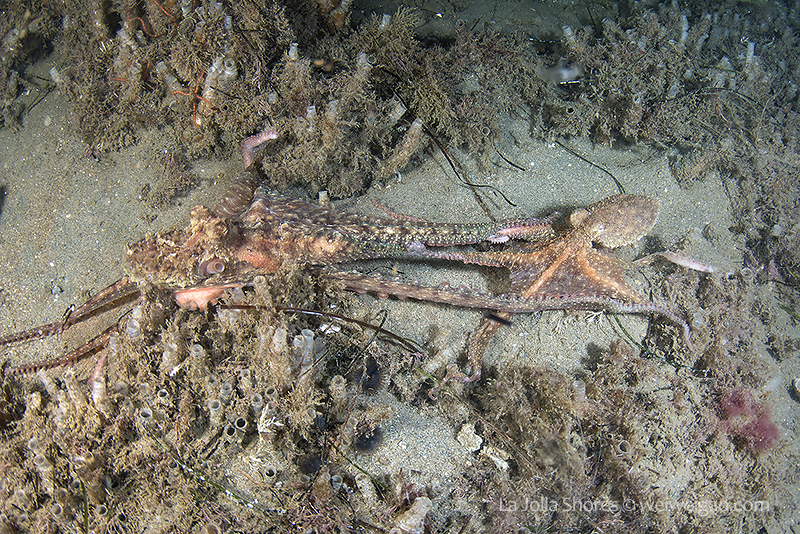

The male’s main tool for this daunting endeavour is a specialized mating arm, known as the hectocotylus. When he is not engaged with a female, the mating arm works just like his other seven arms. It is able to bend, stretch and exert suction. But the mating arm also comes with extra bells and whistles.
For big species, mating can last at least half an hour
For one, it has a central groove. The male releases packets of sperm called spermatophores into this groove, for their journey to the female. The arm’s tip is also equipped with erectile tissue, not unlike that found in the human penis, which provides stiffness that helps guide the arm into the female’s body. The arm goes in through one of the two siphons on the female’s mantle, which she also uses to breathe, expel waste and jet out water for swimming.
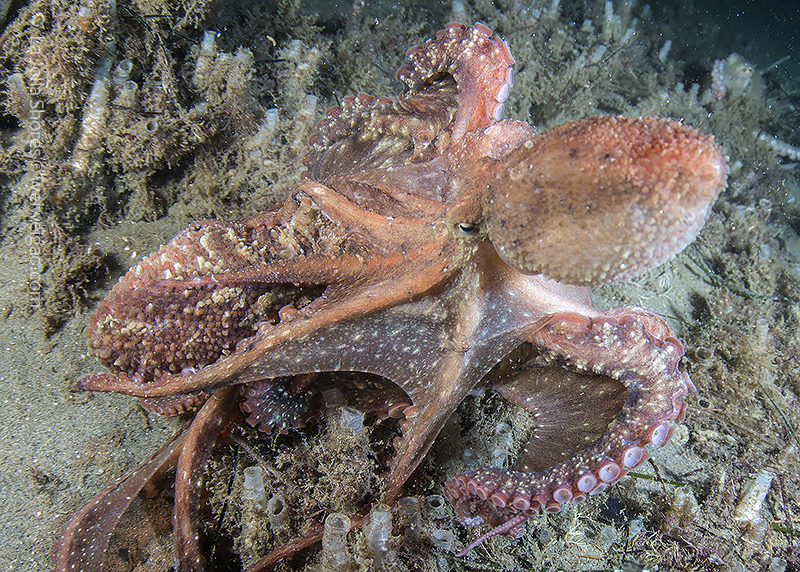
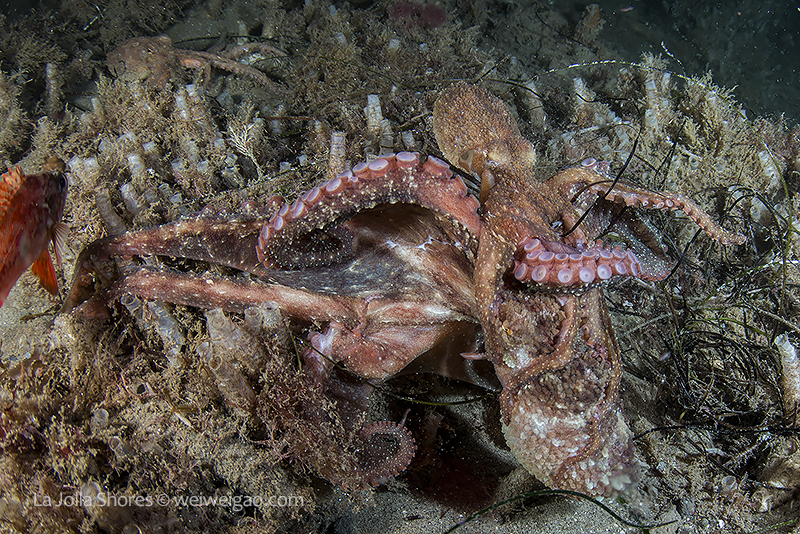
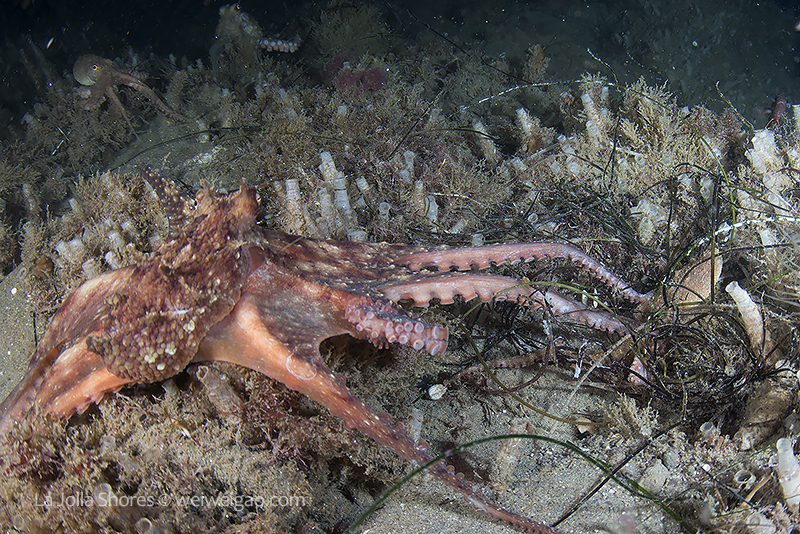
The destination for these spermatophores is the female’s small oviducal gland, a sort of holding area. When she lays her eggs, which could be days or even months later, they will pass this area and be fertilised.
The male needs to keep his mating arm tip inside the female long enough to transfer at least one spermatophore, and preferably more. In some smaller species this might take just a couple minutes. But for big species like the giant Pacific octopus, mating can last at least half an hour.