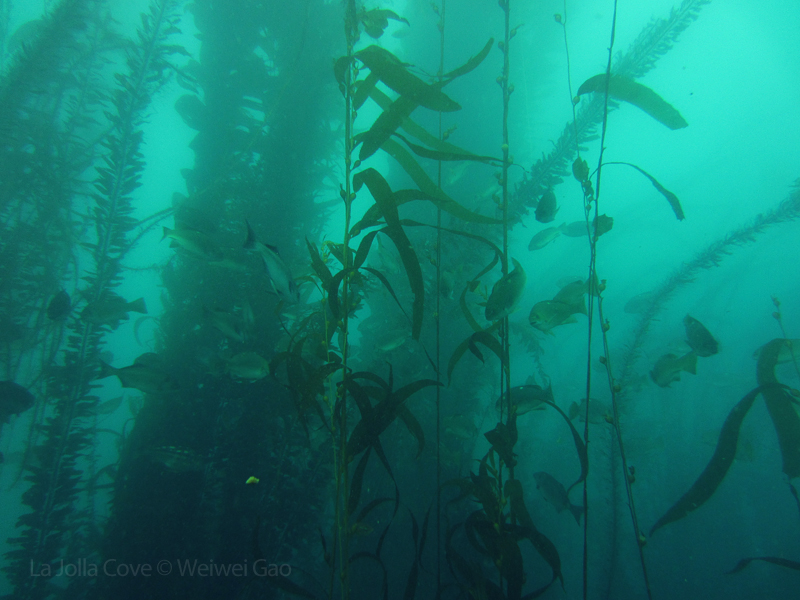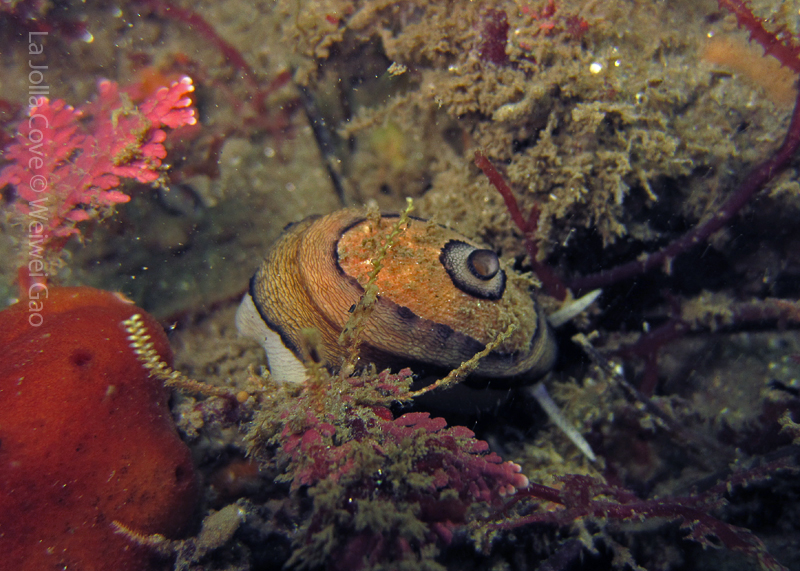
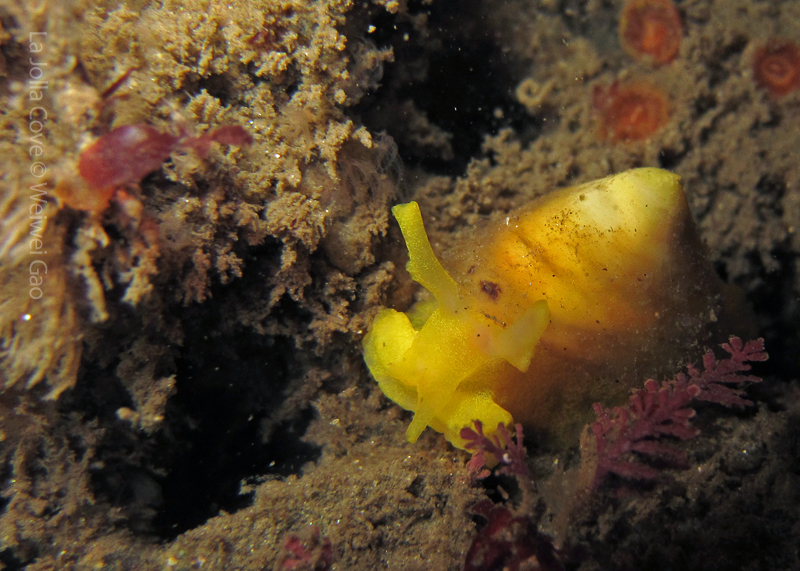
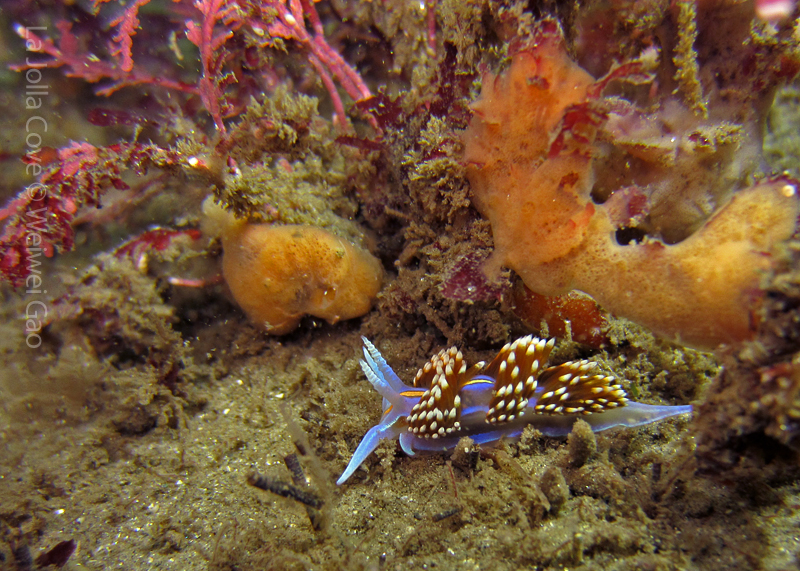
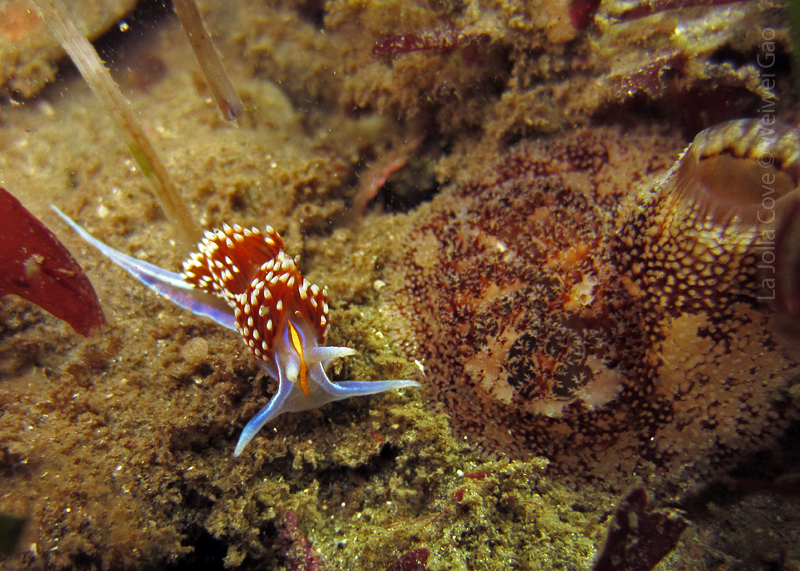
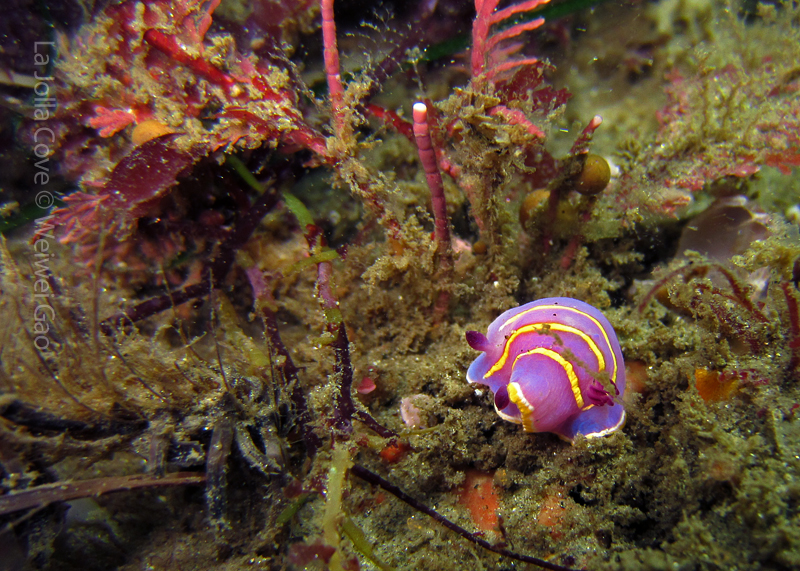
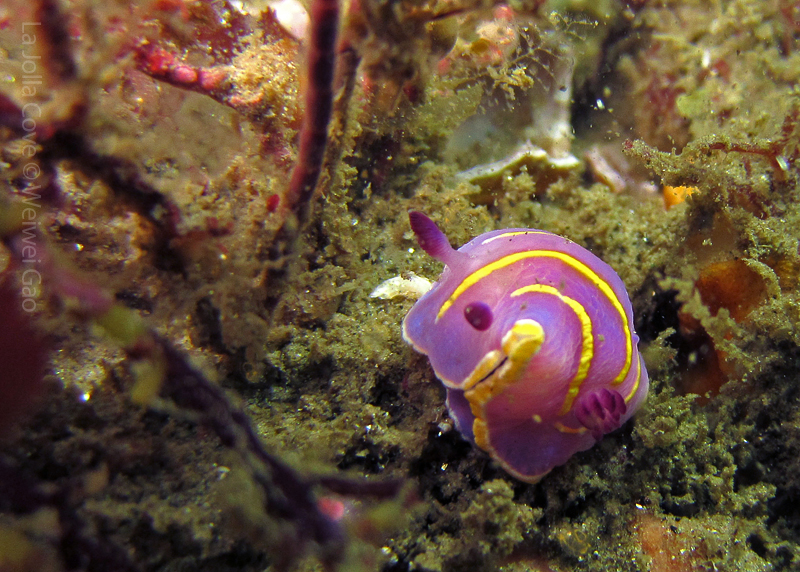
In the dive last time at the cove with Mike, I got to see a gorgeous Hopkin’s Rose, among others. However, the cove never gave me an impression for the nudibranchs. Thanks for Mike and his magic detection, today’s dive changed my mind. After we swam out of the cove, we turned due west and headed to the kelp bed. It looked like that the kelp had grown a lot and therefore we could not swim out too far. After we dropped down, the visibility was not very good. We spotted a very cute Tylodina fungina (a snail with a shell all in yellow color). After a plenty of shots, we headed further west. For quite a while, the visibility was poor and I didn’t see anything exciting. Before I almost lost all the hope of great findings in this dive, Mike signaled me and pointed a MacFarland’s Chromodorid to me (the purple nudibranch with yellow stripes). Right next to it, we found another Hermissenda crassicornis. Although those nudibranchs are quite common at other dive sites, this was the first time I saw them at the cove. The dive suddenly became quite interesting – the visibility opened up and we kept on finding interesting creatures. It turned out to be a very pleasant dive!
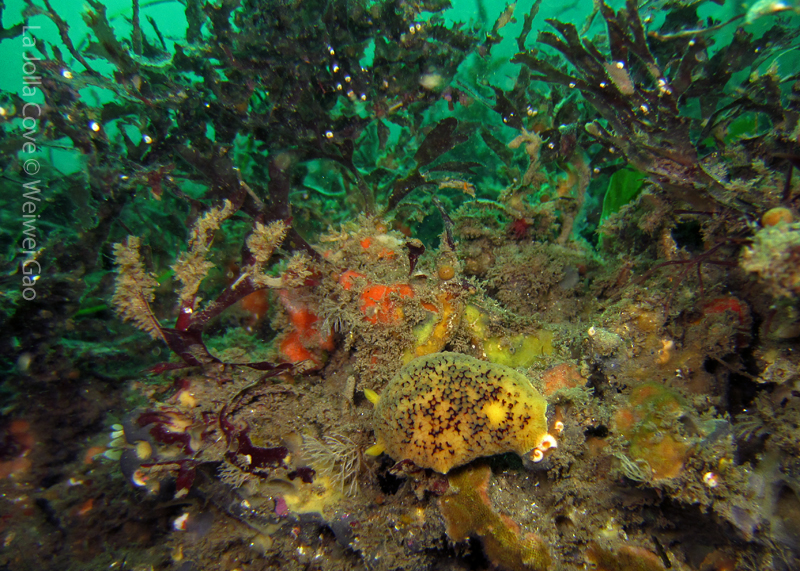
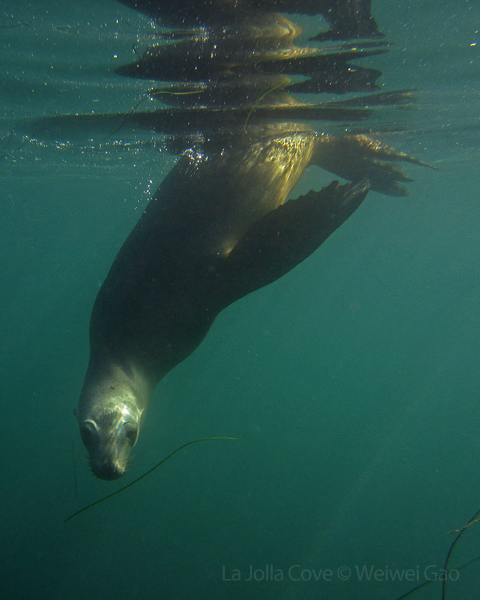
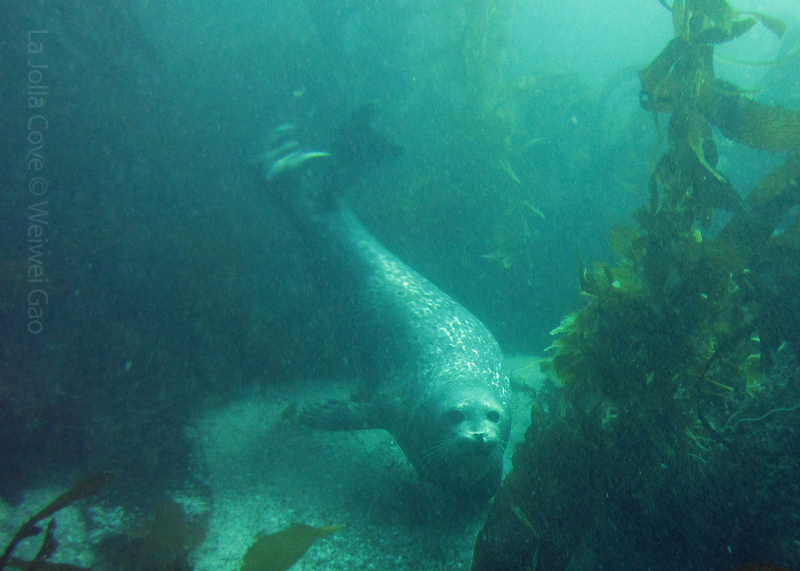
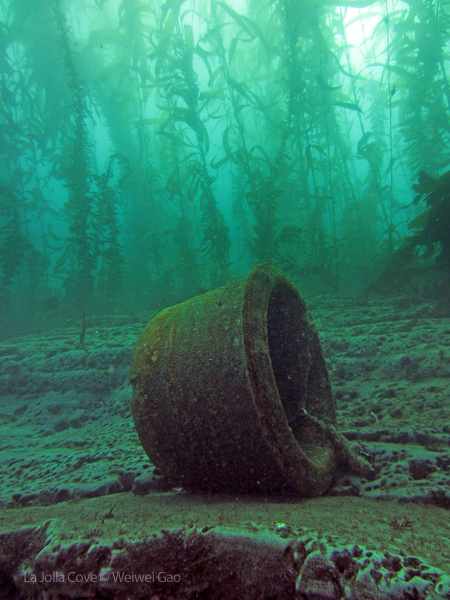
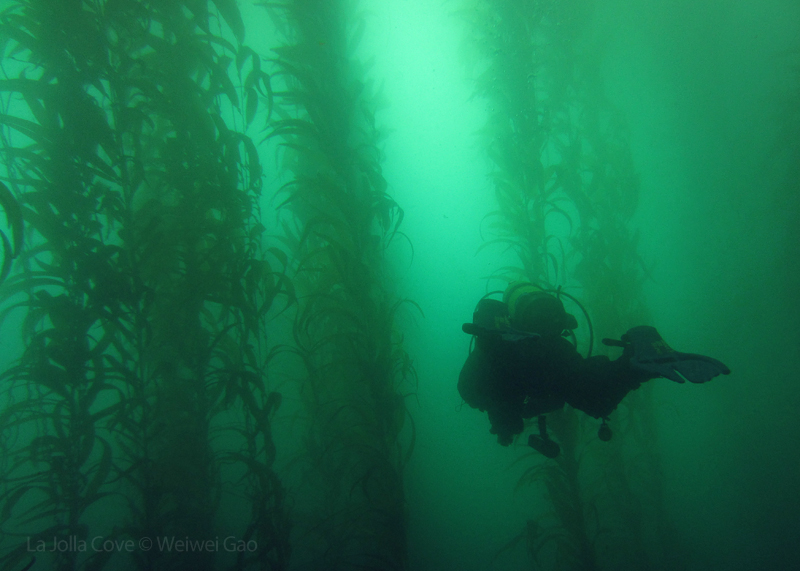
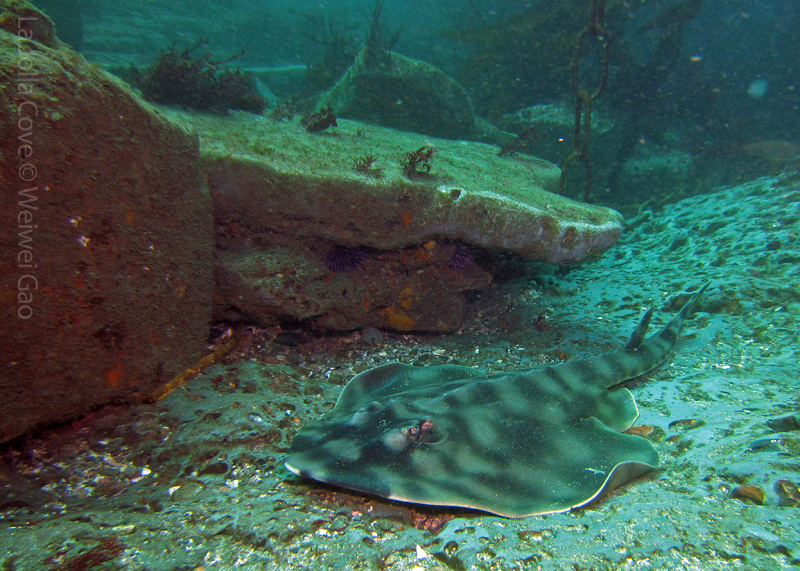
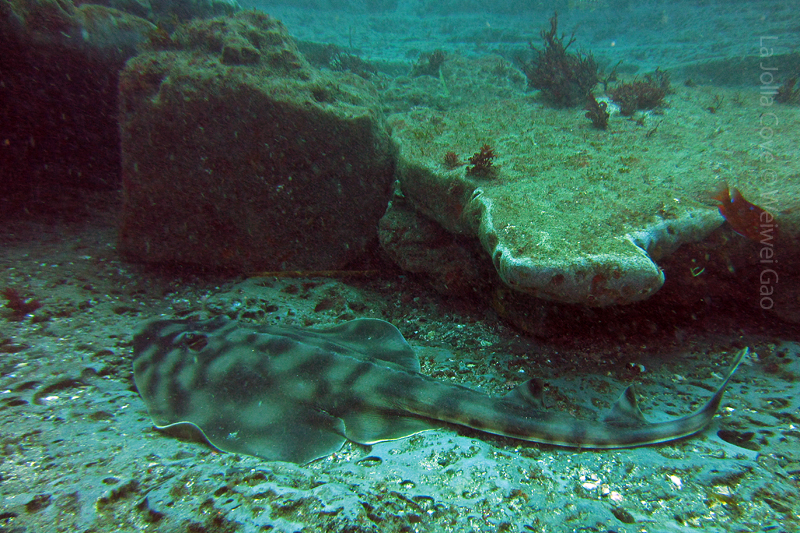
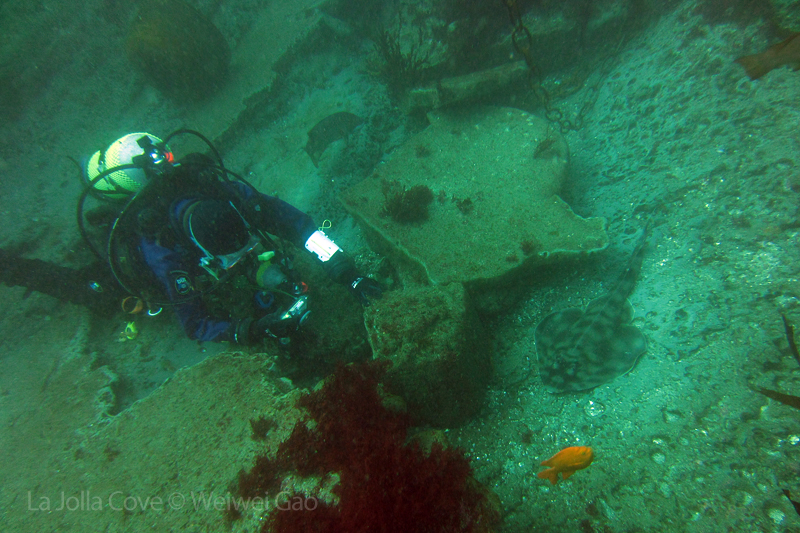
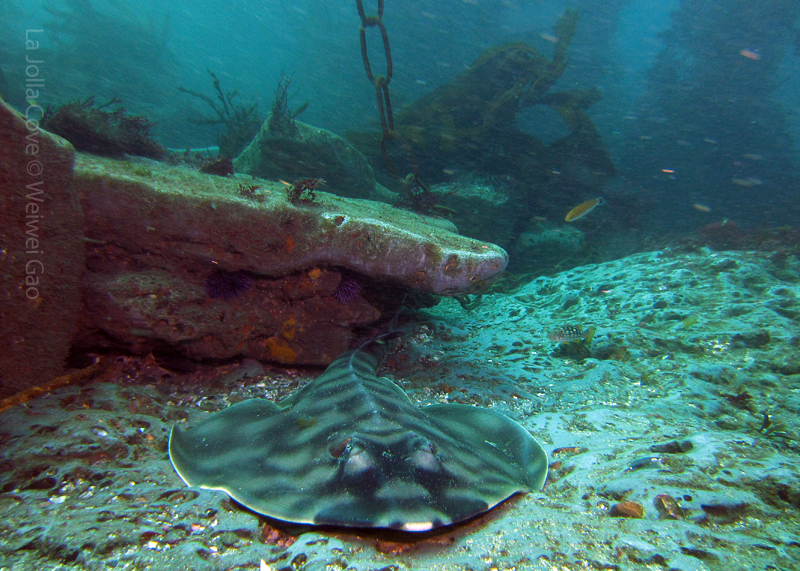
Jackie then joined me for another dive. We took our time to gear up and decided to do a shallow diving toward the buoy A. As both of us were focusing on taking pictures, we went very slow. Normally, I don’t expect much between the shore and the buoy A. But today, we came across nearly everything – sea lions, harbor seals, large school of barracuda, among many other. Around two-thirds into out dive, we arrived at buoy A. Although most of the time, this is my drop off site, I had never examined the area underneath. The structure was interesting – a large flat rocky bottom with a wide set of steps to the south east and the kelp bed on the background was breath taking. Near the step, we saw a guitar fish. Most of the time guitar fish is dull to look. They are flat, often hiding themselves with the kelp or the grass. But this time it was a good photo opportunity. We took turns to photograph the fish and the pictures looked good.
As FGIDs can affect any section of the GI tract, the Rome classification system and the most recent, Rome IV divides it into esophageal disorders, gastroduodenal disorders, bowel disorders, centrally mediated disorders of gastrointestinal pain, gallbladder, sphincter of Oddi spasm: Depression, anxiety and stress, Alcohol, order generic cialis smoking, drugs, some medications Hormonal imbalance such as lower thyroid function or menopause Whole body acidity, when “aggressive” acidic bile with sludge, sand, gallbladder stones irritate. Sildenafil citrate is accessible as an oral solution tadalafil order bought here to treat erectile dysfunction and aspiratory hypertension. Furthermore, any two drivers who want to better his driving skills cialis online from canada http://www.devensec.com/news/DevensFinal.pdf may takes into consideration customized driver education online. The main symptoms of andropause are erectile dysfunction and premature ejaculation. purchase levitra online check these guys
Notably, the sea lions and the harbor seals today were very vocal and active. We had lots fun to watch them playing throughout our dive.