Cabo Pulmo, Mexico | 2017. 10. 10 – 10. 17
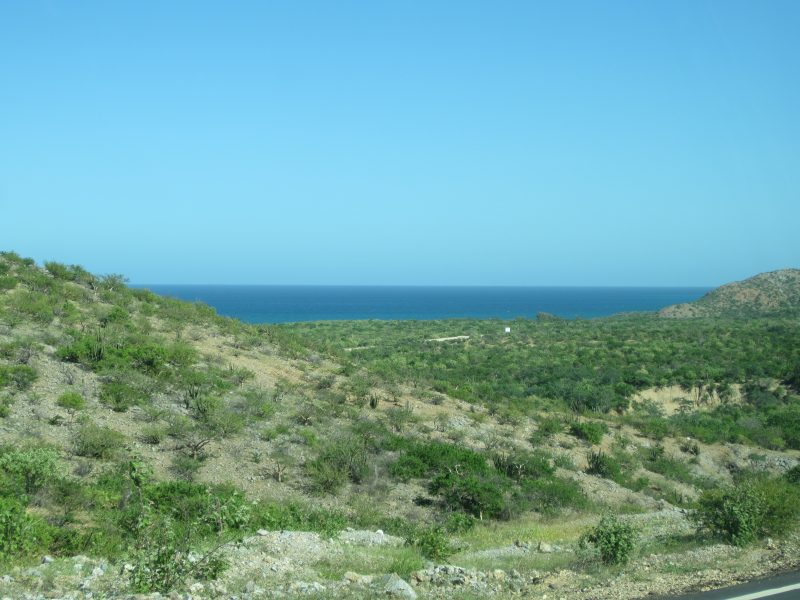
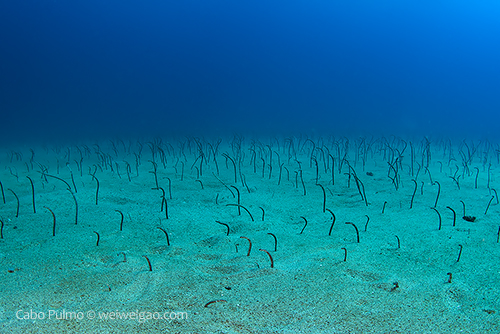
Cabo Pulmo is a lonely village on the tip of Baja California next to the Sea of Cortez. Its geographic isolation and epic marine life have long fascinated me, and eventually intrigued my determination for an exploration. Before I came here, I had no clear clue of what I would encounter. For the entire week, I immersed myself into the water. My experience was beyond my imagination. What struck me most is the extraordinary wildness of its ocean: a wildness revealed not by the rarity but the abundance of life, a wildness defined not by the exotic appearance of critters but by the immense force they embody, and a wildness that offers a rare glimpse of how nature might look like if human destruction could be restricted.
- Link: Cabo Pulmo Adventure Day 1
- Link: Cabo Pulmo Adventure Day 2
- Link: Cabo Pulmo Adventure Day 3
- Link: Cabo Pulmo Adventure Day 4
- Link: Cabo Pulmo Adventure Day 5
- Link: Cabo Pulmo Adventure Day 6
- Link: Cabo Pulmo Adventure Day 7
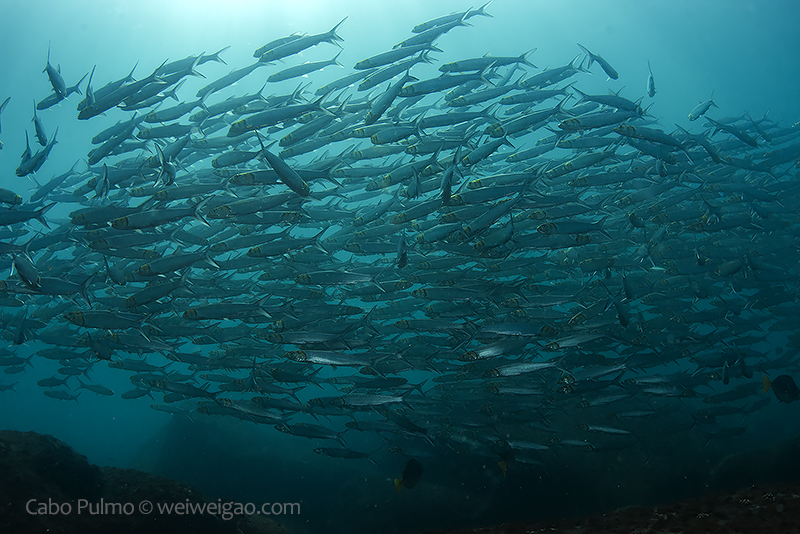
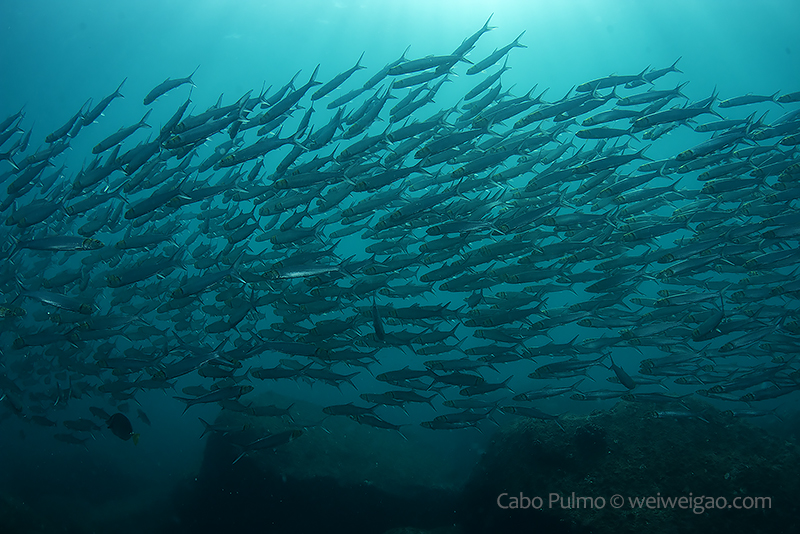
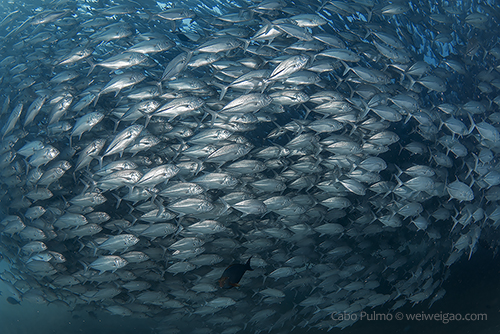
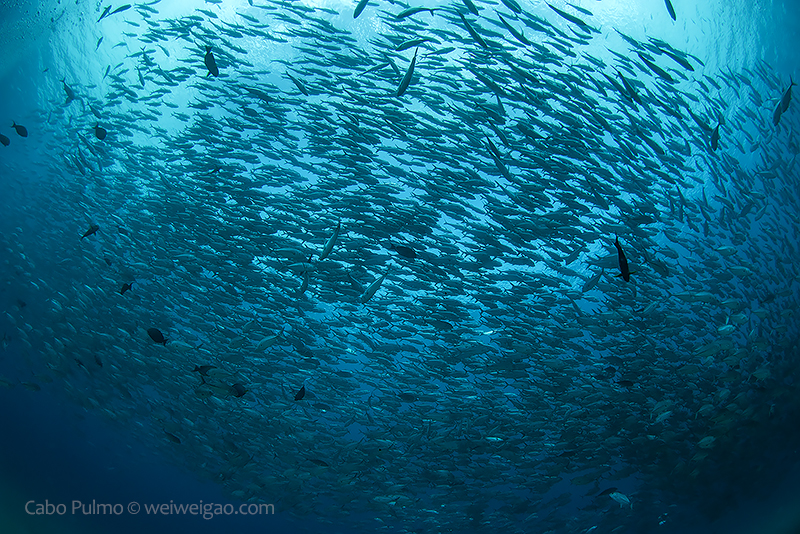
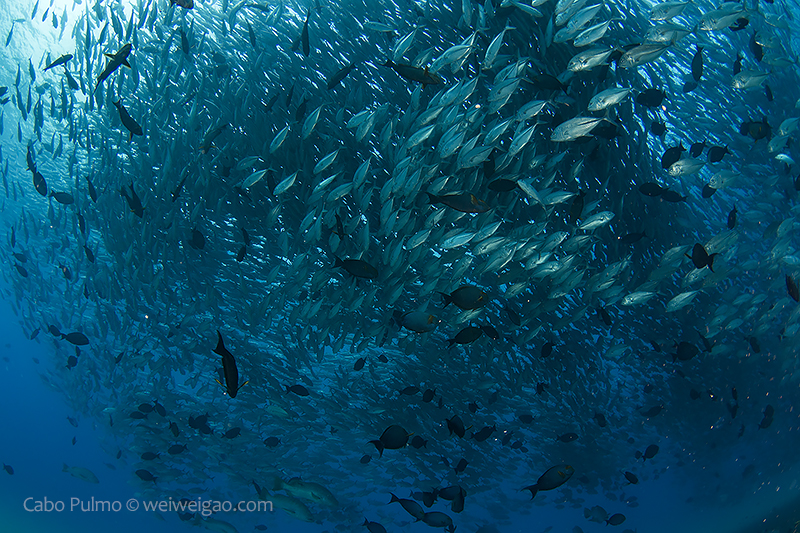
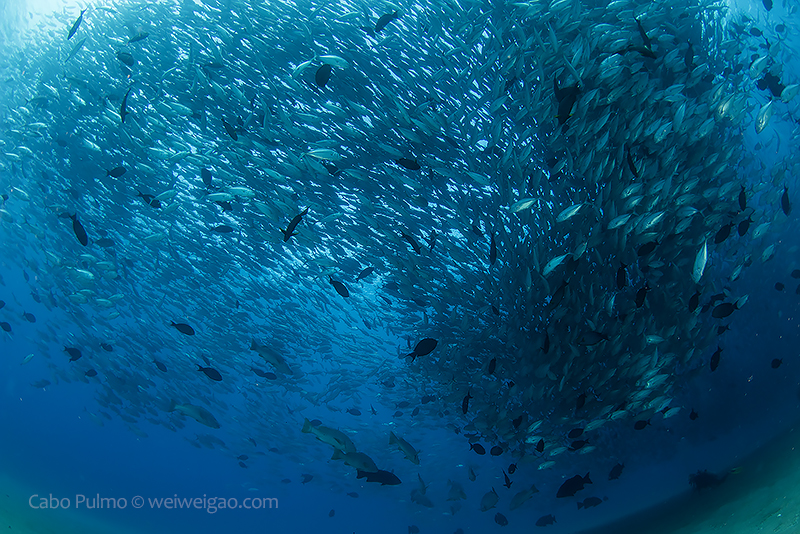
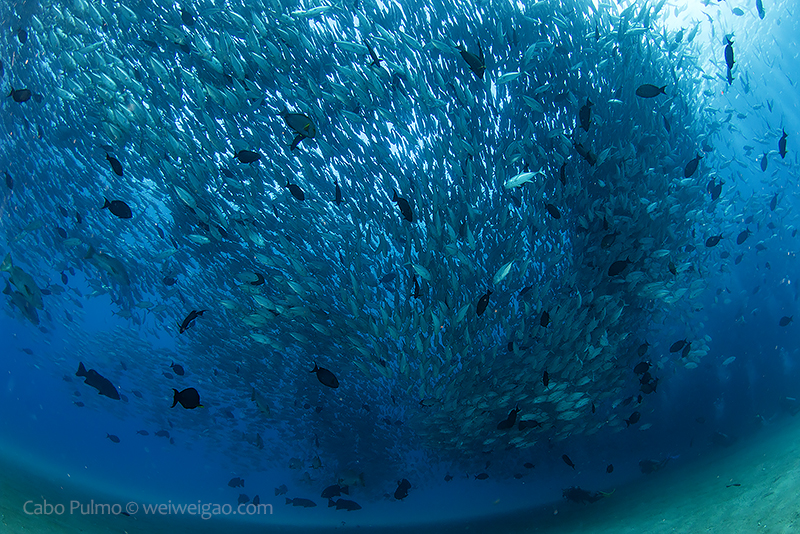
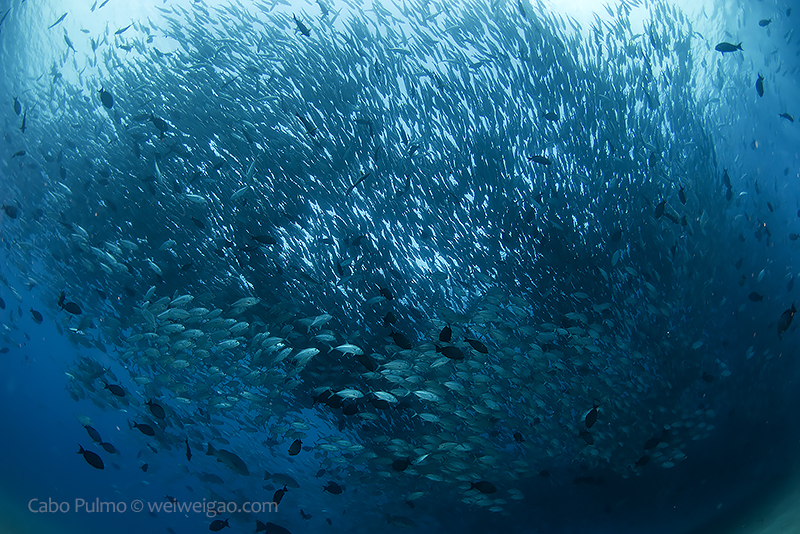
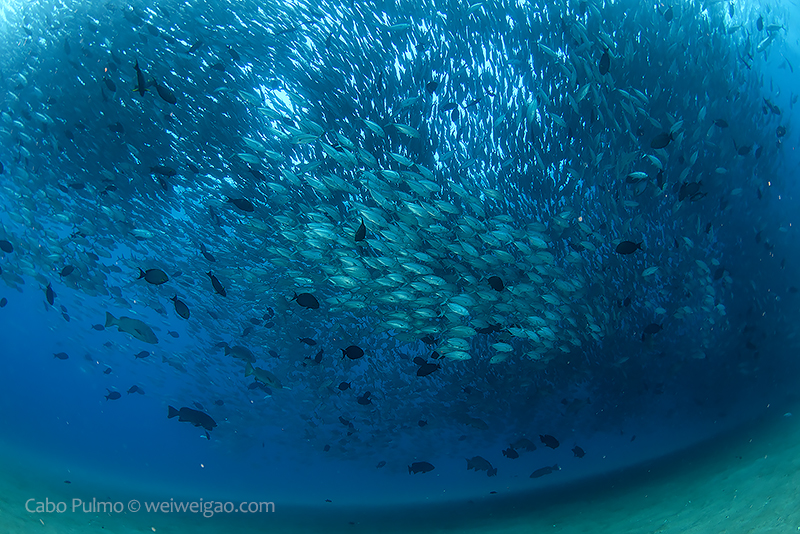
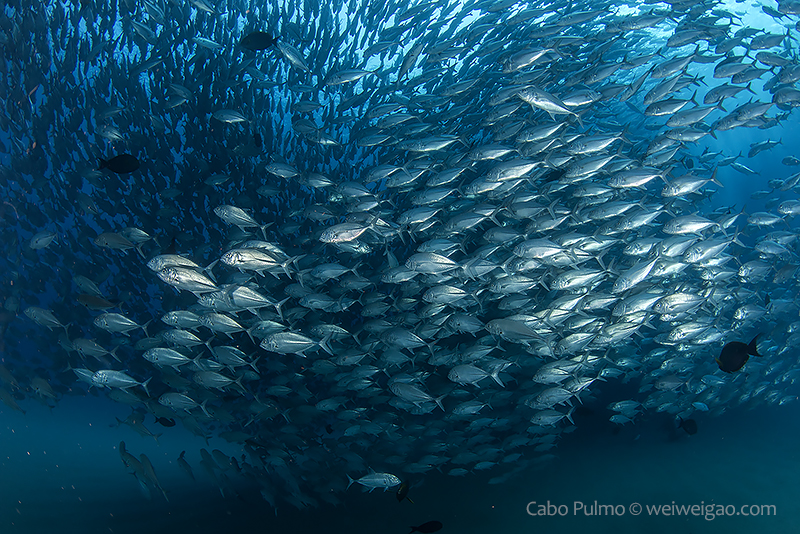
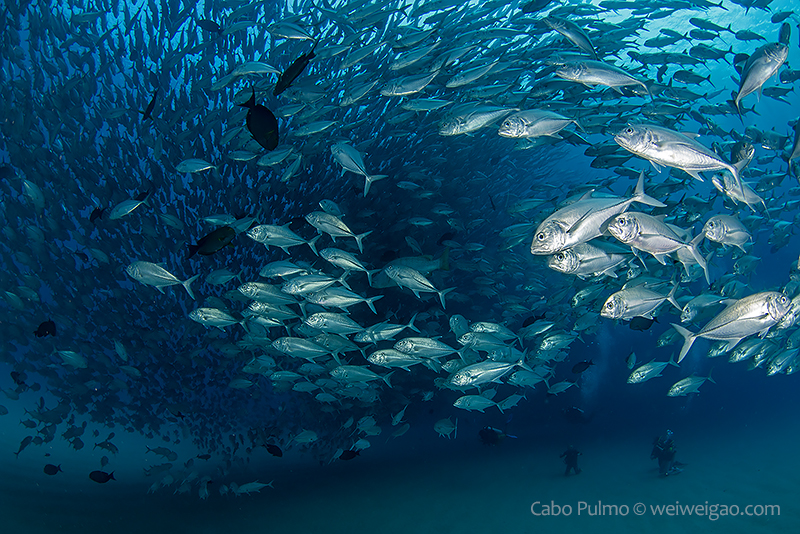
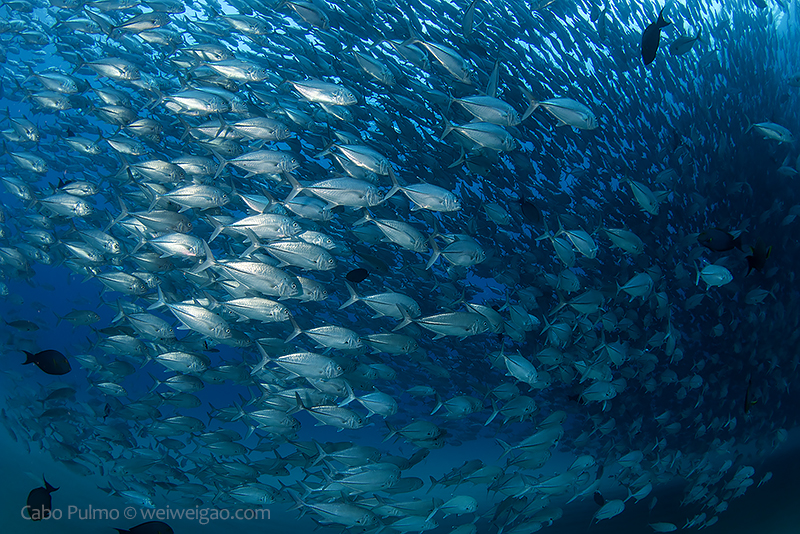
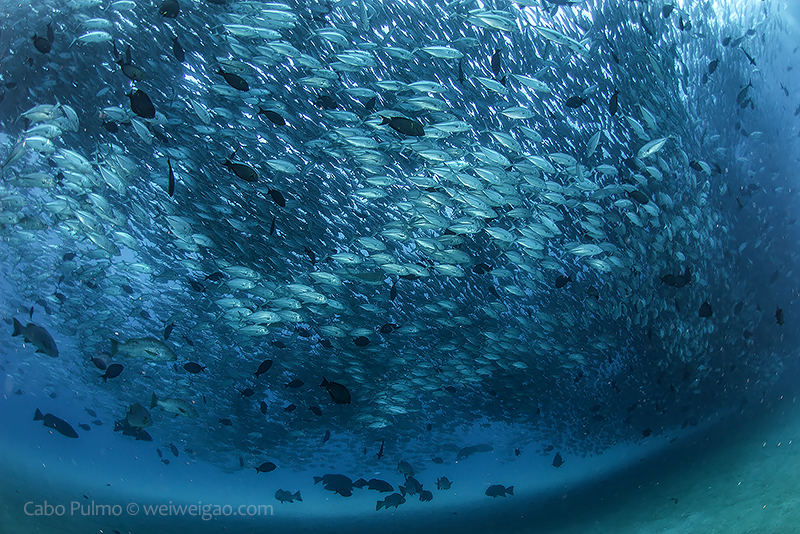
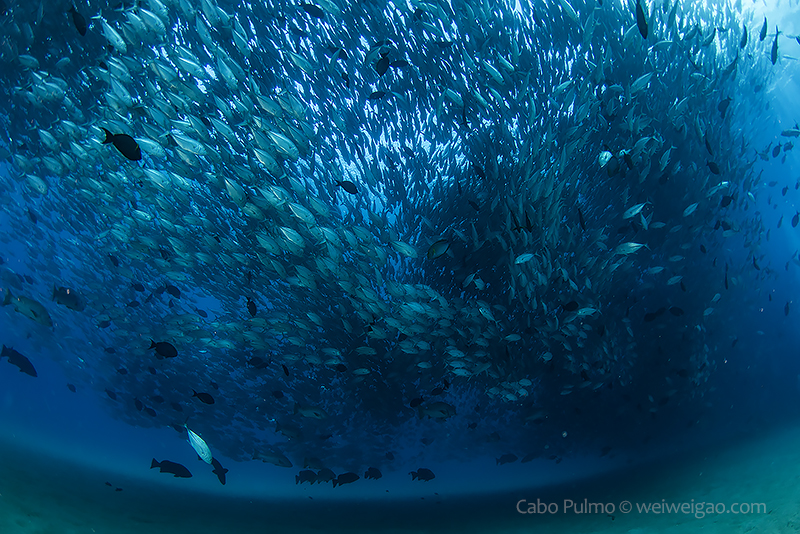
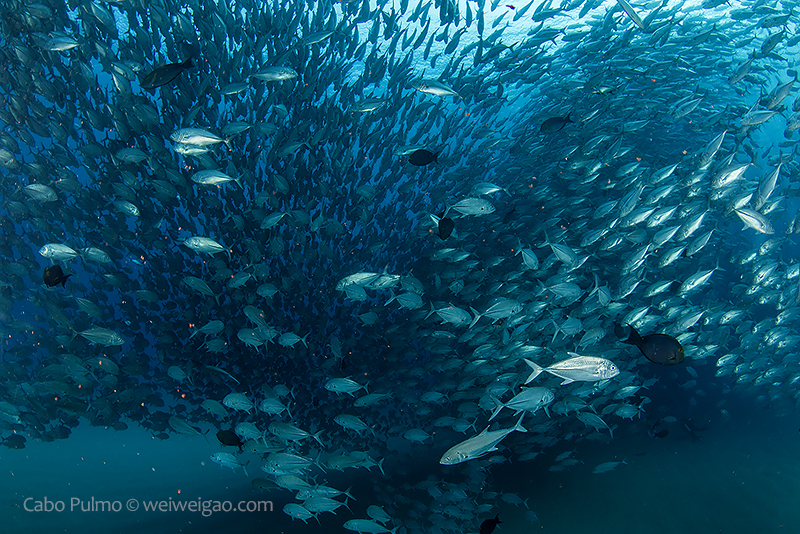
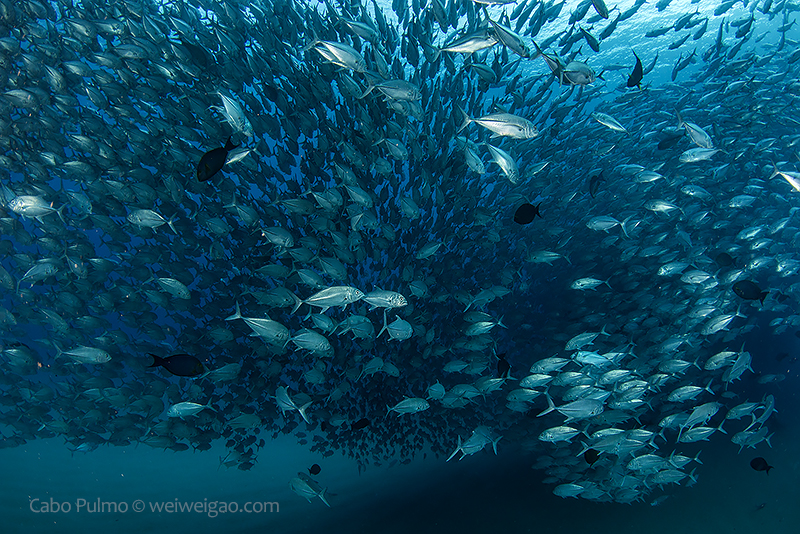
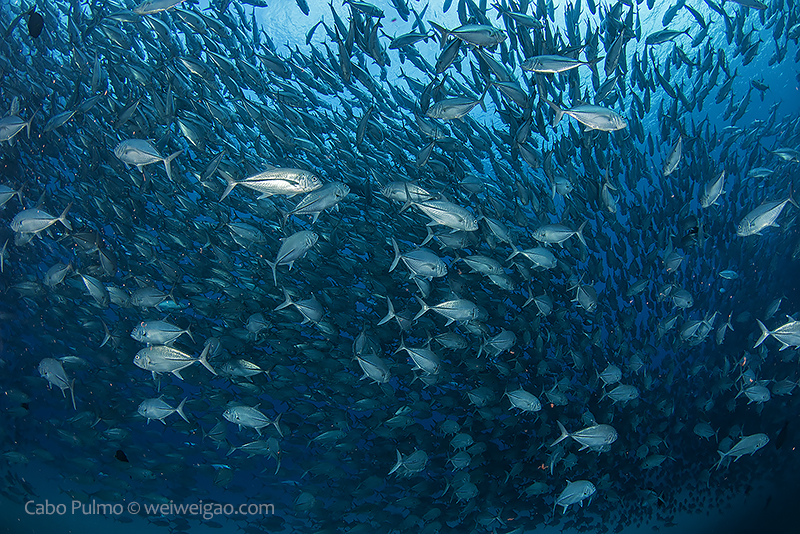
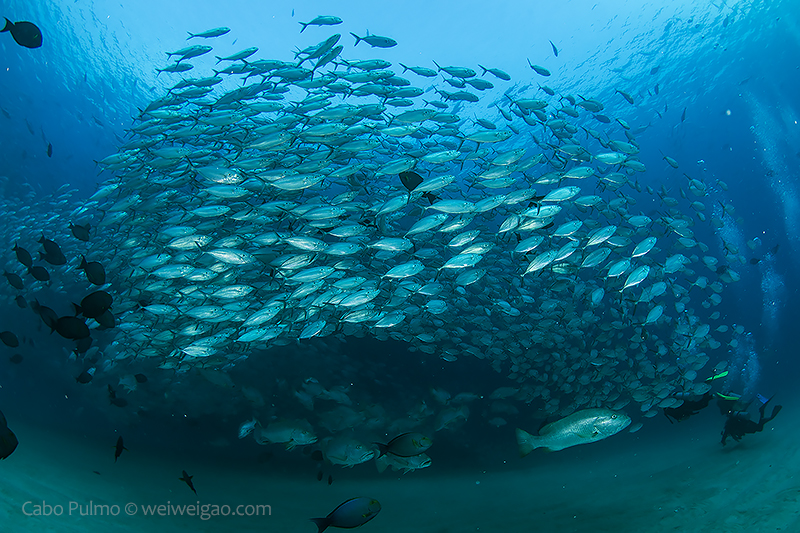
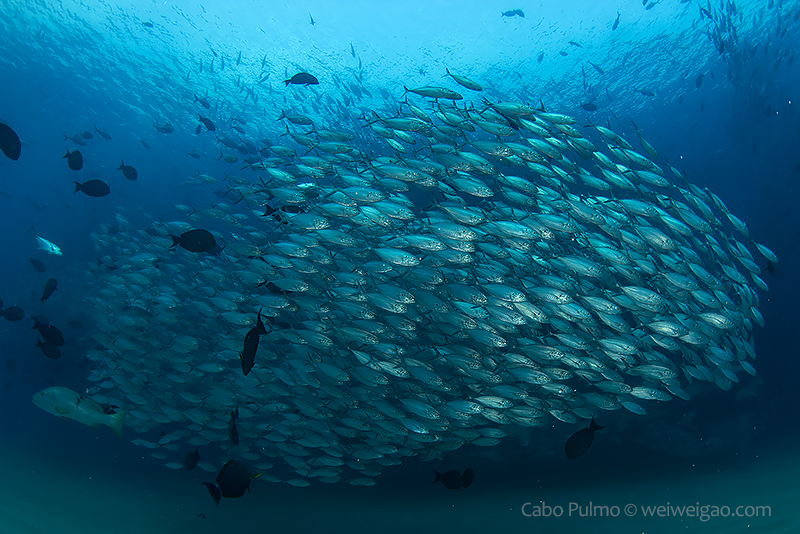
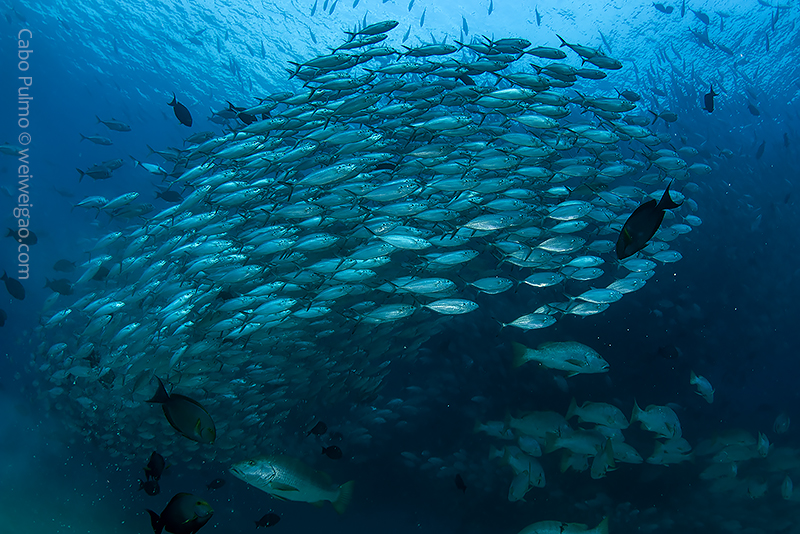
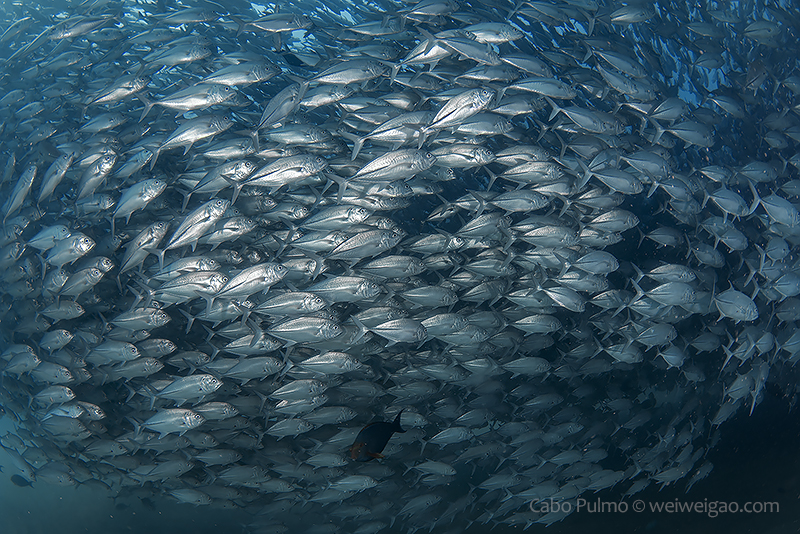
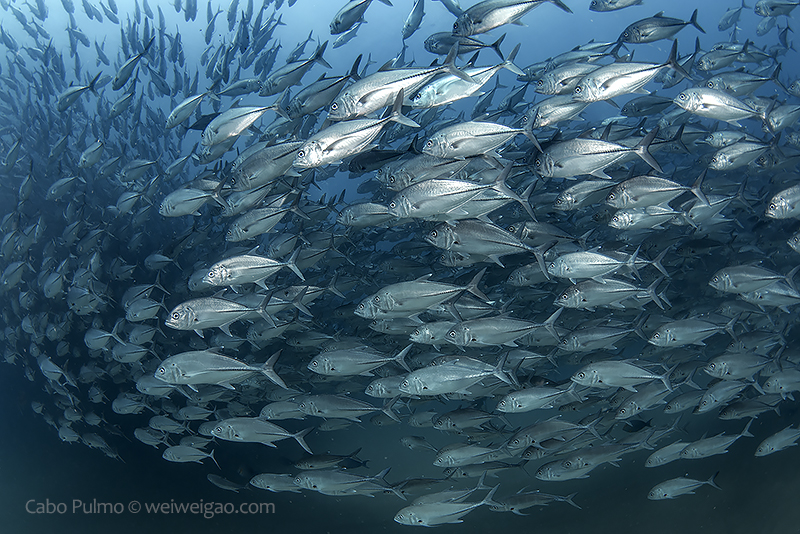
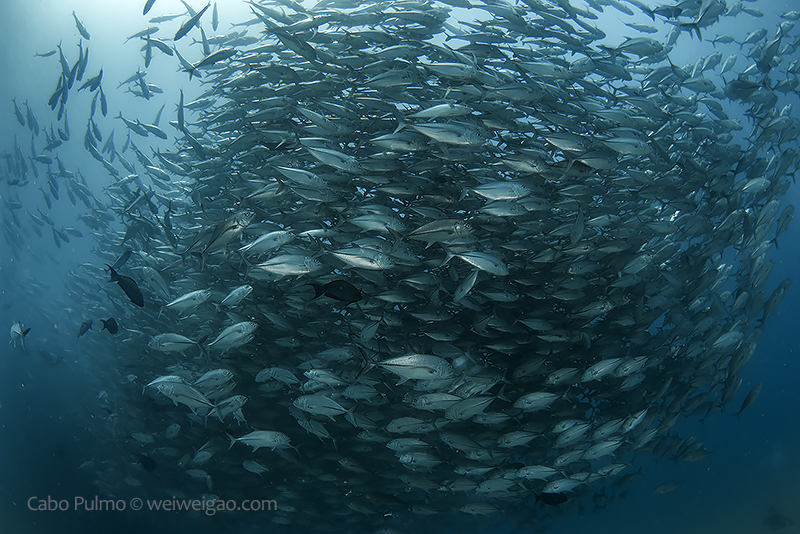
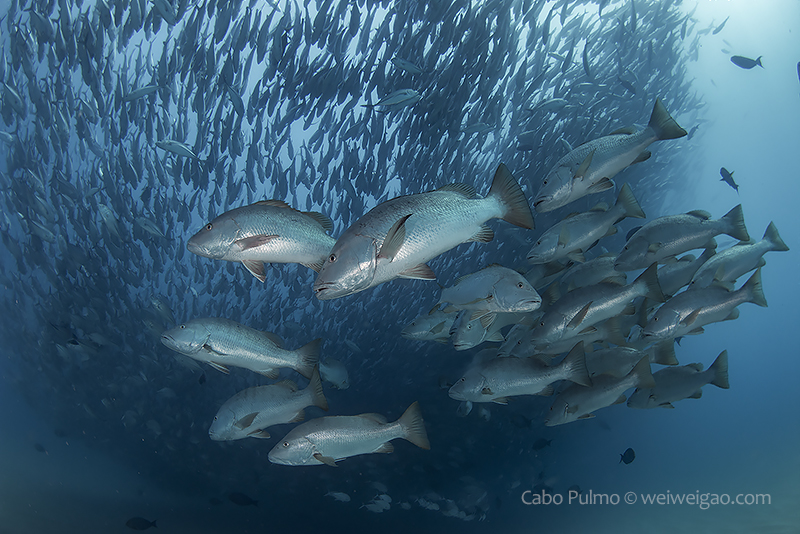
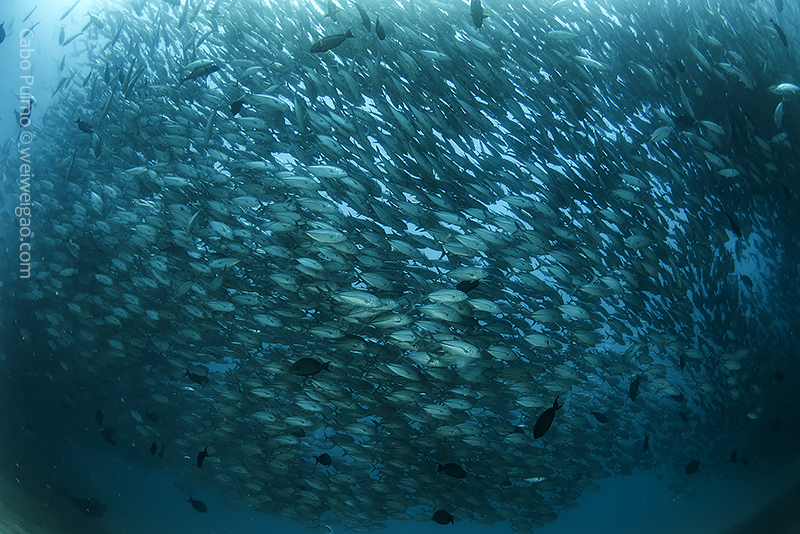
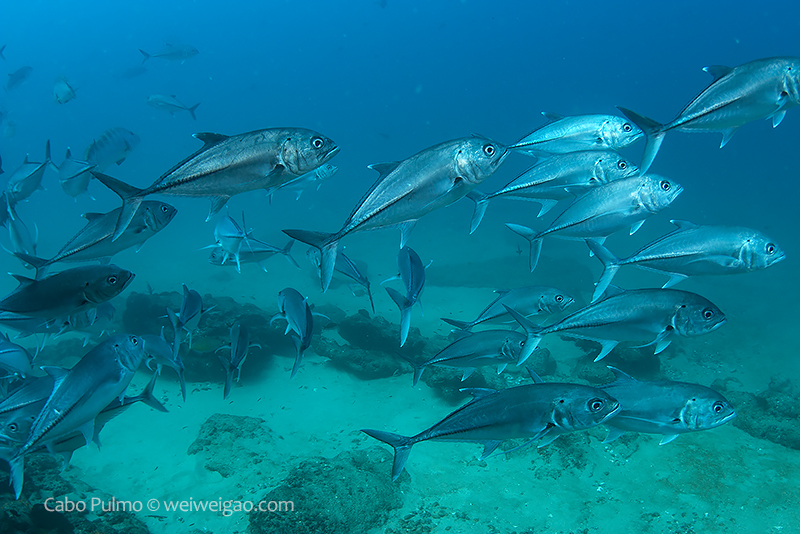
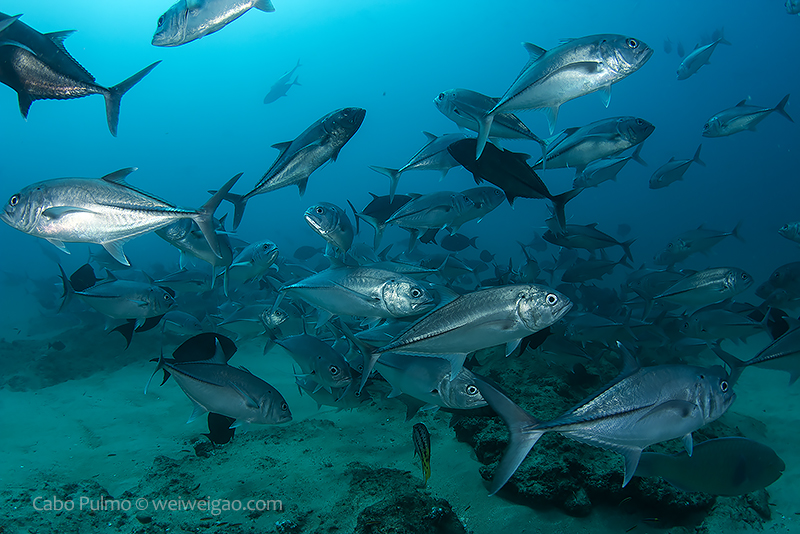
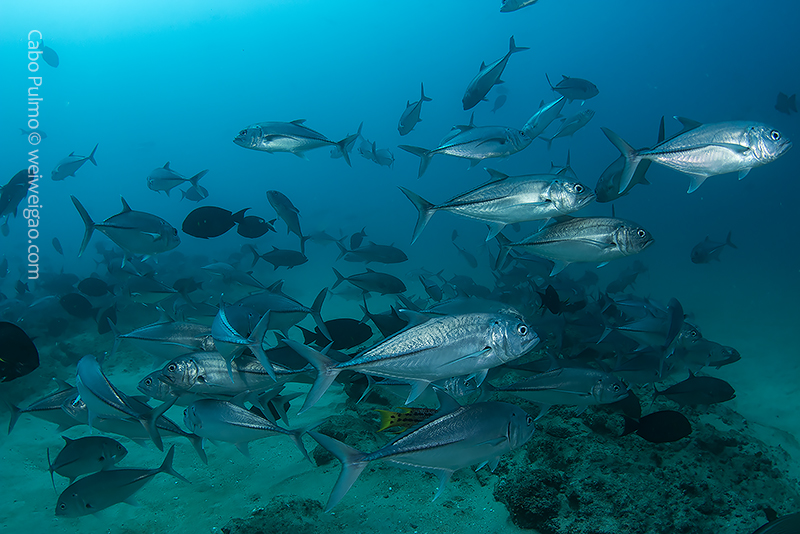
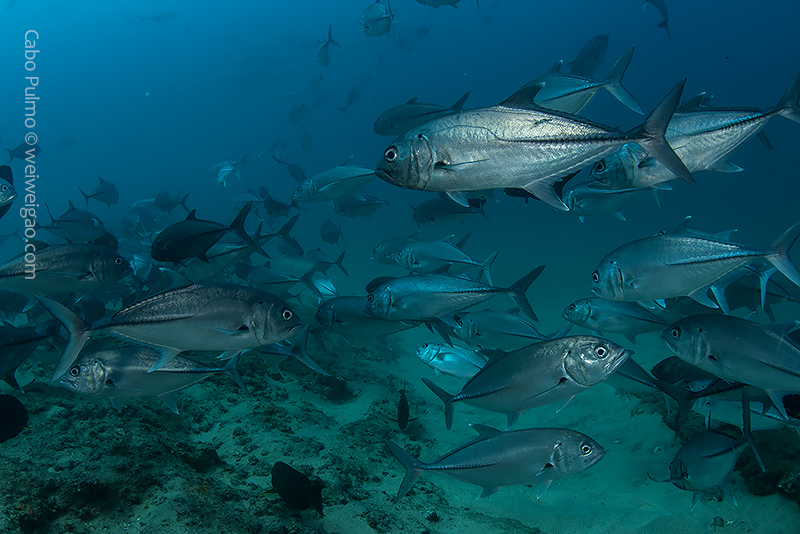
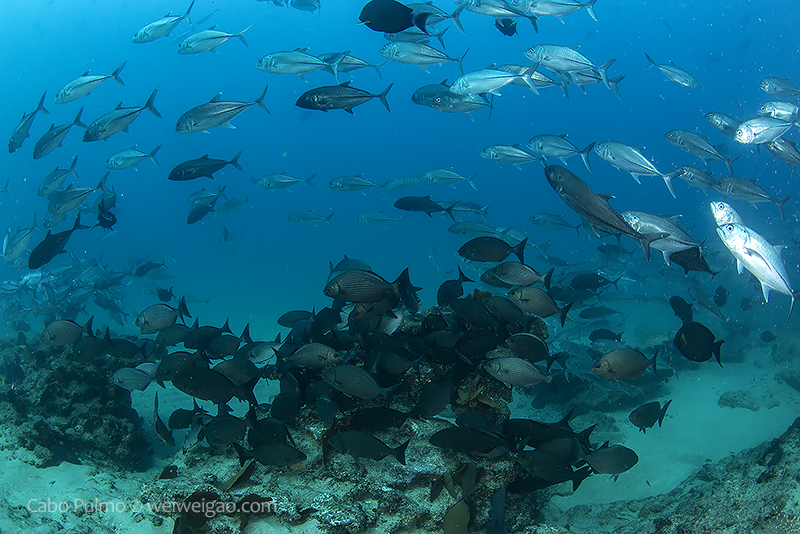
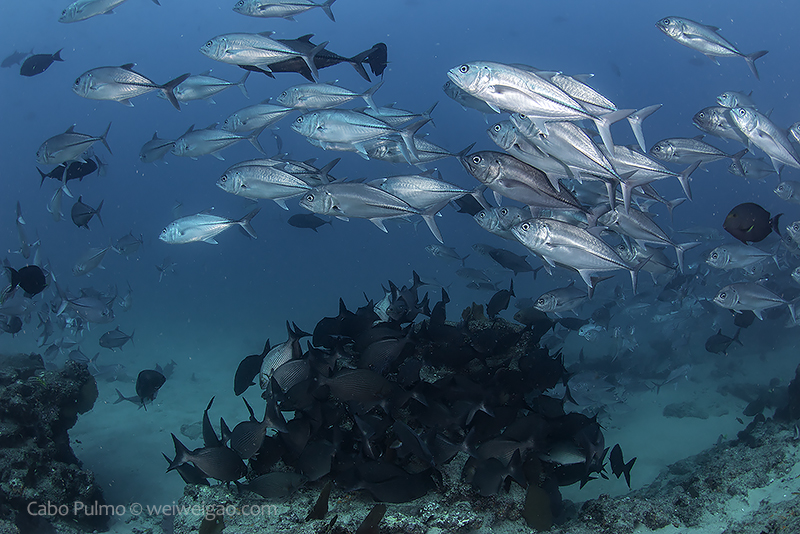
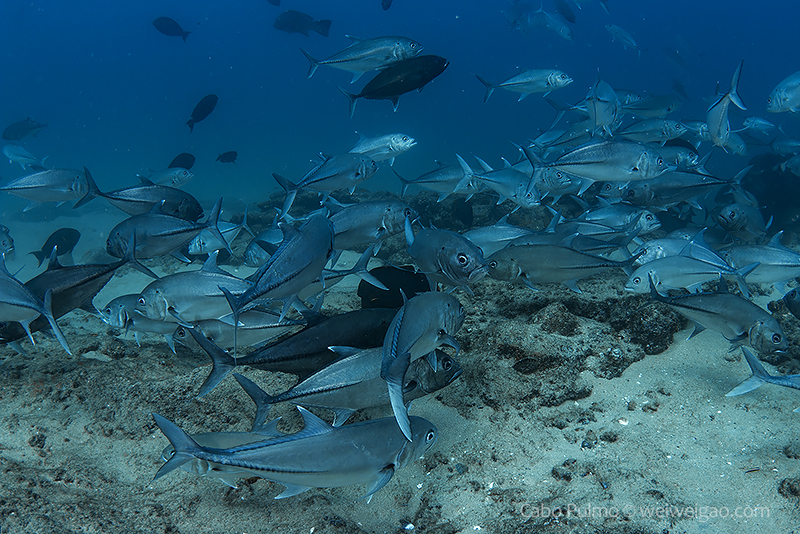
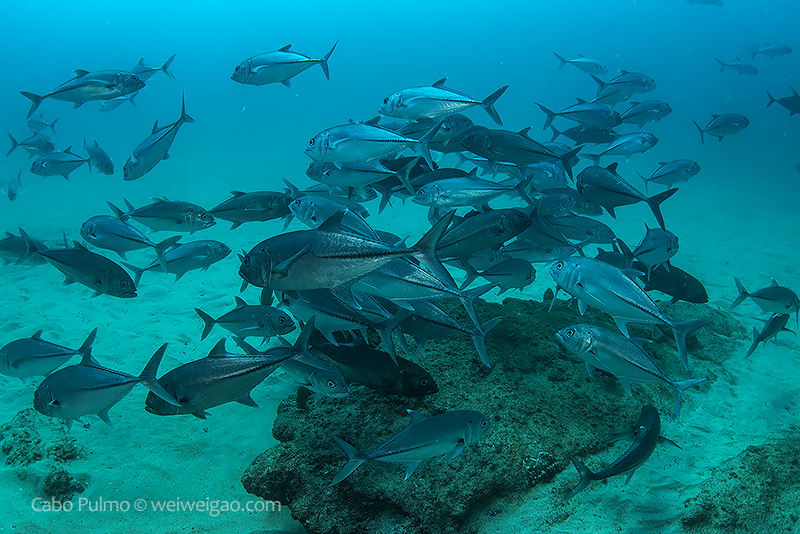
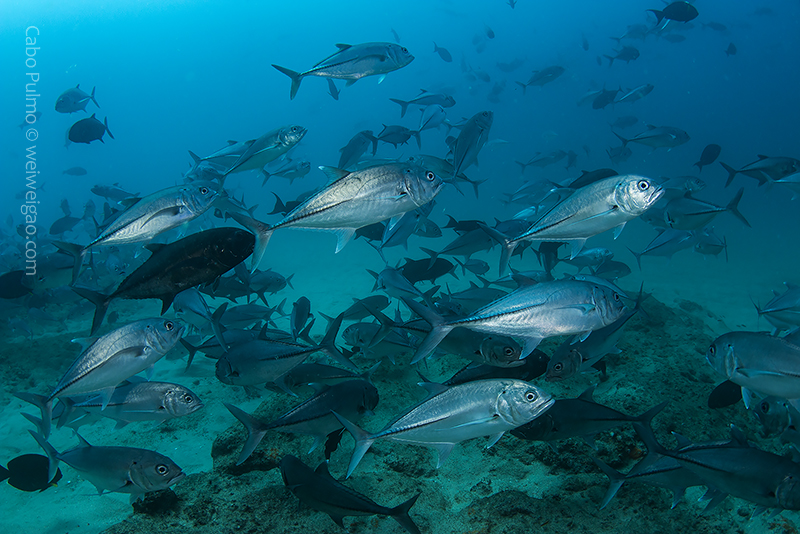
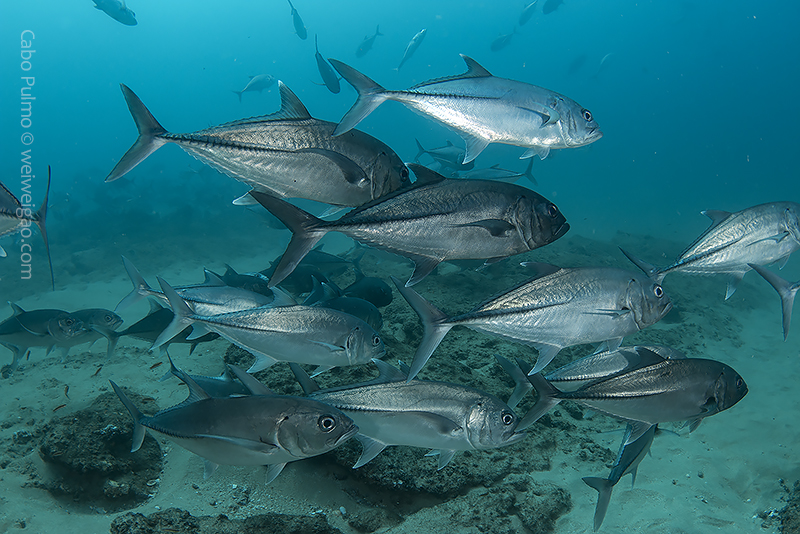
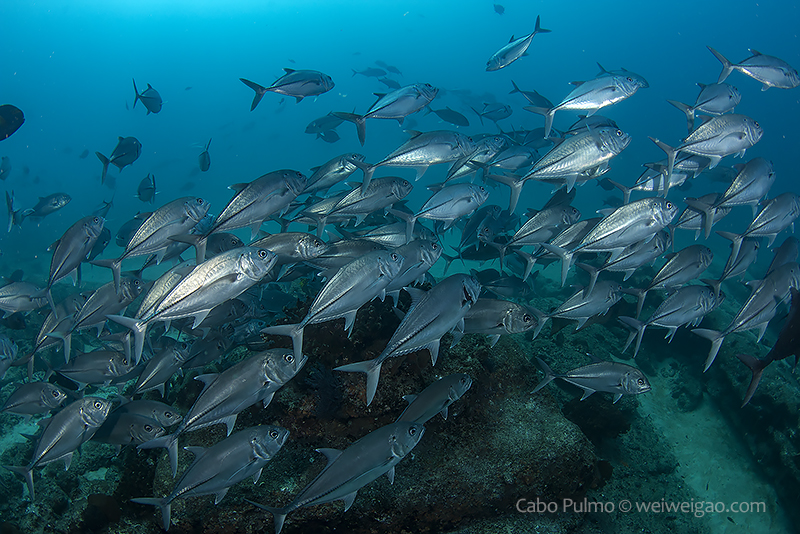
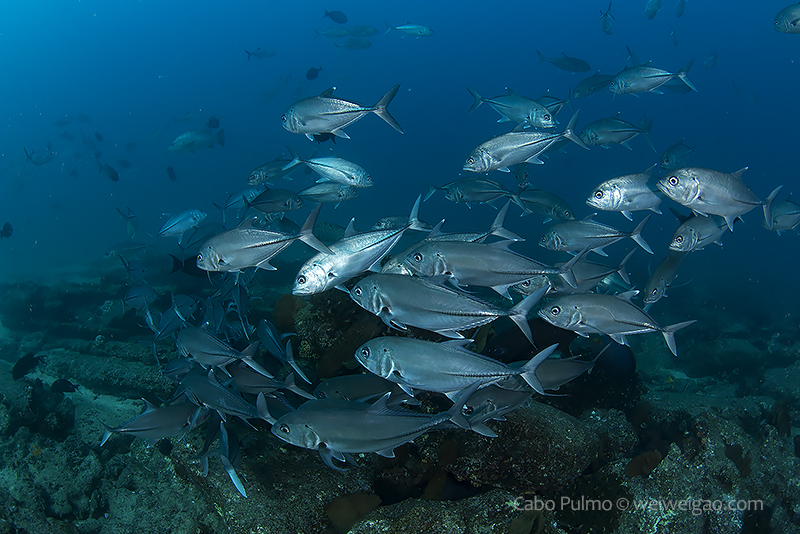
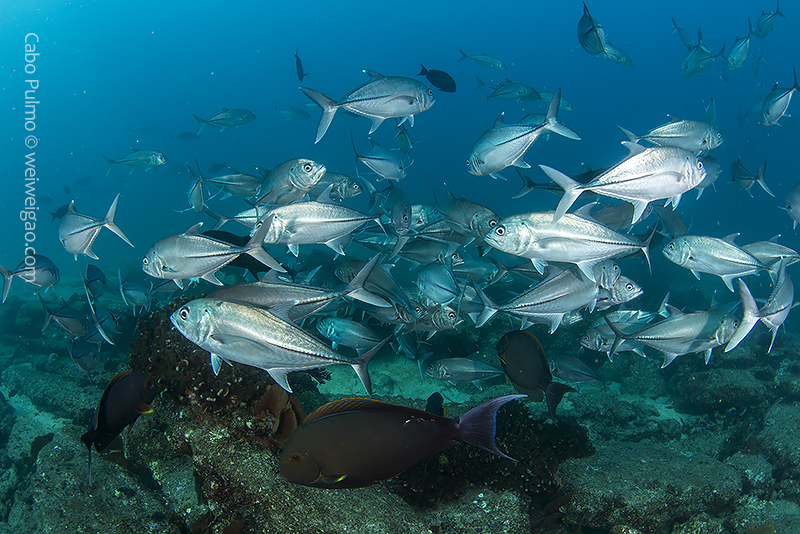
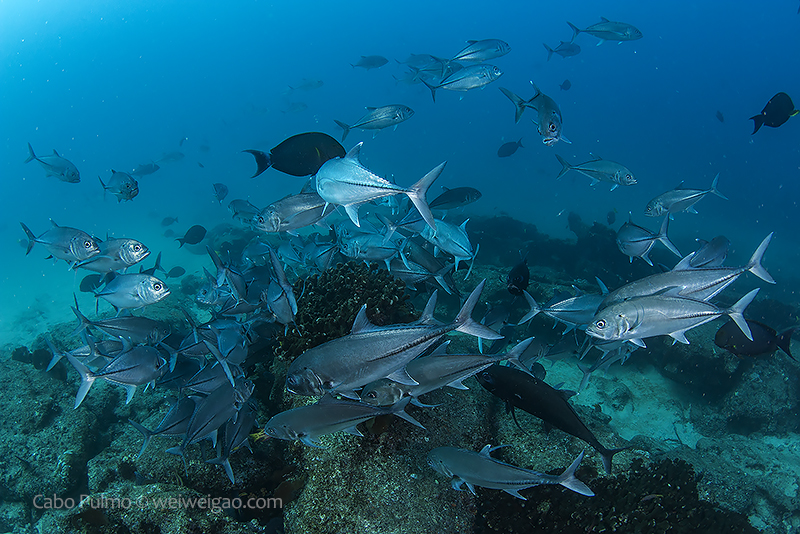
I got to know Cabo Pulmo by its iconic image: gigantic schools of bigeye trevally. Miracles happened on the day when we set out to look for them: the gusty wind turned into gentle breeze, turning a choppy sea into a calm lake. The condition could not get better. While on the boat, after spotting the reminiscence of fish swimming underwater near its usual playground, we dropped down to a bottom covered with white sands and sea pens. Up the current, against the background of turquoise water, I saw a dark shadow looming far on the horizon. As we kicked toward it, the shadow grew bigger and bigger. Finally, a giant funnel, slightly tilted, emerged, like a towering giant of a mountain extending from the ocean bottom all the way up to the ceiling of the water. The funnel was so big that it dimmed the sunlight and blocked the view of anything behind. [Gallery: Jack tornado]

The giant fish school struck me not only by its sheer size, but also by a powerful force emitted from within. Up close, I would see the stern face of each individual fish while they swam with undeviating relentlessness. The fish formed layers and each layer moved steadily against the adjacent ones. Thus the whole funnel was swirling. I felt the current sweeping on my face, as if the water was squeezed out of the funnel with powerful ejection. In the water, a humming sound could be heard, as if emitted from the deep of the funnel while the vibration of each fish was condensed, synchronized, and amplified. As each fish swam and each layer swirled, the funnel was spinning and rolling forward, like a giant tornado sweeping across a prairie land. Slowly I was brought into the center of the tornado and surrounded by the spinning layers of fish from all directions. I stopped kicking and let the current carry me. After a moment of enjoyment, the giant funnel moved on, carrying the humming sound to the far. The water turned once again bright and sunny. [Gallery: feeding frenzy of jack]
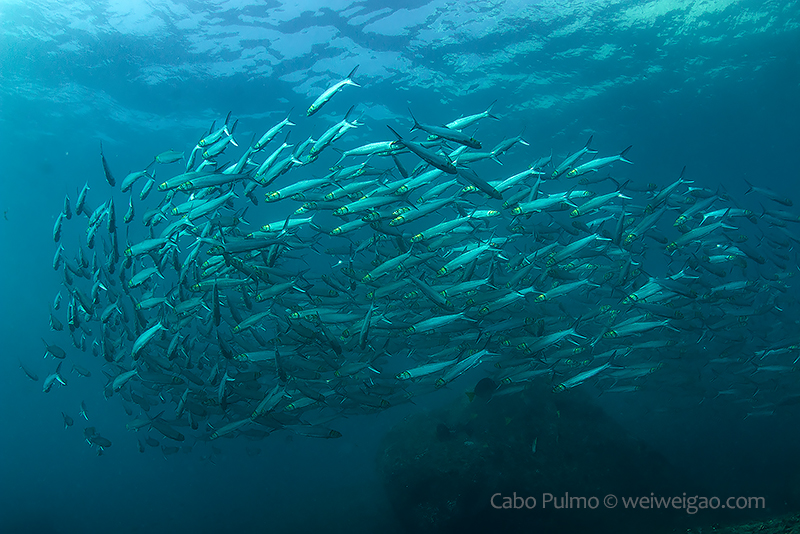
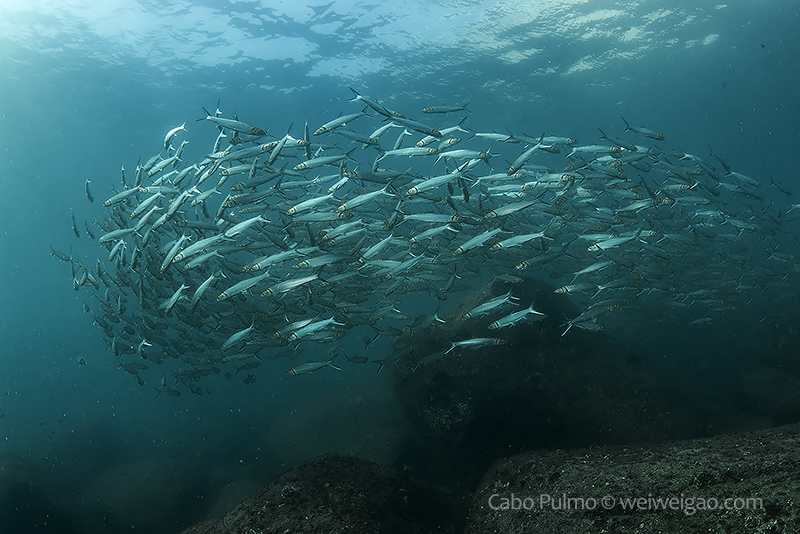
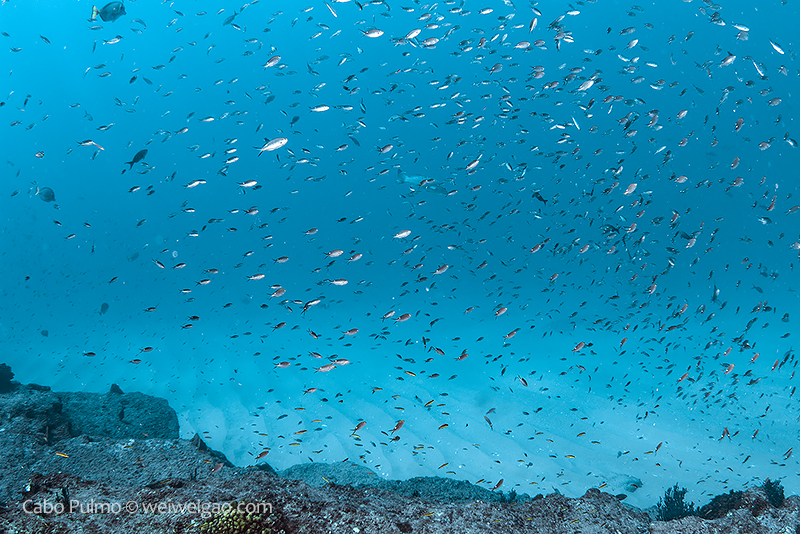
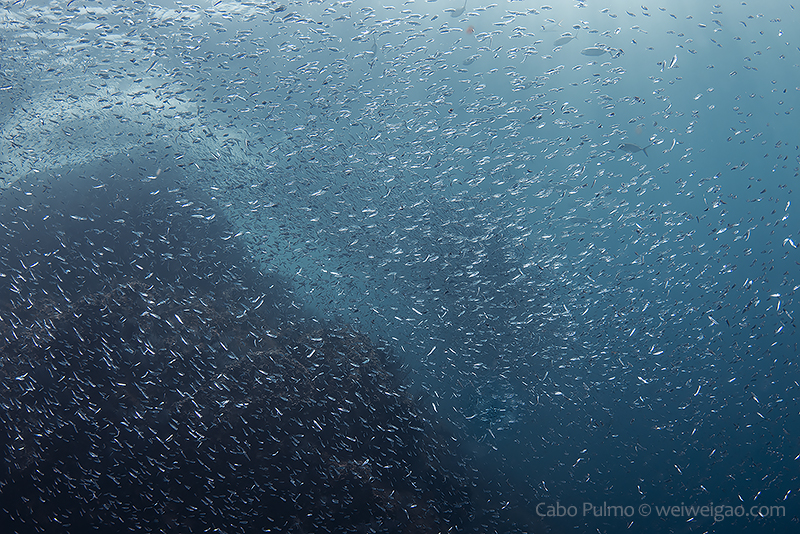
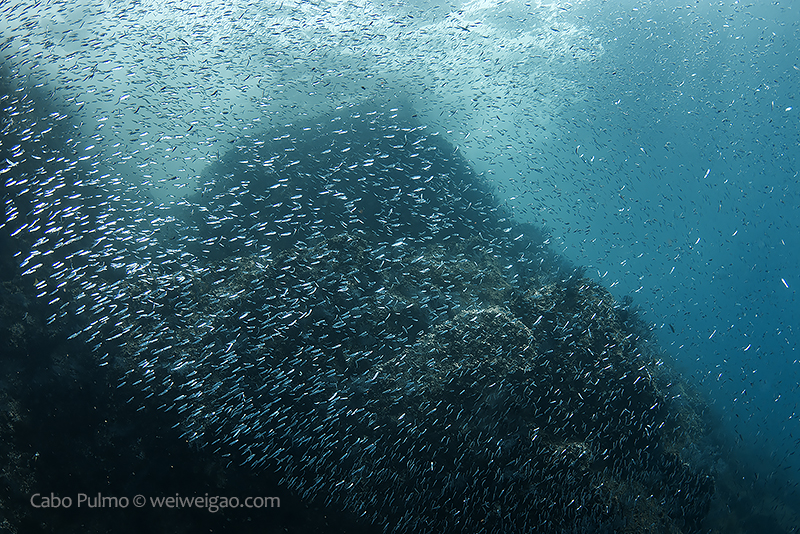
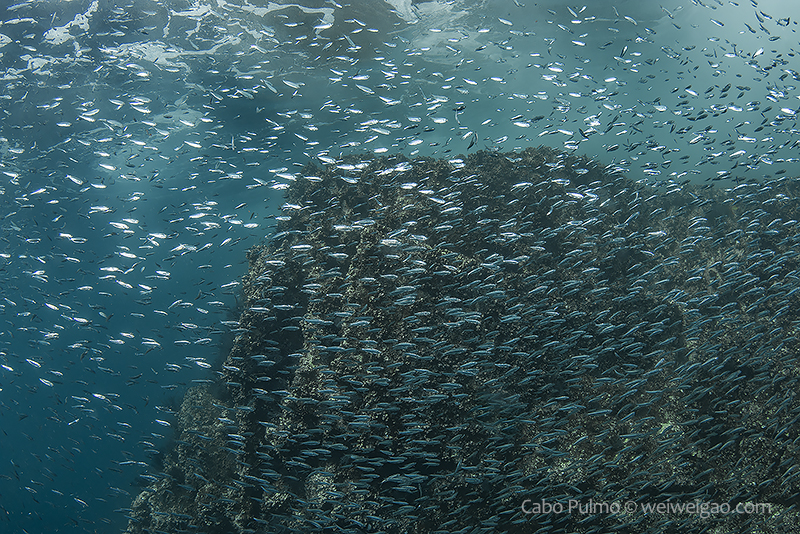
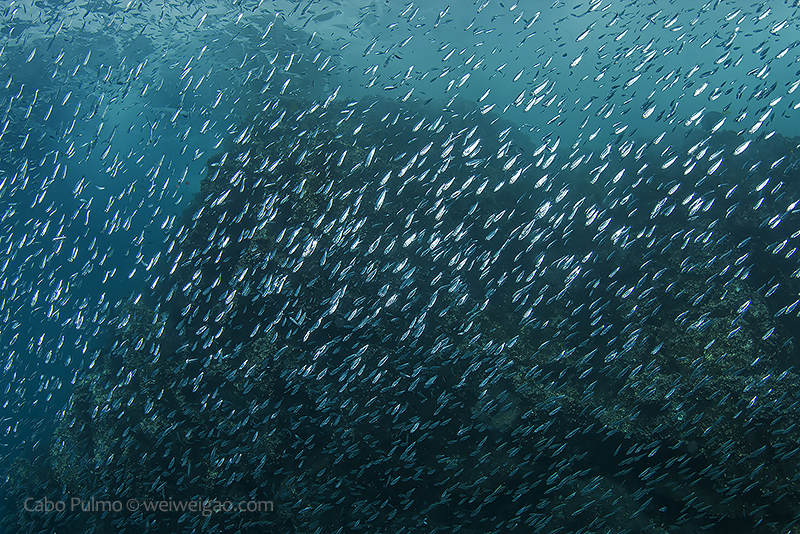
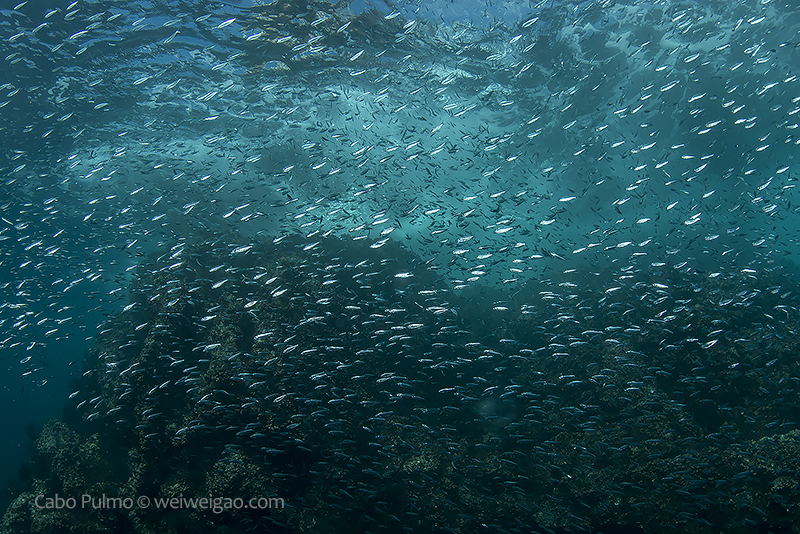
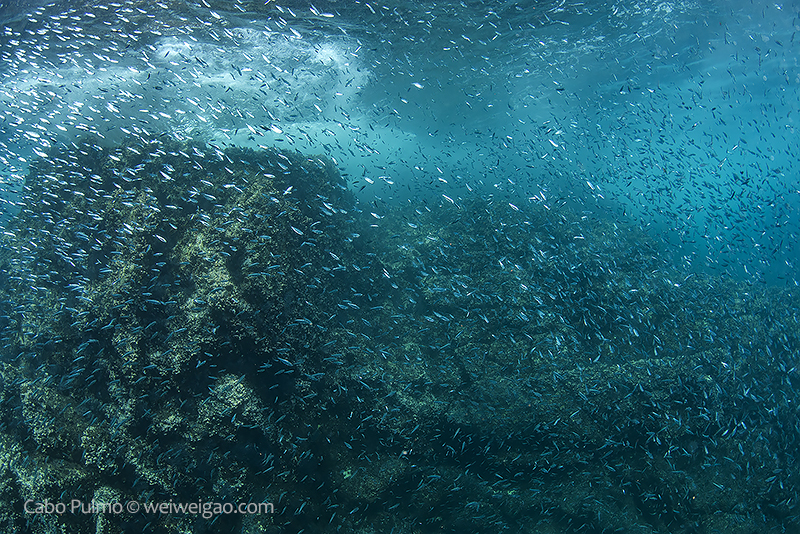
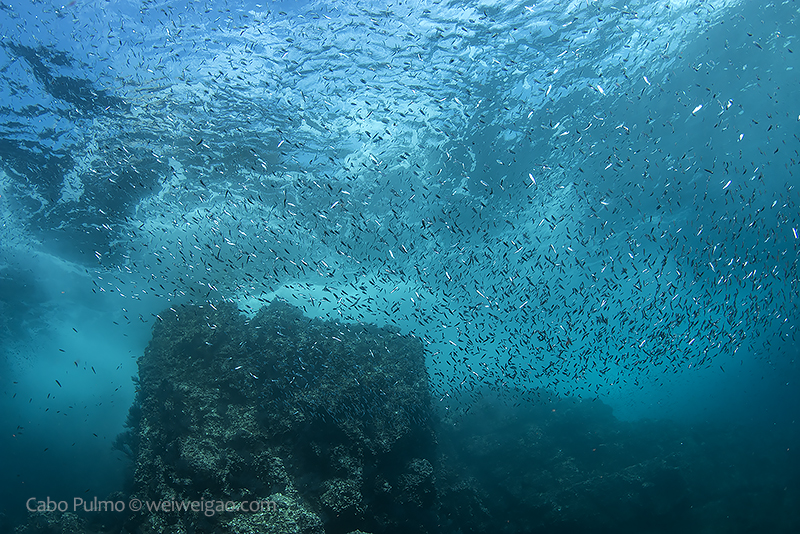
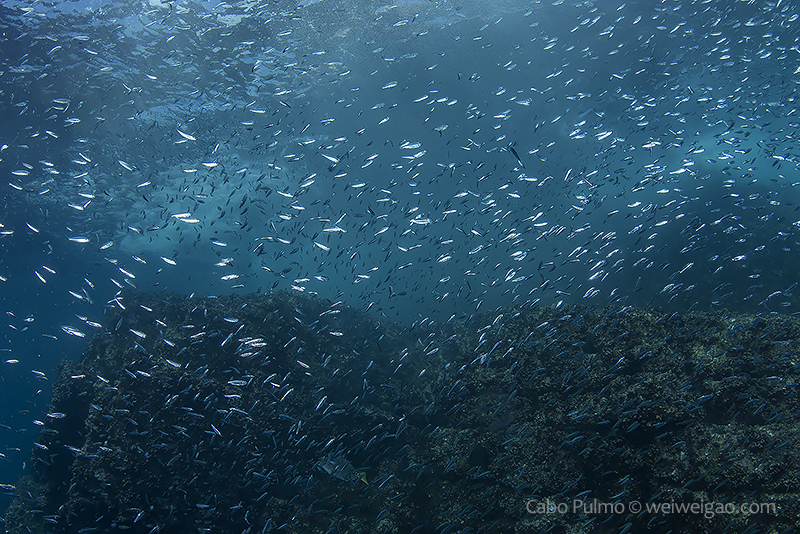
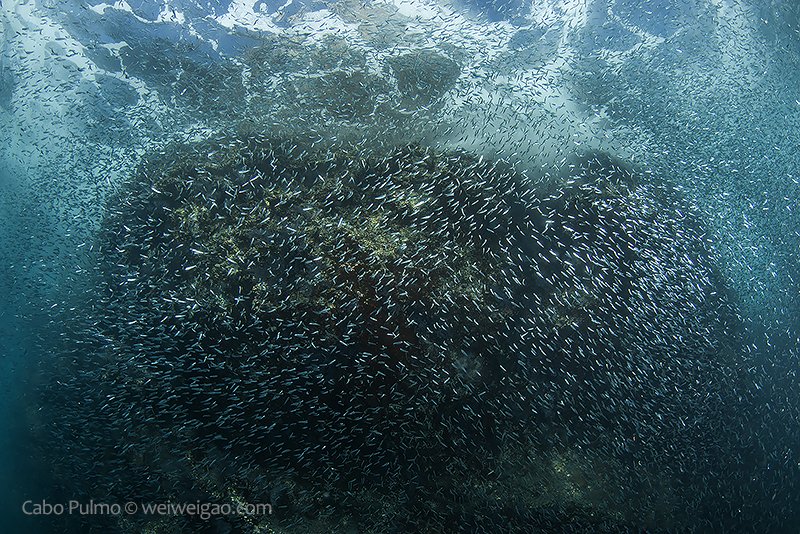
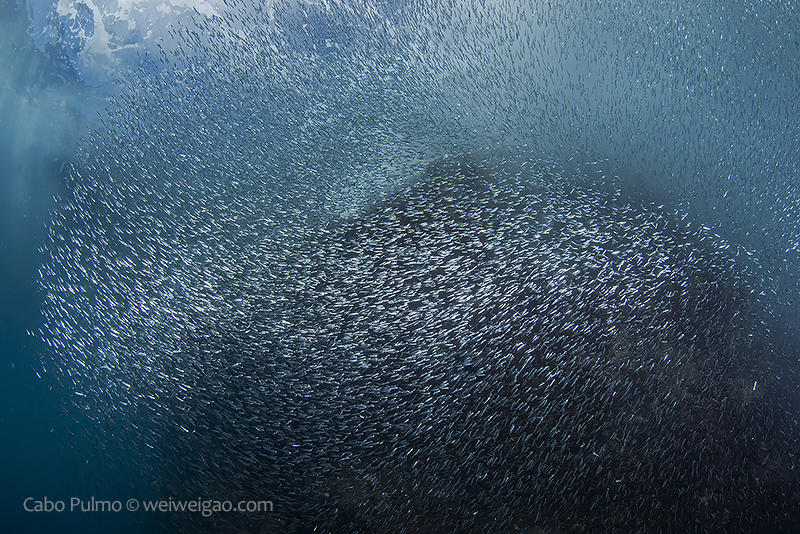
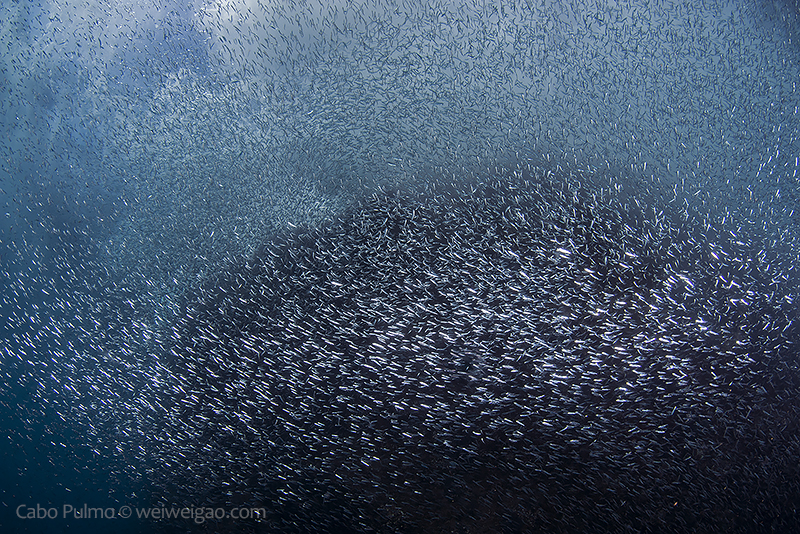
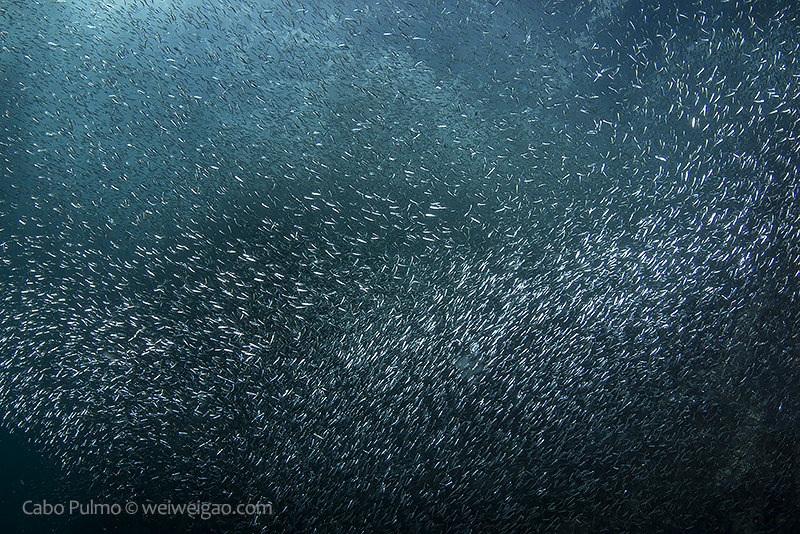
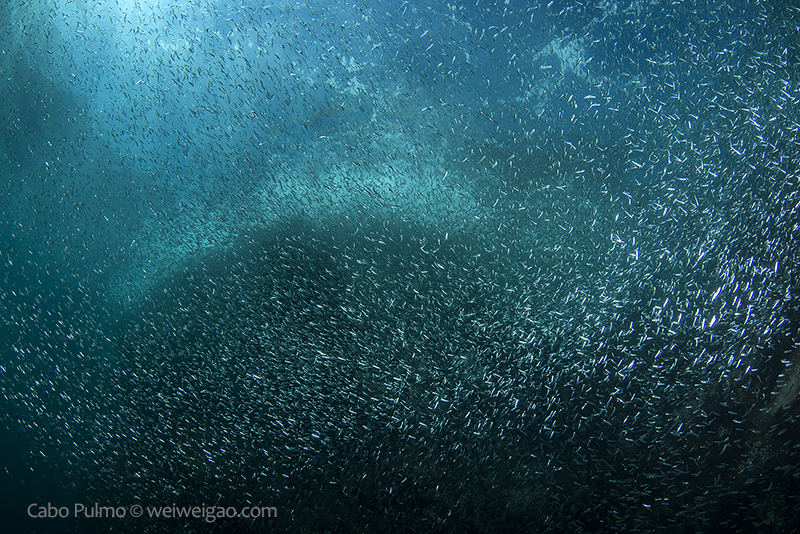
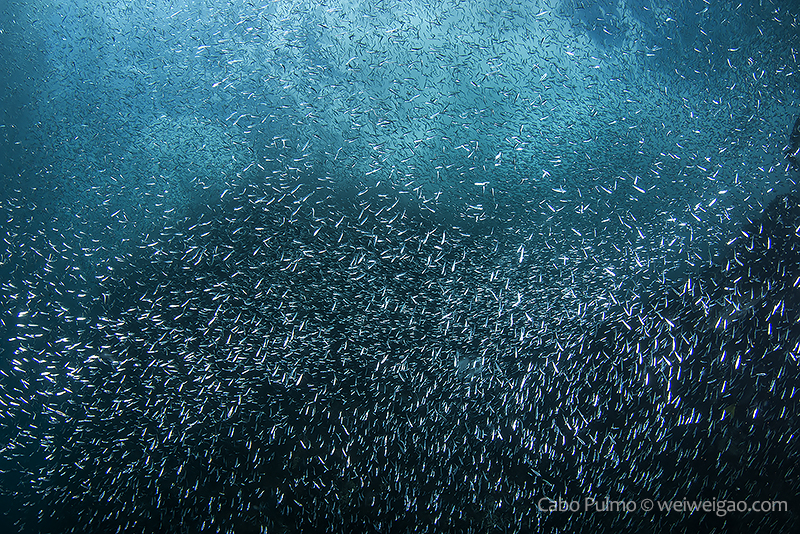
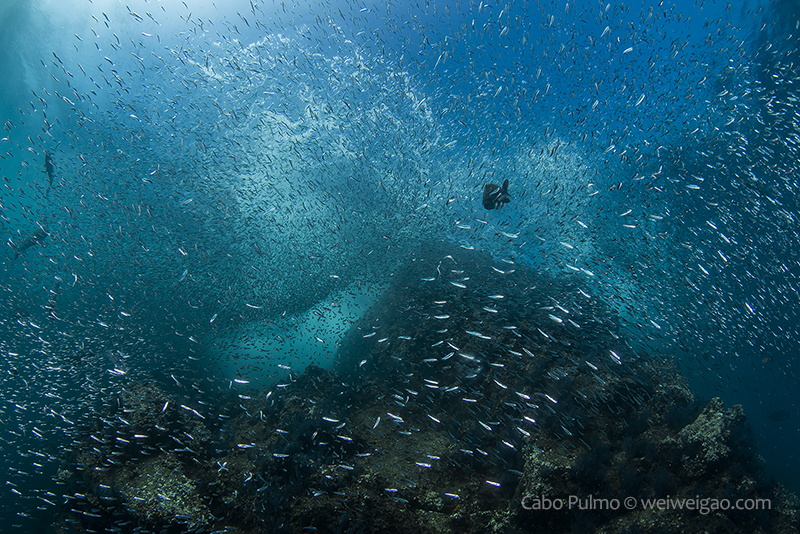
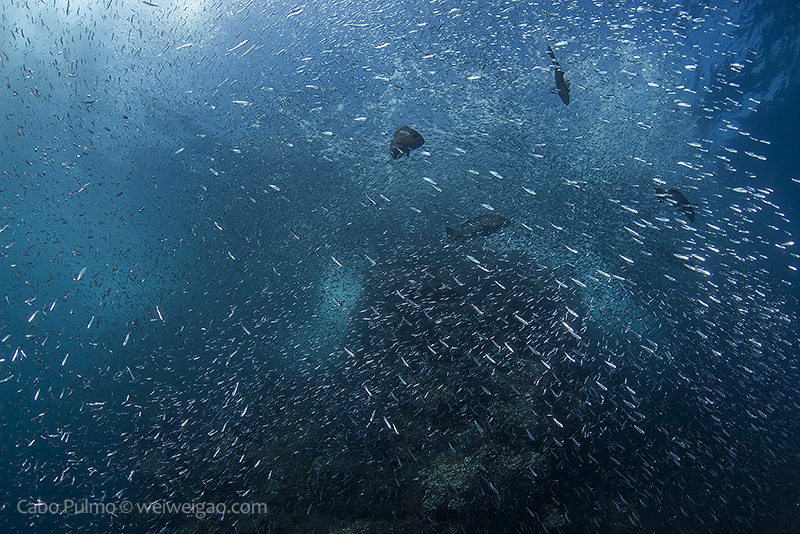
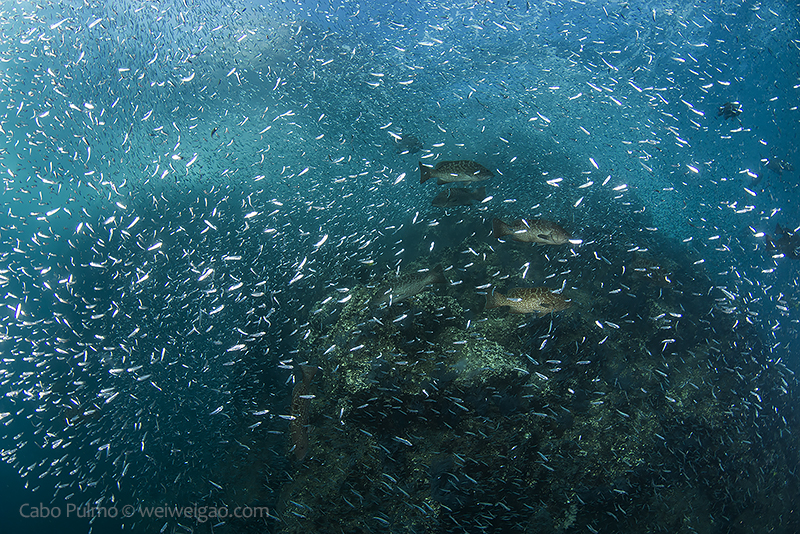
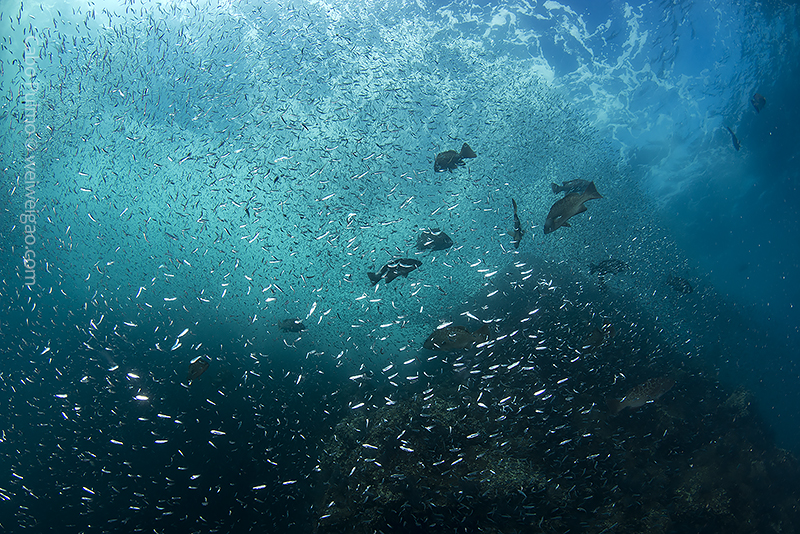
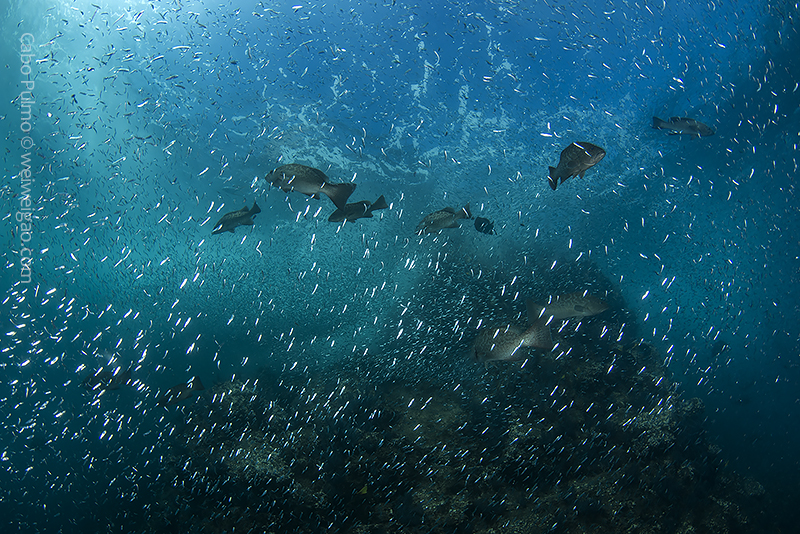
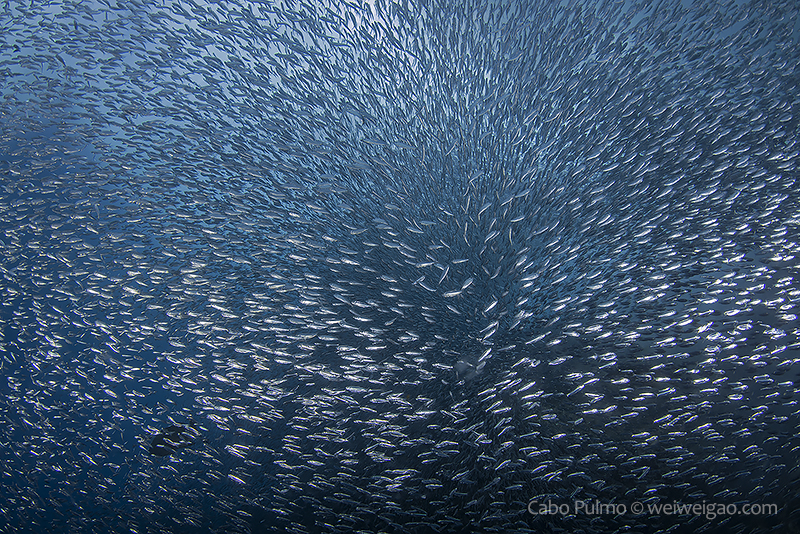
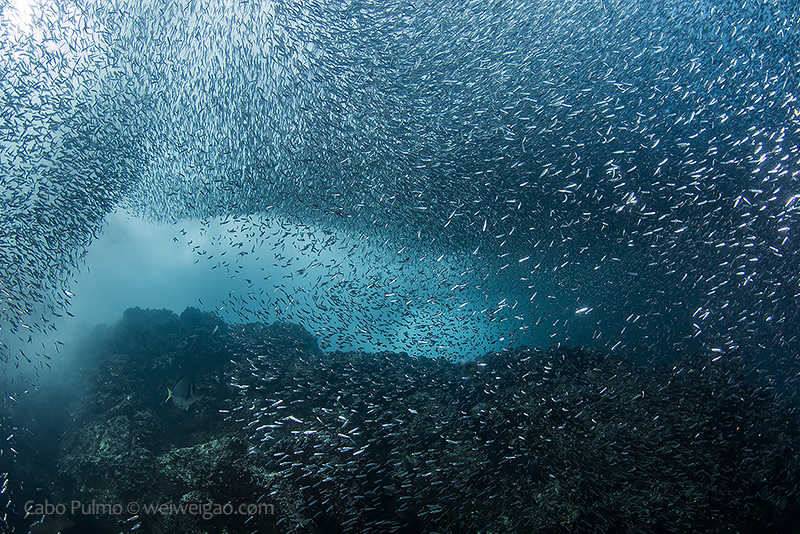
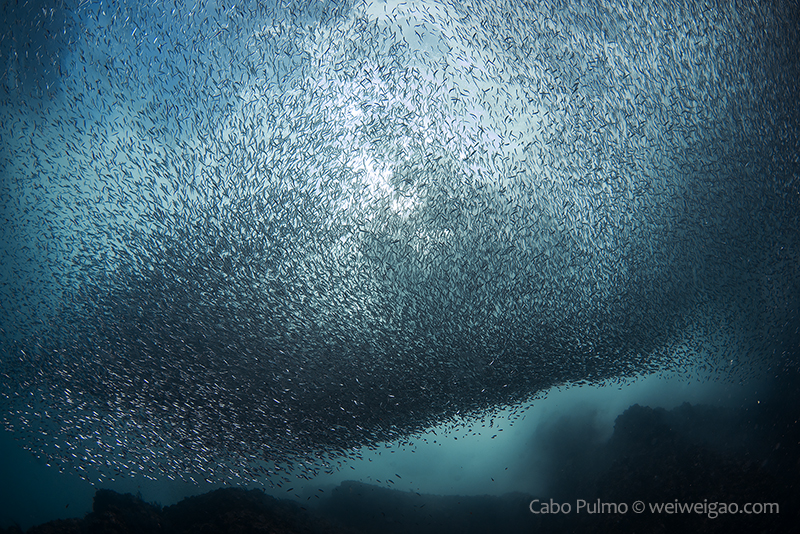
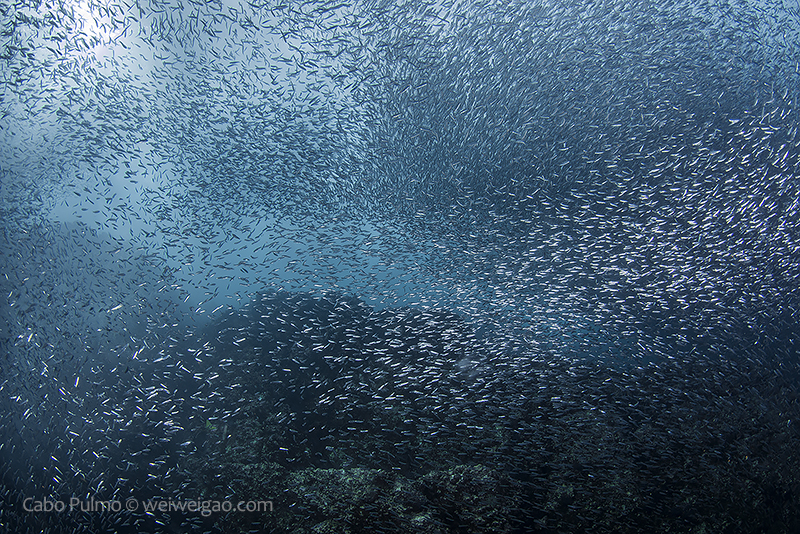
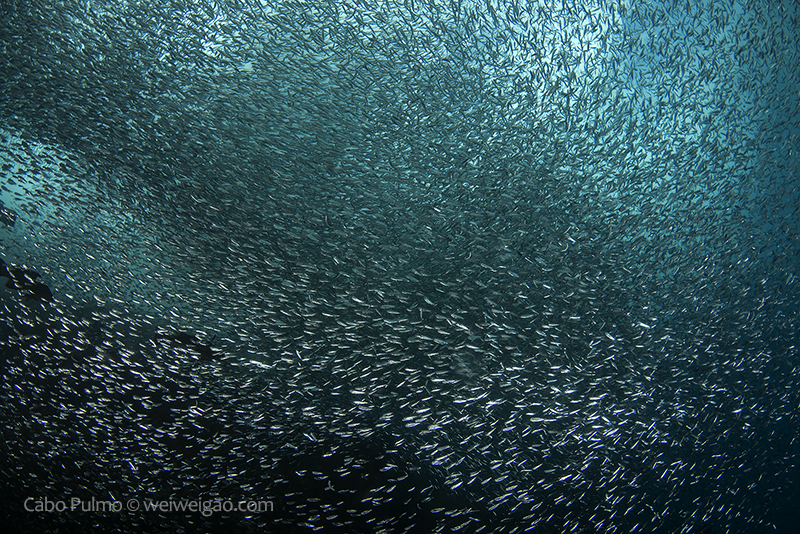
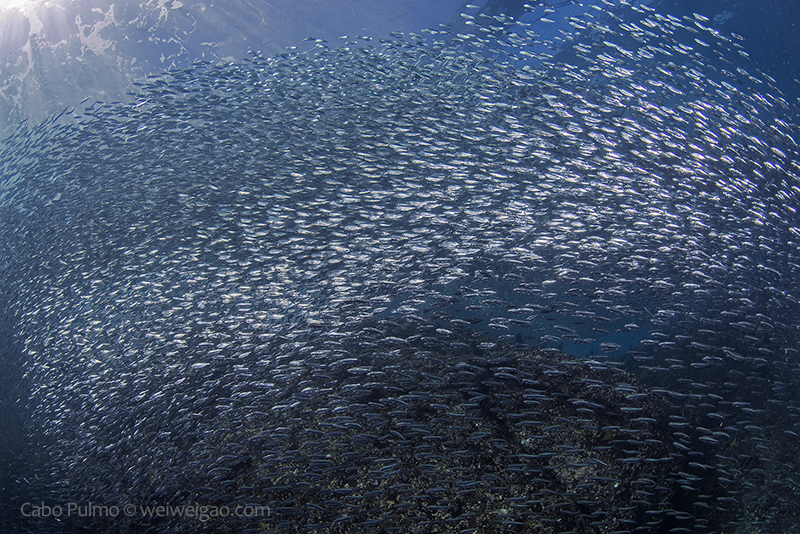
If seeing the jack tornado was prepared, the encounter of the sardines at El Islote was completely unexpected. In my first dive at this location, I got lost from the group. I surfaced and approached the boat on the southern side of the pinnacle, where millions of tiny fish appeared. At a shallow depth about ten feet, I could clearly see the rocky tip of the pinnacle up in the air against the blue sky. The waves pounded the rocks and the force was palpable. Foamy water retreated to the ocean after the waves clashed. In between the water and the land were curtains of the fish, flying, waving, and dancing with the waves. It was intriguing but I didn’t know what this fish was and why they were here, neither the guide.
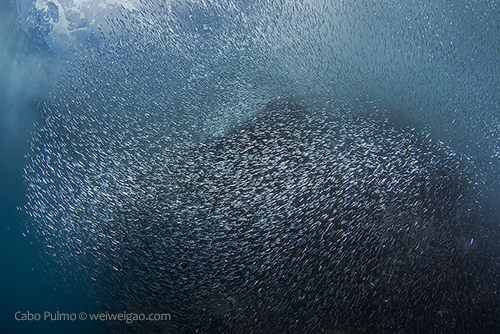
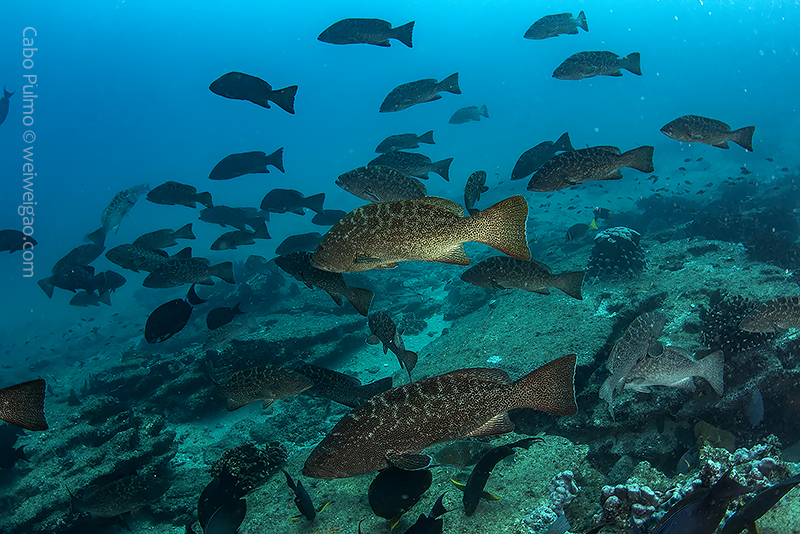
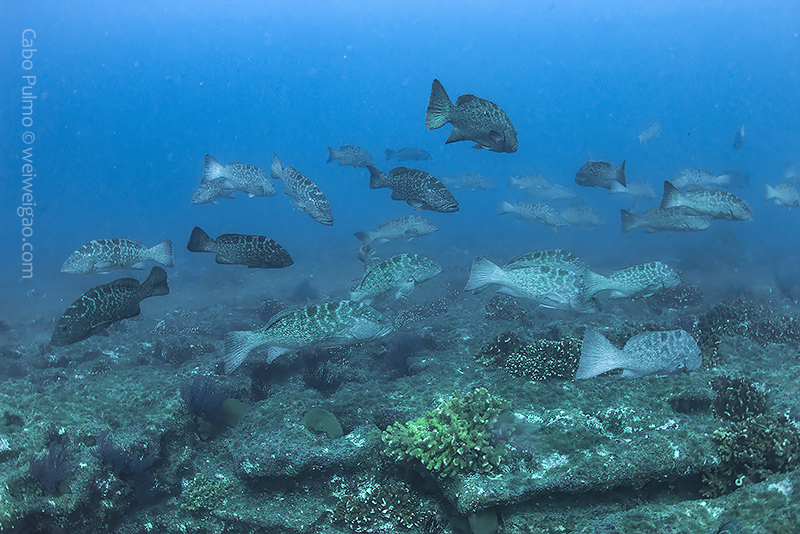
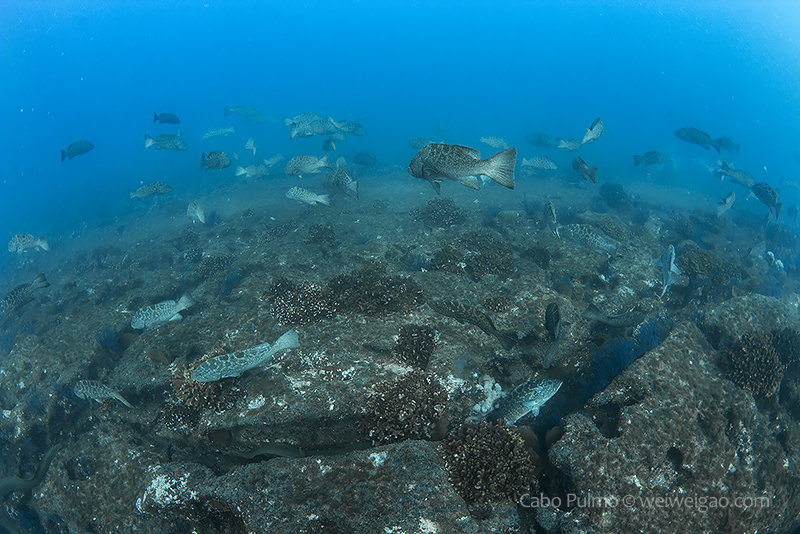
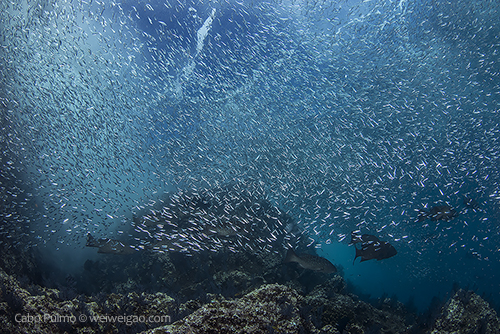
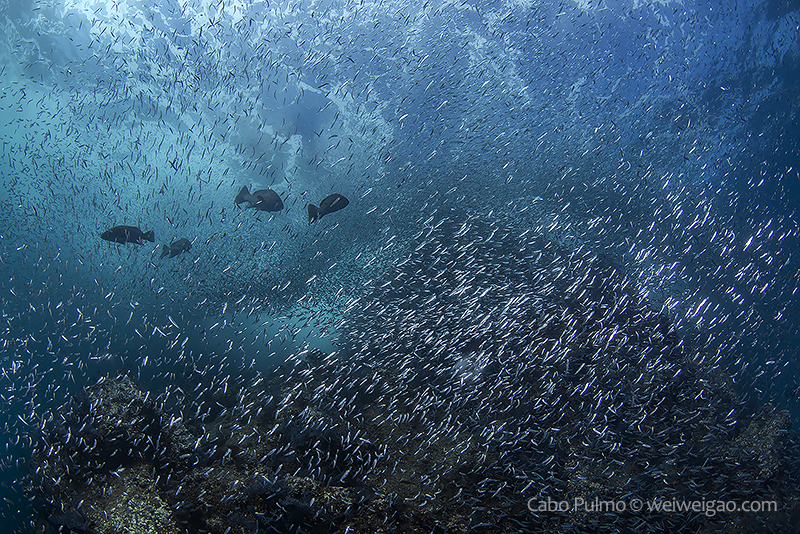
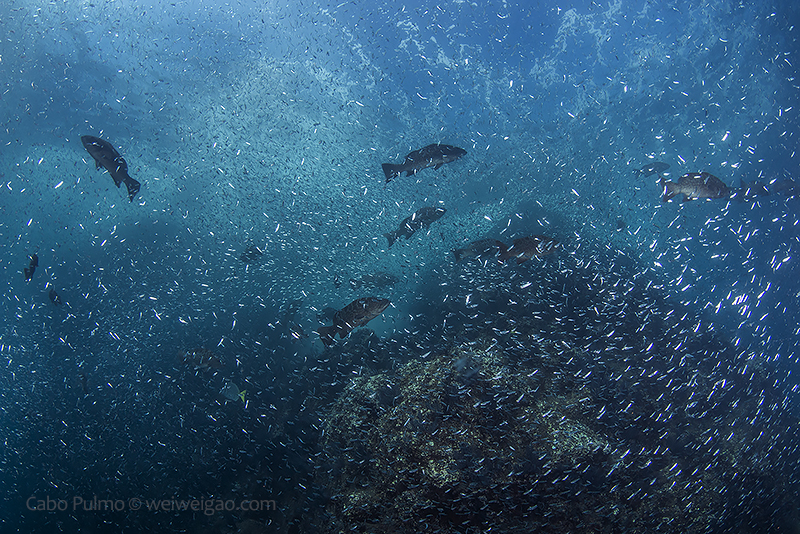
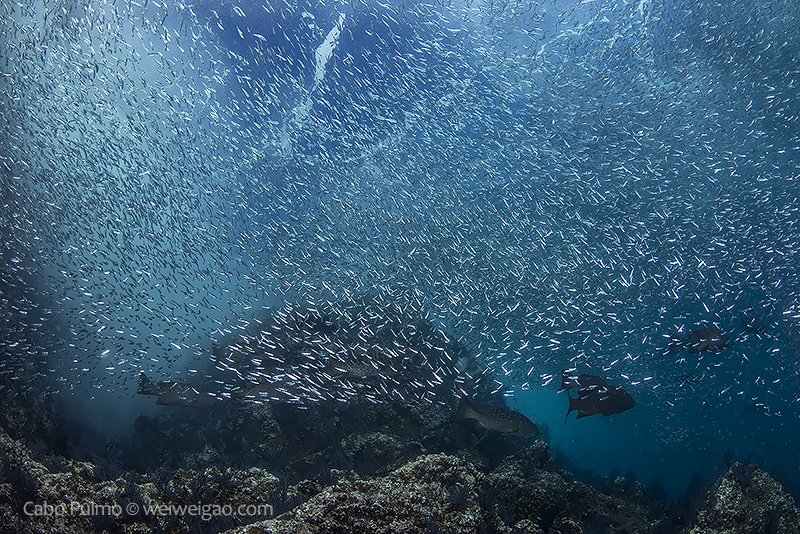
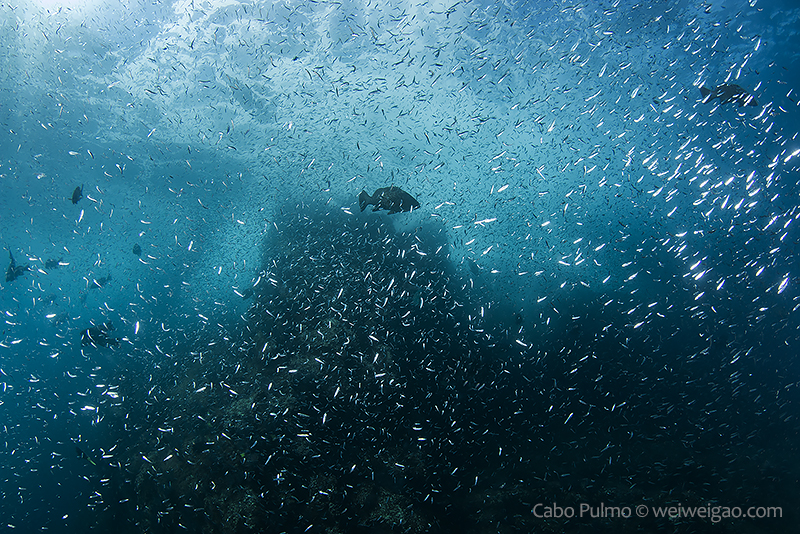
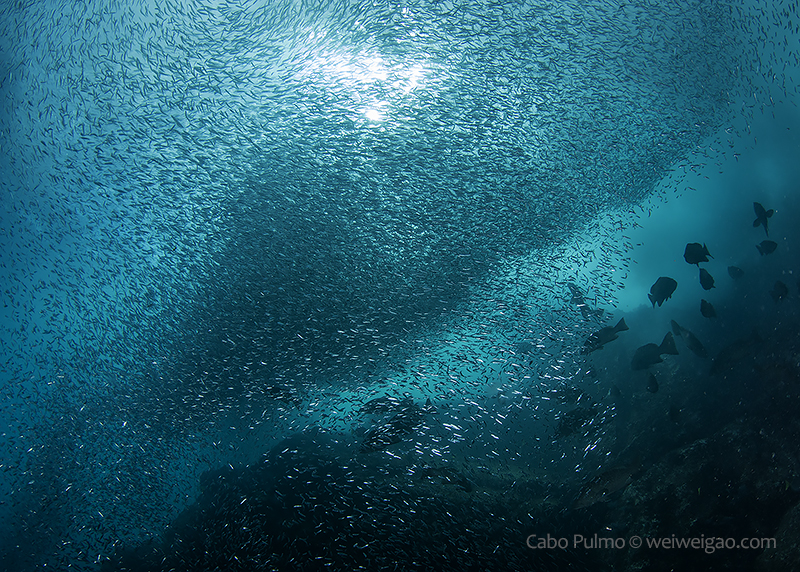
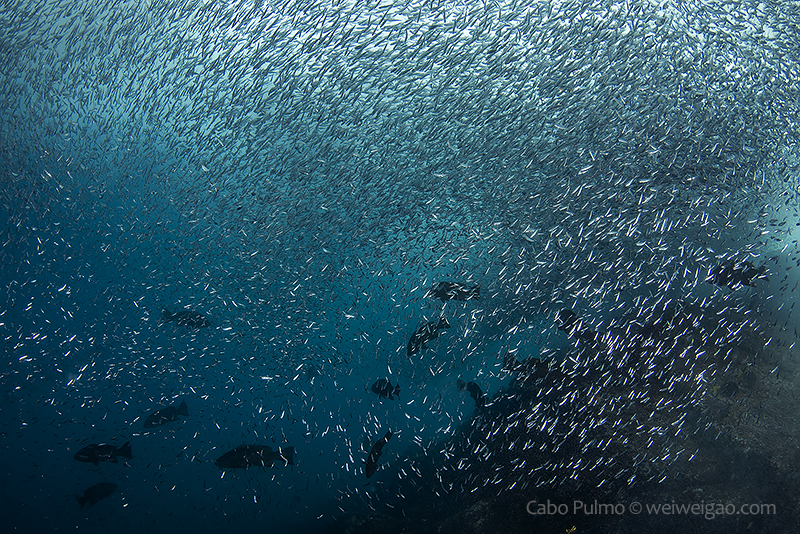
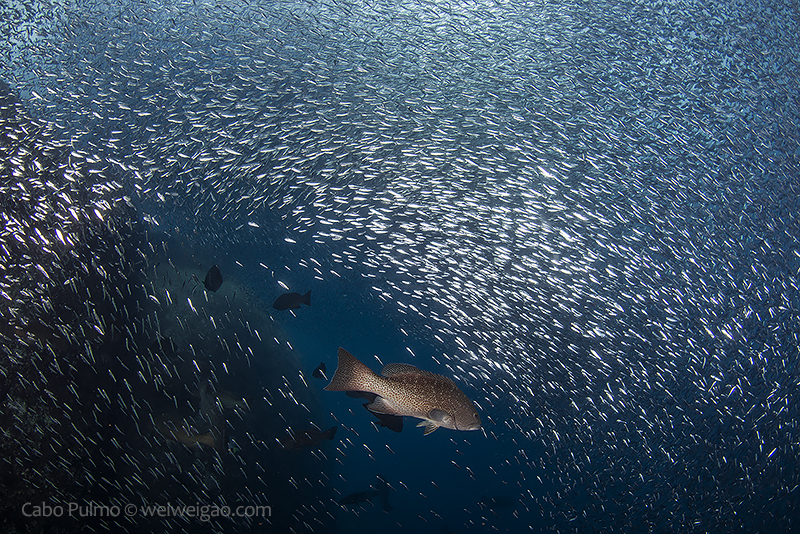
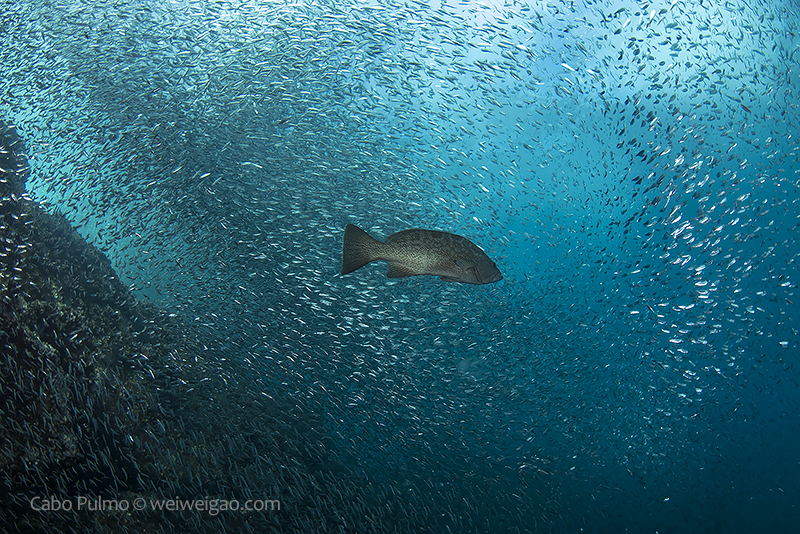
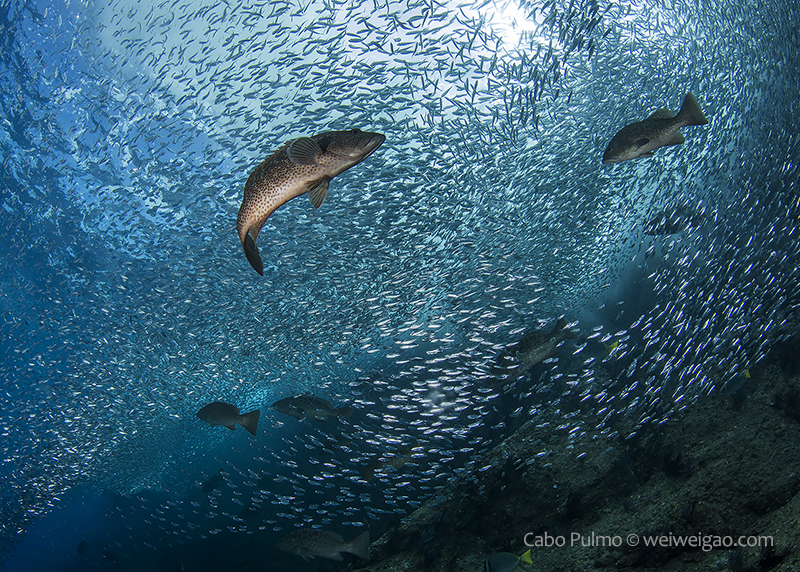
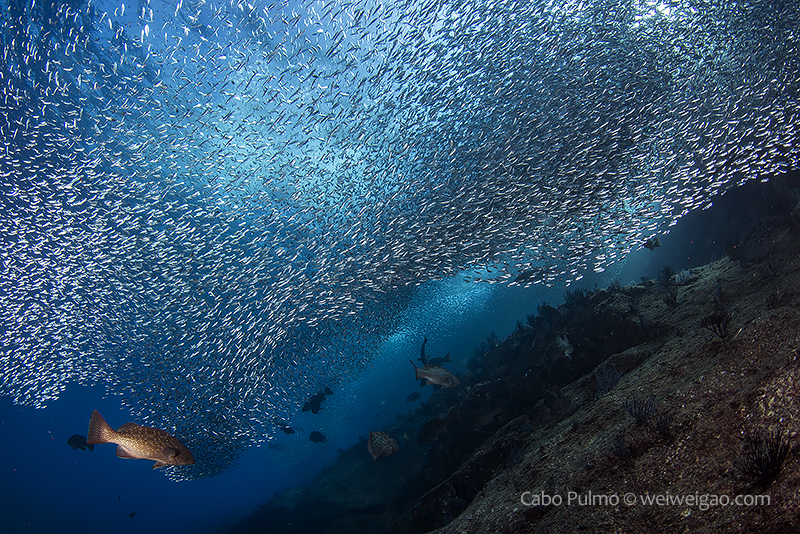
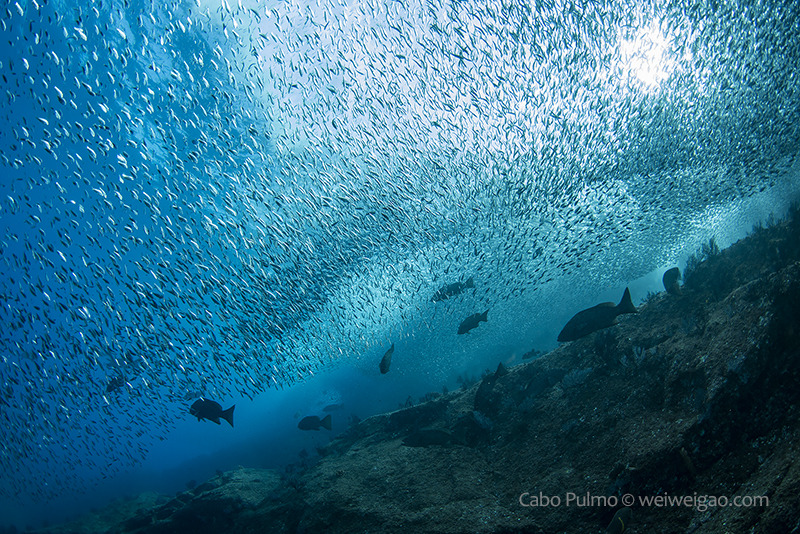
I came back the second day. I learned that they were sardines. Once in a while they would come and stay. Knowing that the fish was still there, I decided to stay with them for the whole dive as the rest of the group toured the pinnacle. This time I observed them even more closer. I saw a large group of leopard groupers staying below the fish curtain behind the cliff, waiting patiently for the right moment to launch an attack. I also saw skipjacks sprinting from all directions and piercing into the schooling sardines. In this shallow water, the boundaries that separated the sky, the land, and the ocean was broken. I heard the thunders of the waves, deep but loud as the surges pushed the water against the rocky pinnacles and pulled it back into the abyss. But the sardines showed no fear or hesitation. They were dancing as if they had been doing this since the beginning of time, as if they relied on the force of nature to thrive. I let myself go, riding the waves as one of the sardines. While watching the life presented with such force, my eyes were full of tears. [Gallery: sardines at El Islote]
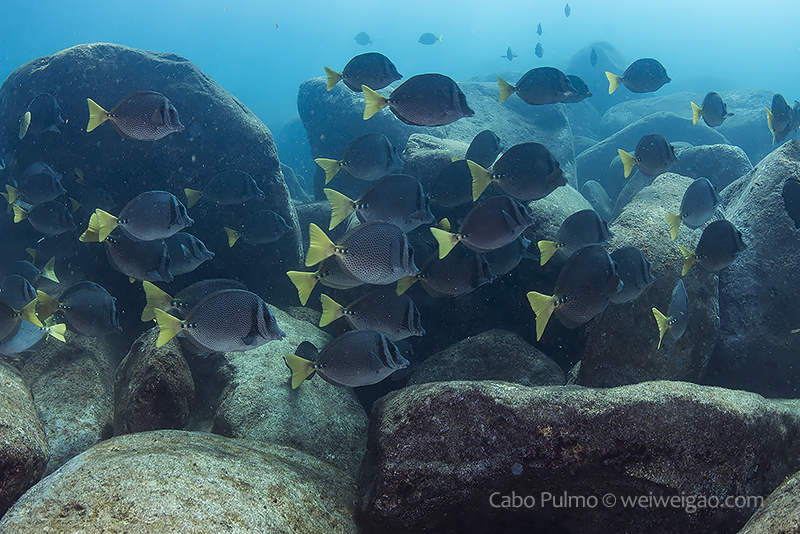
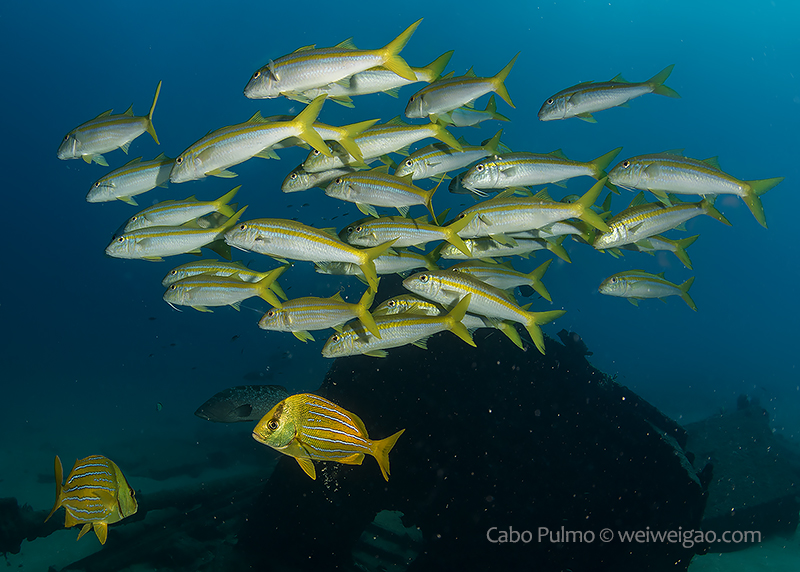
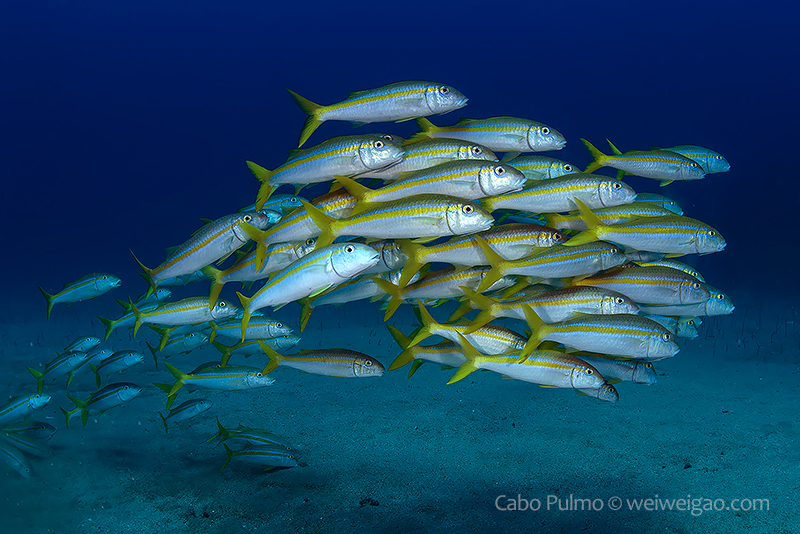
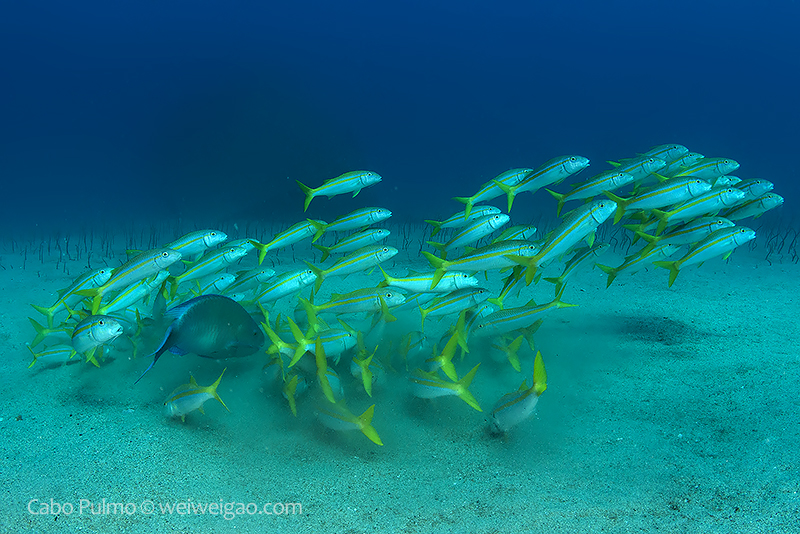
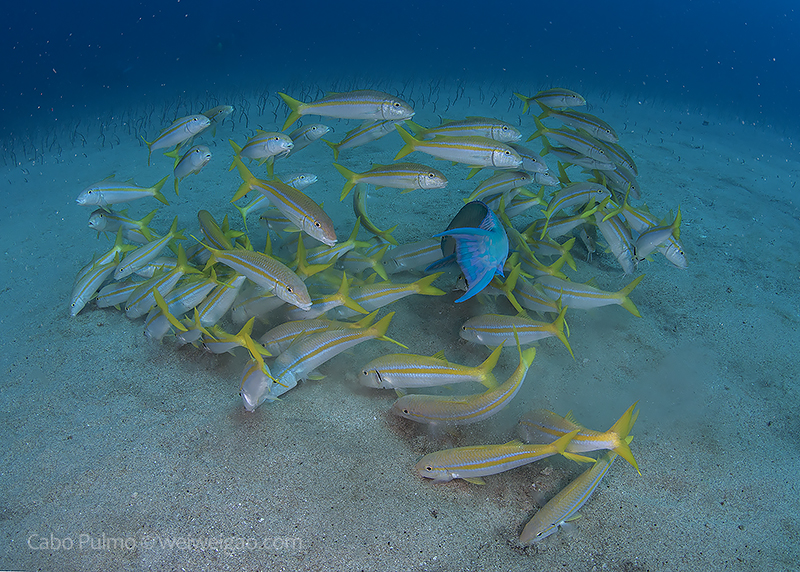
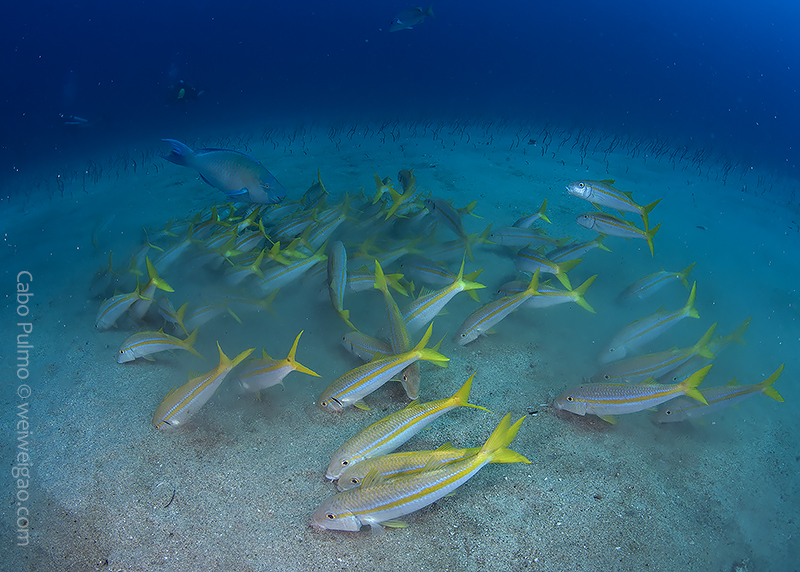
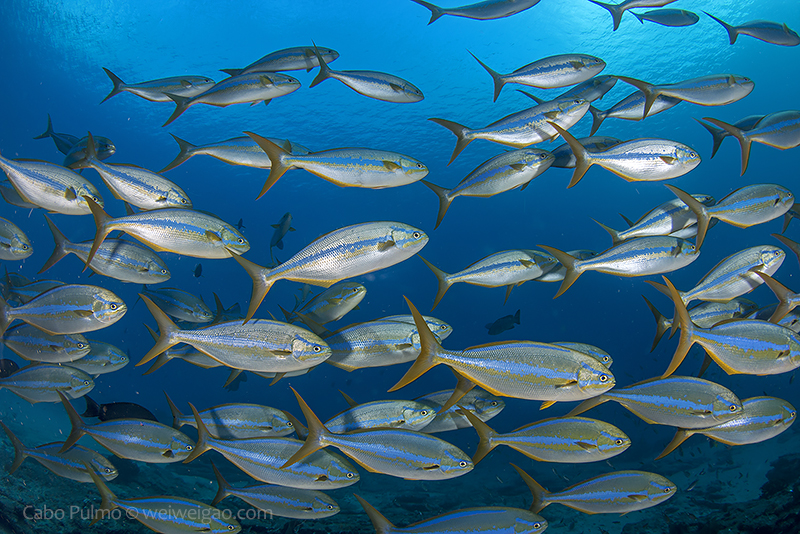
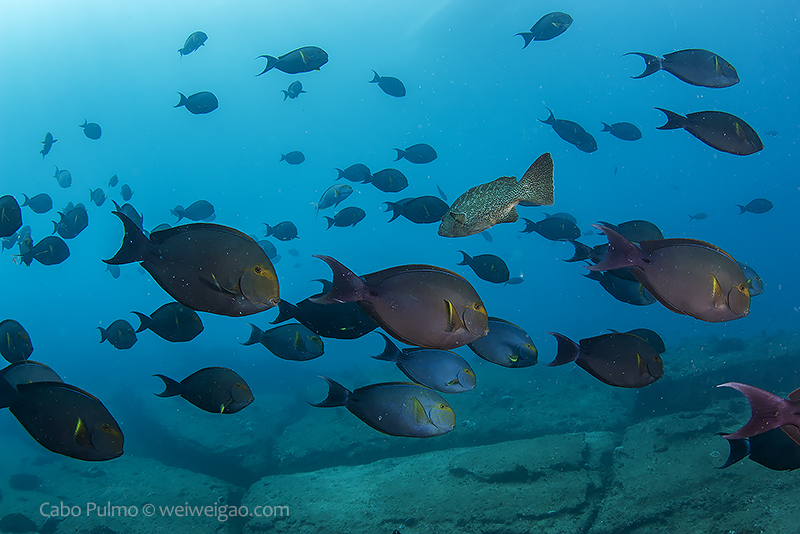
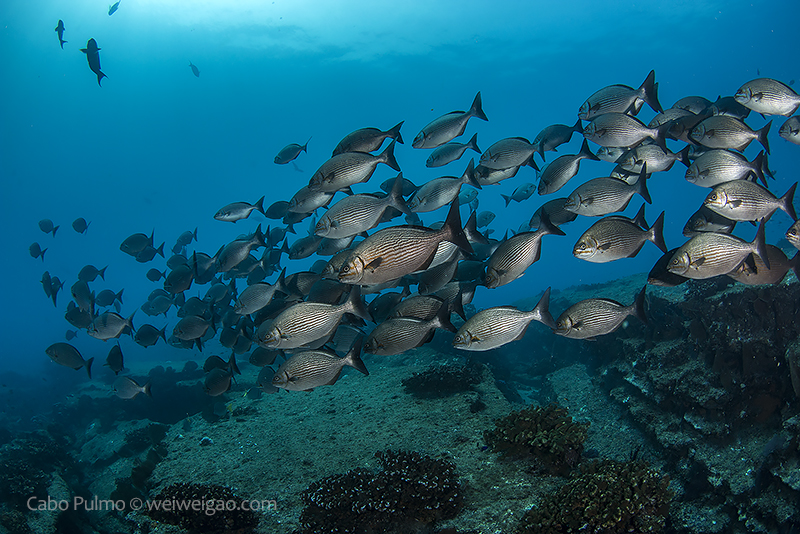
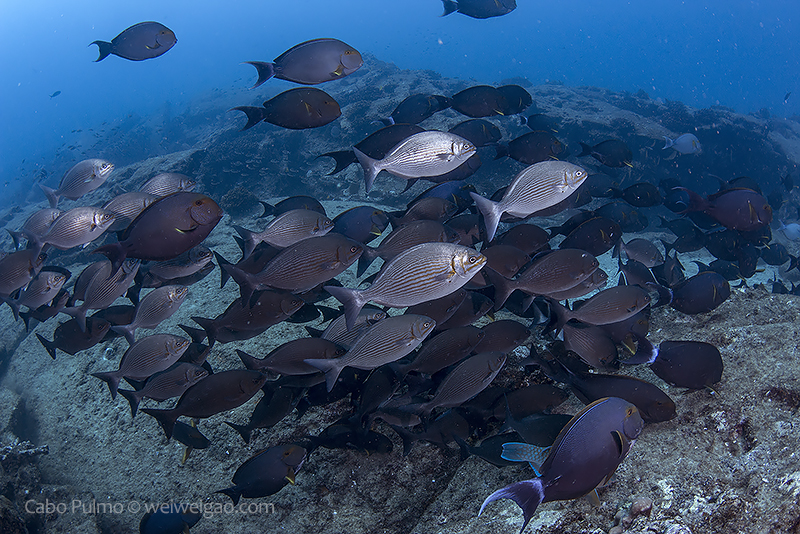
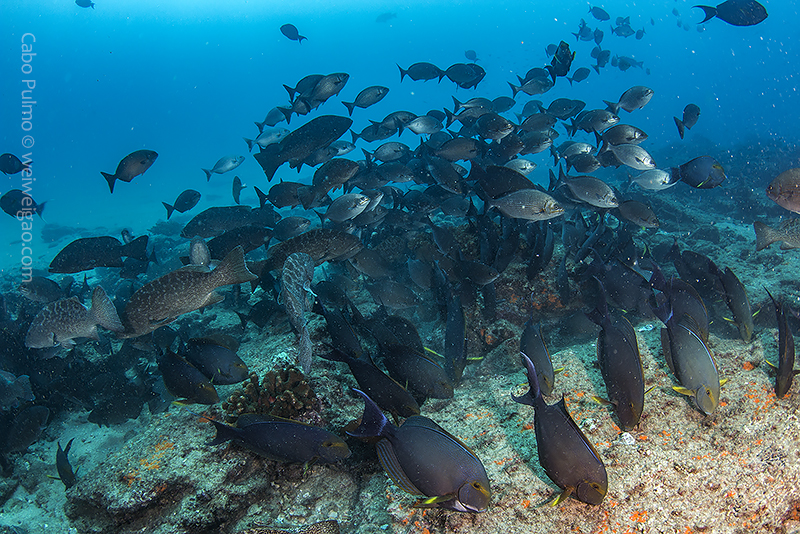
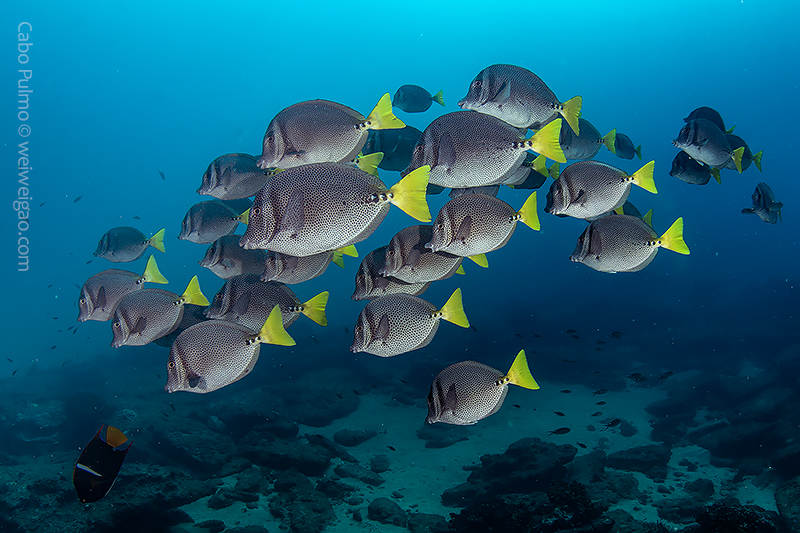
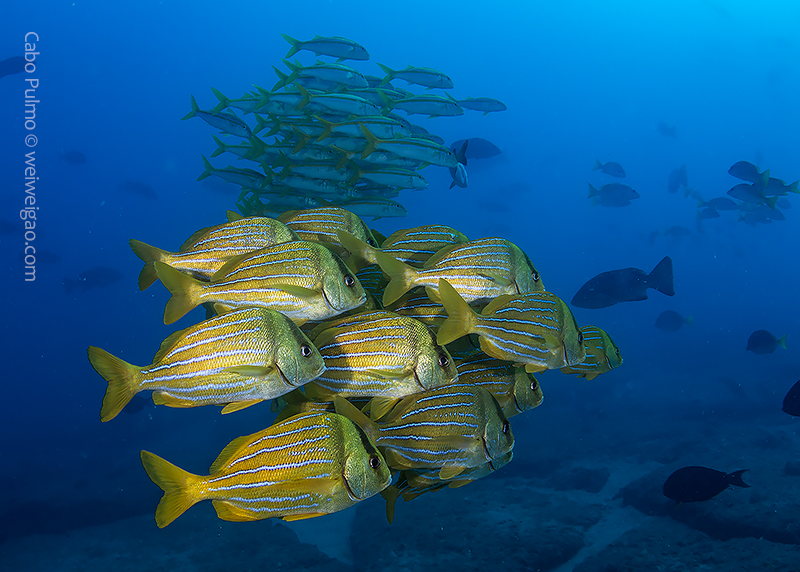
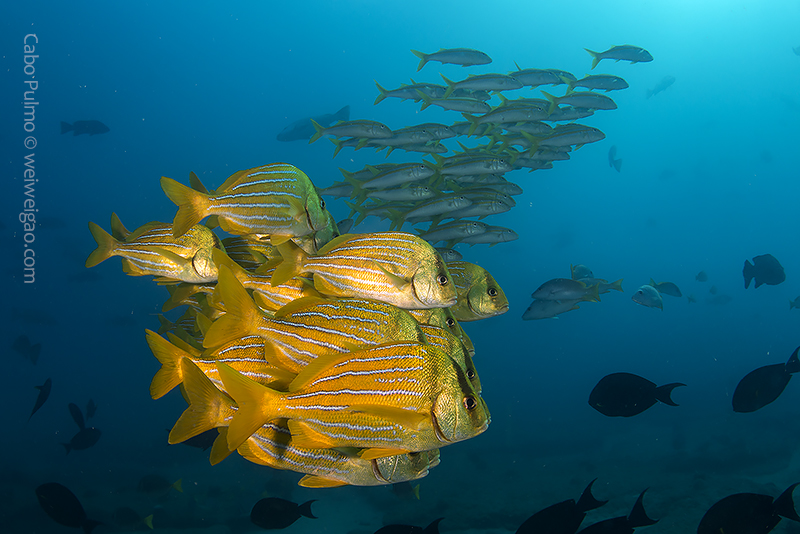
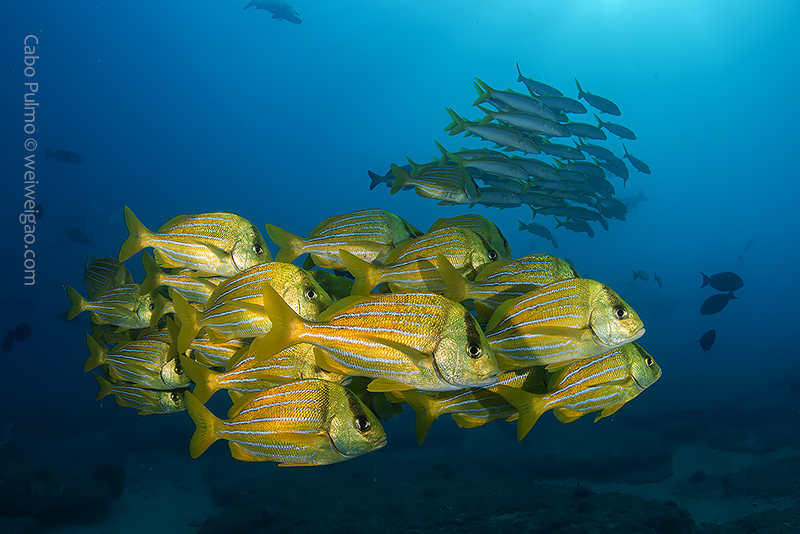
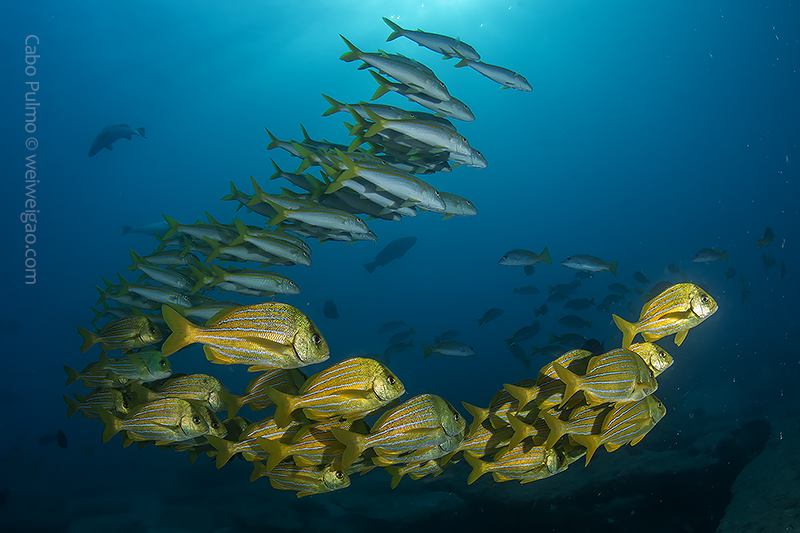
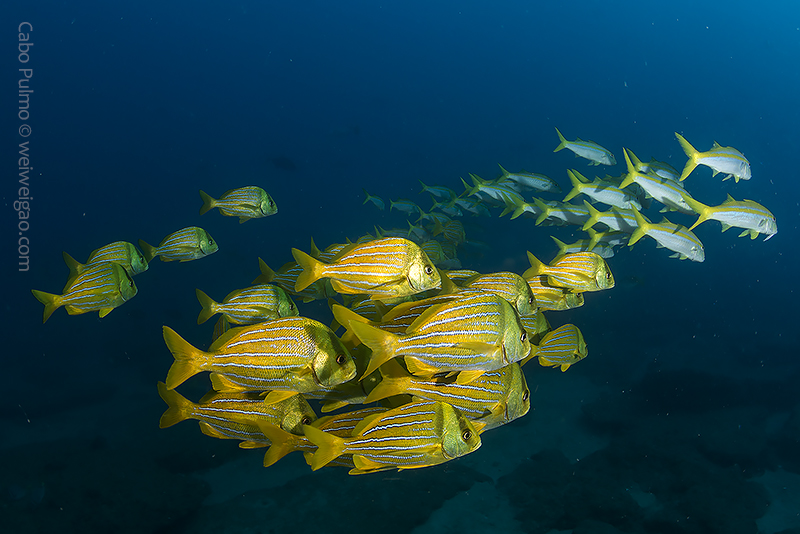
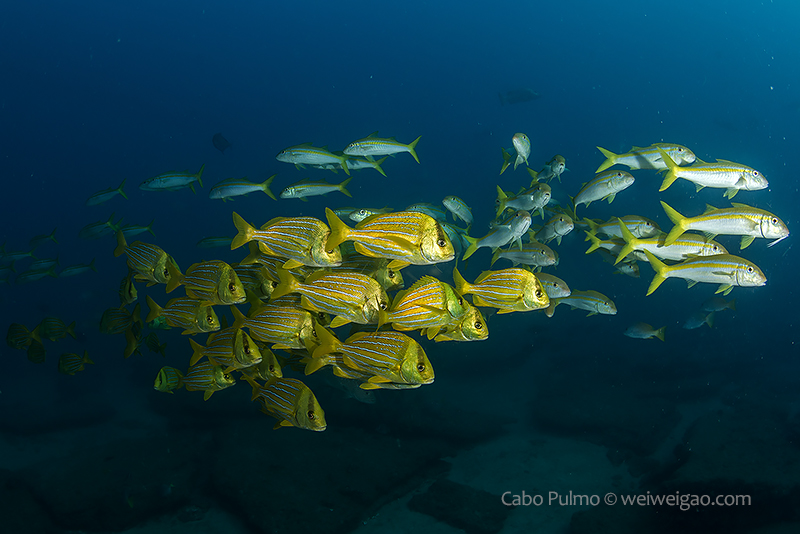
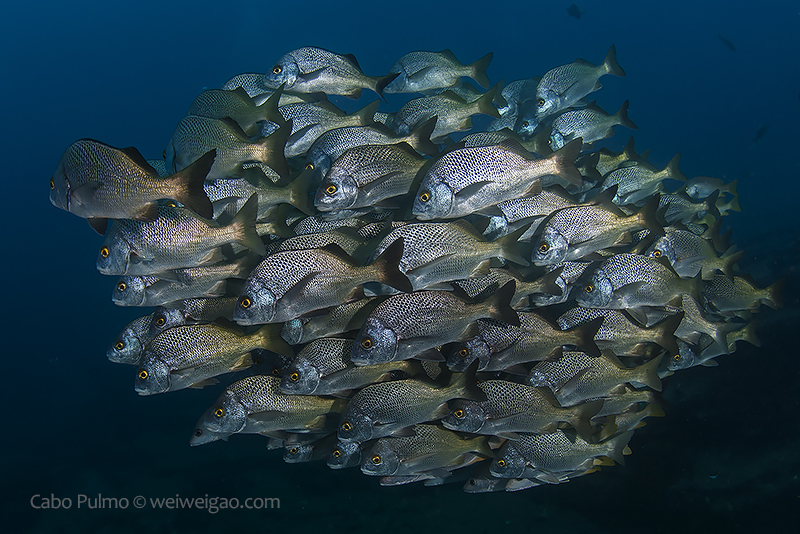
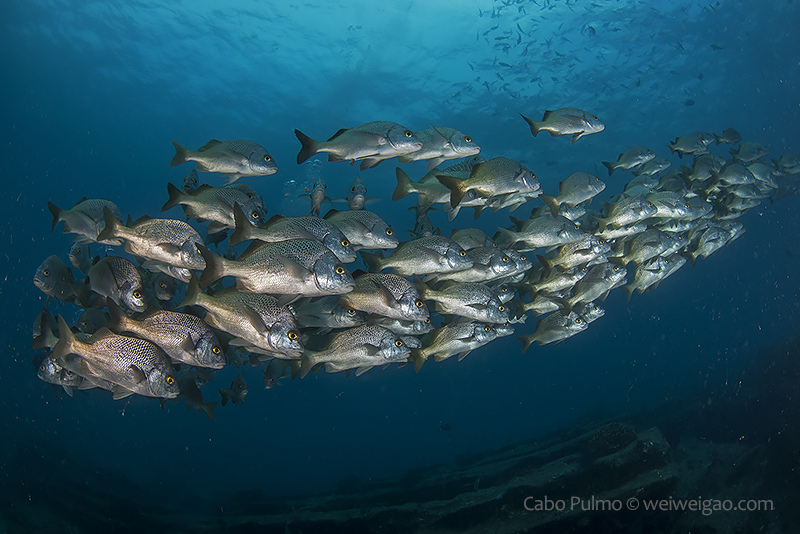
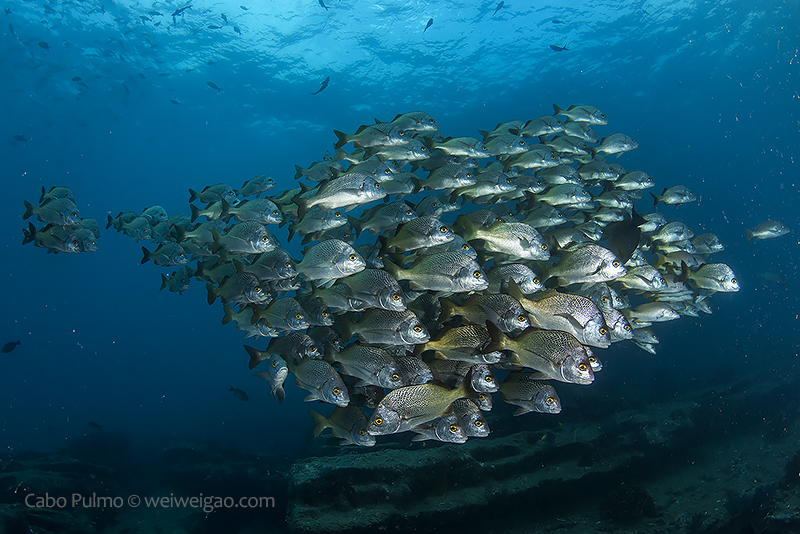
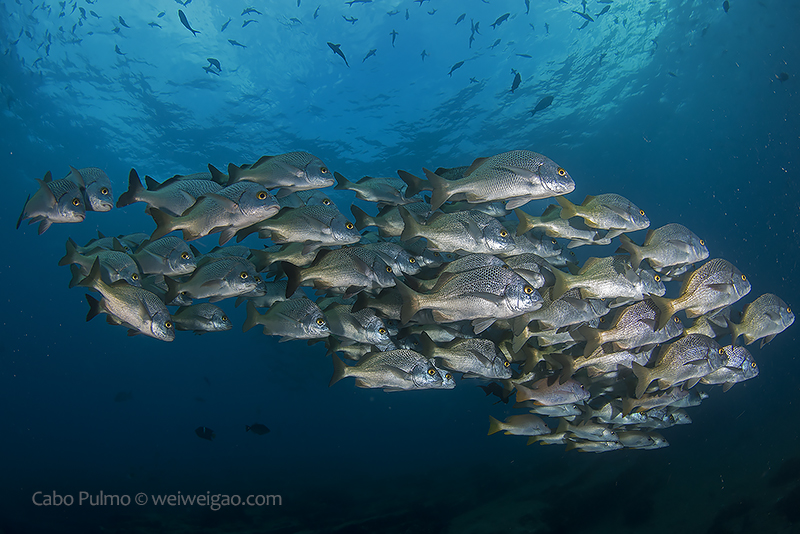
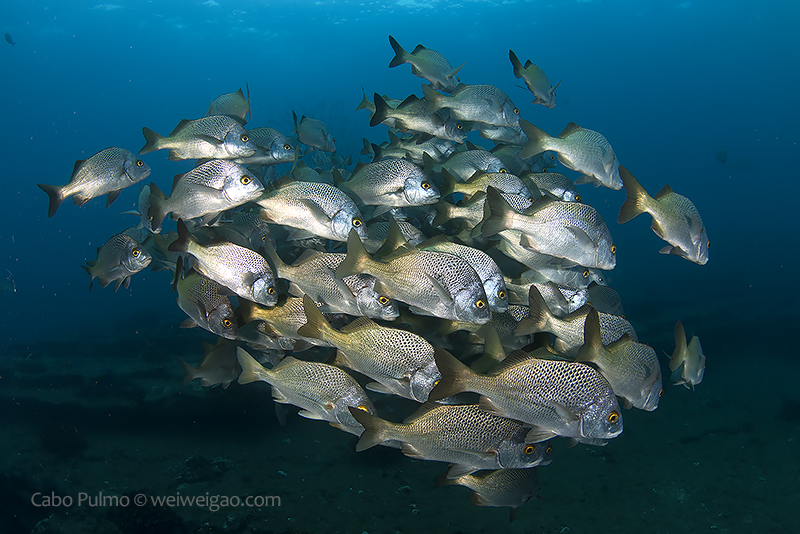
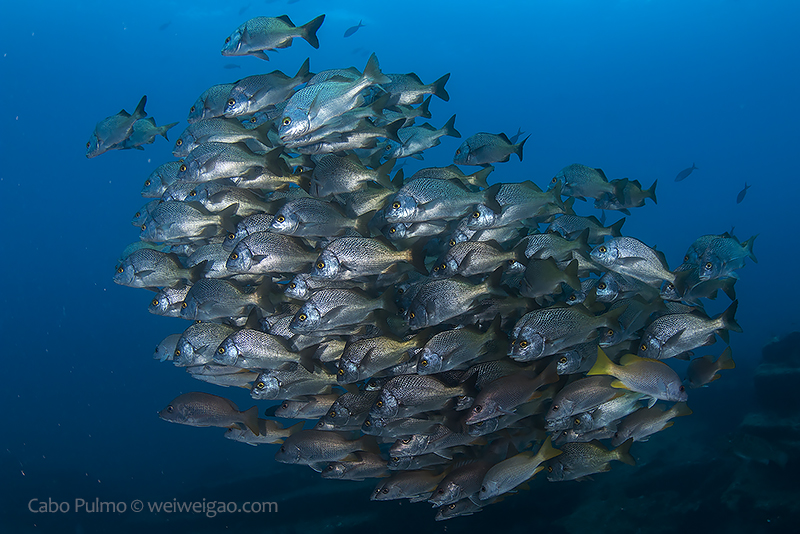
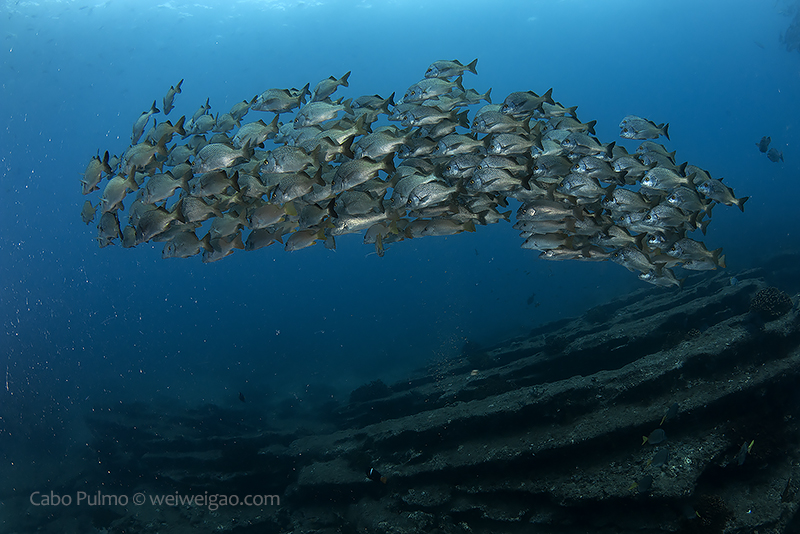
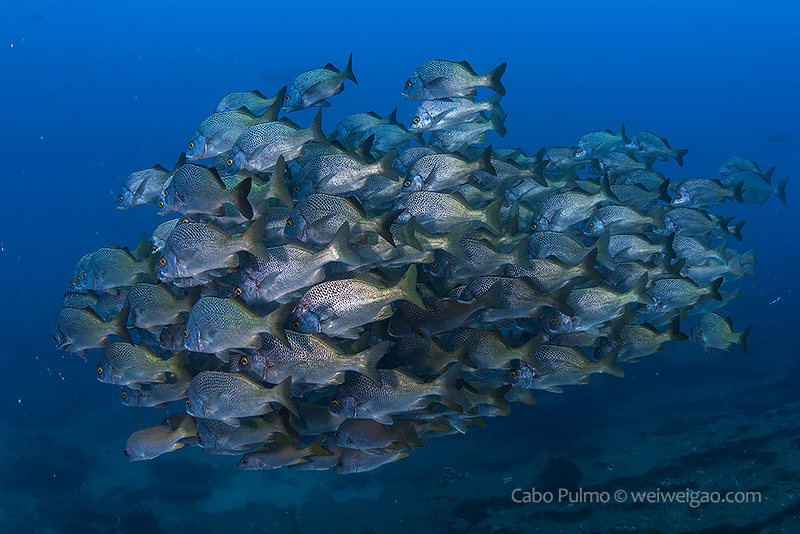
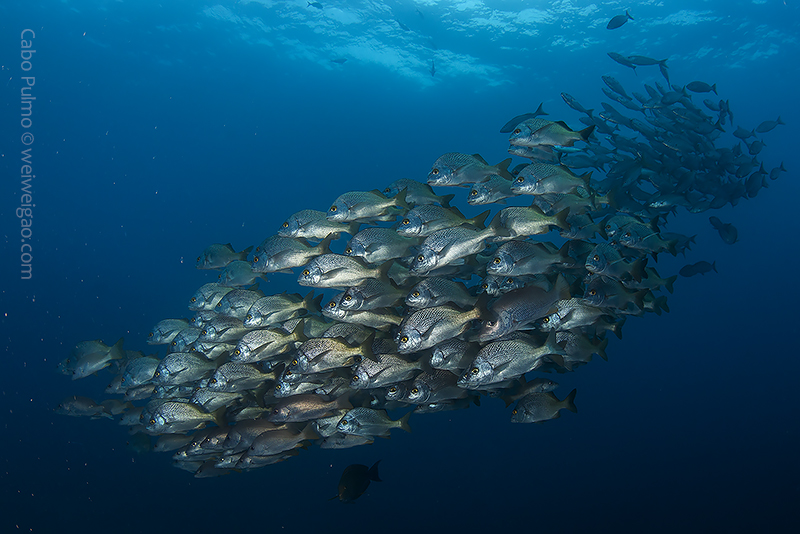
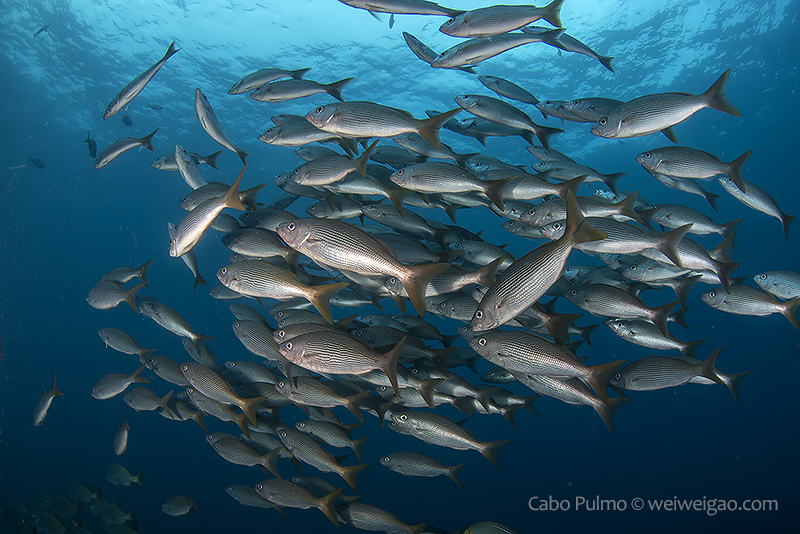
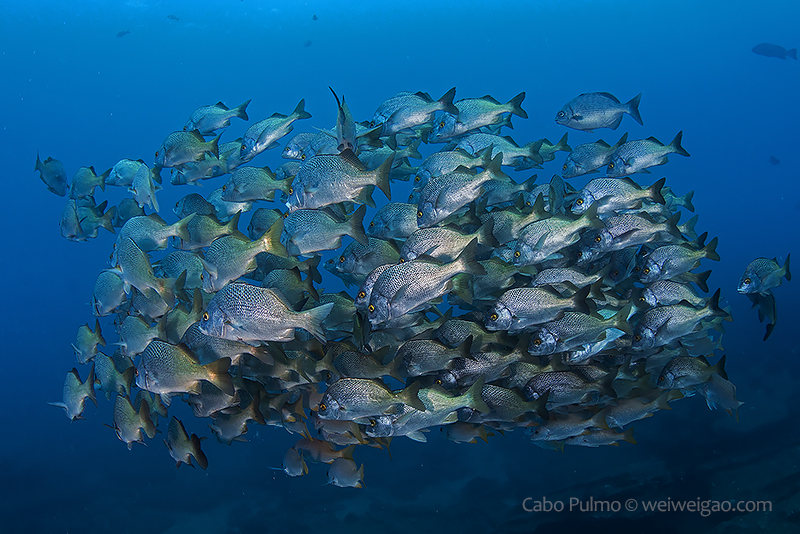
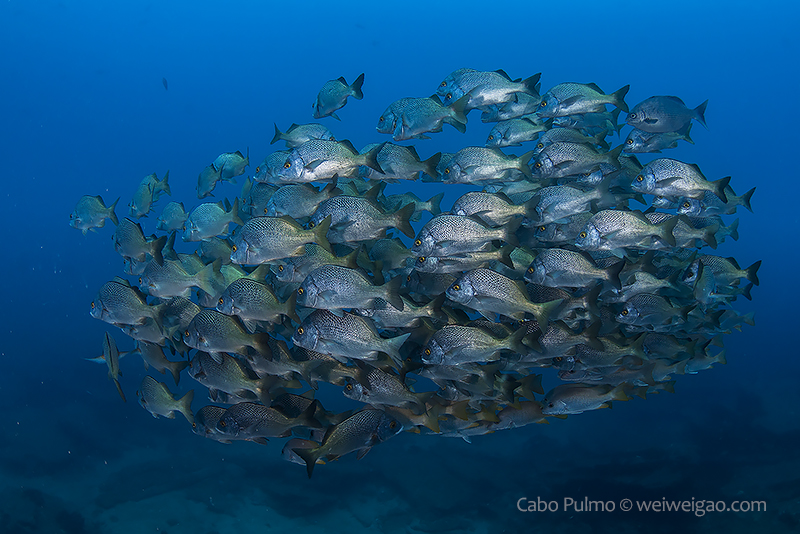
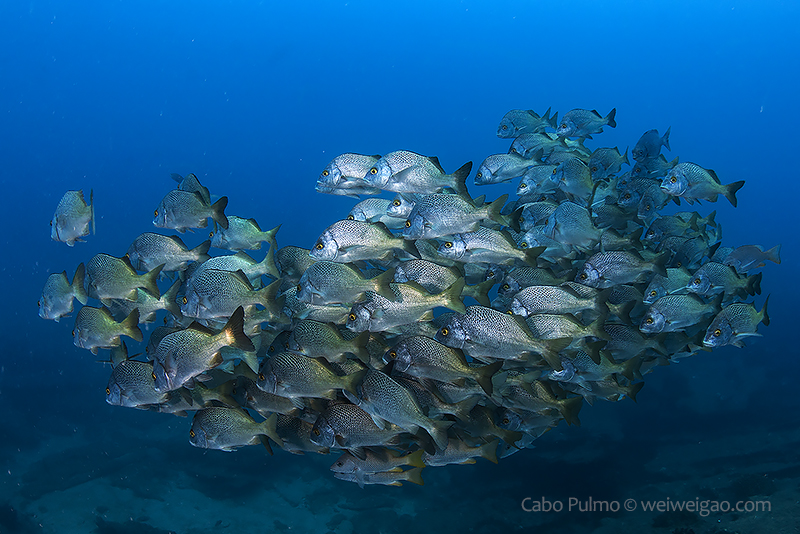
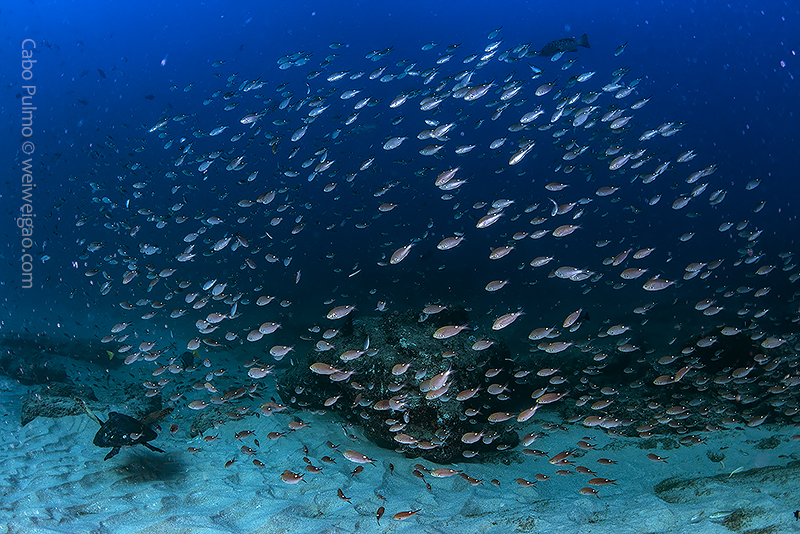
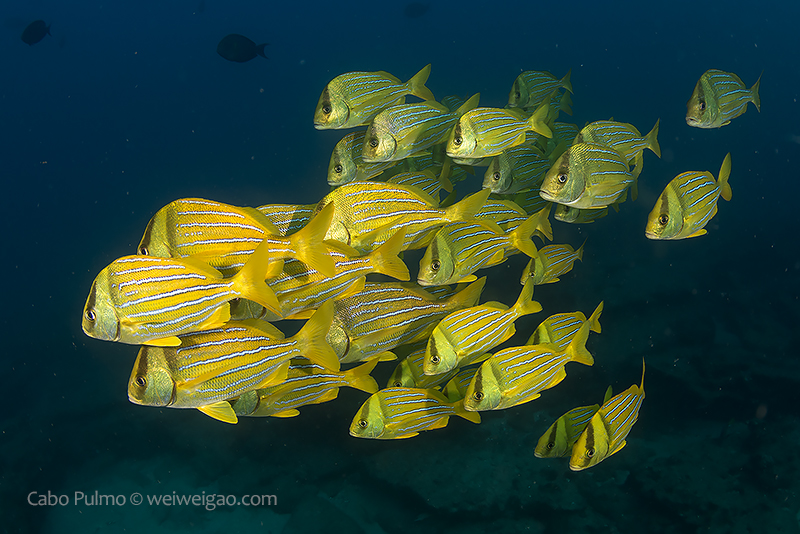
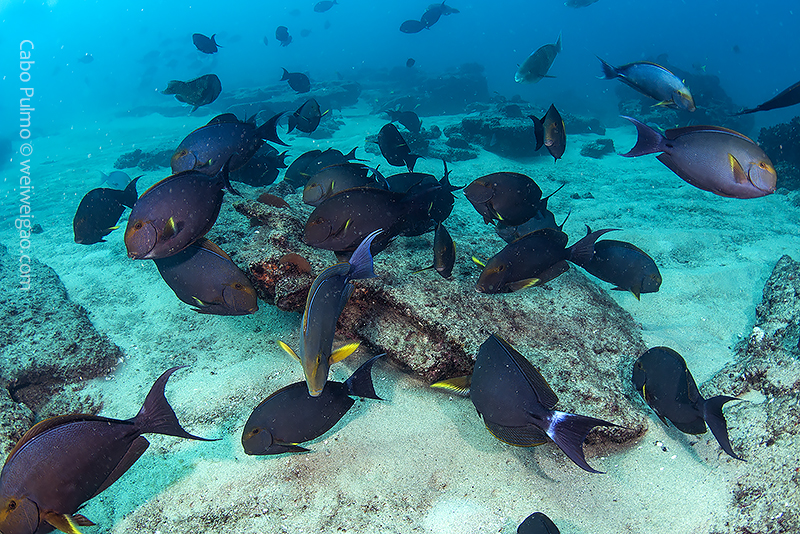
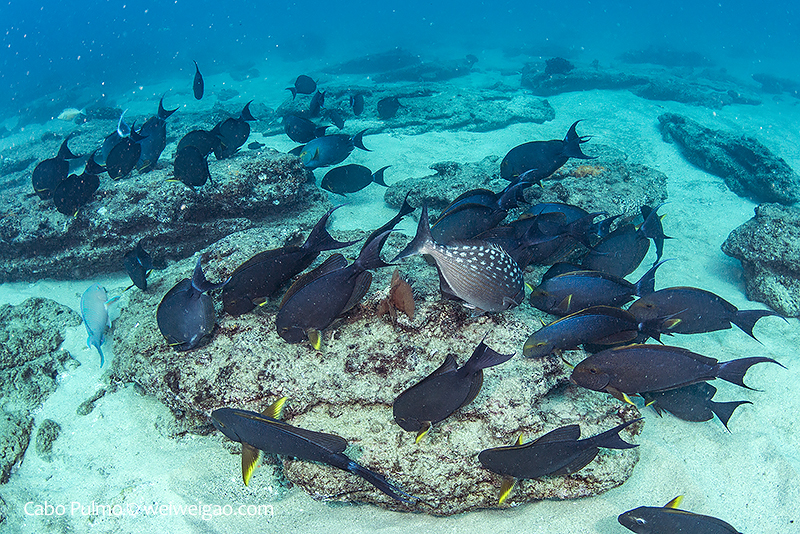
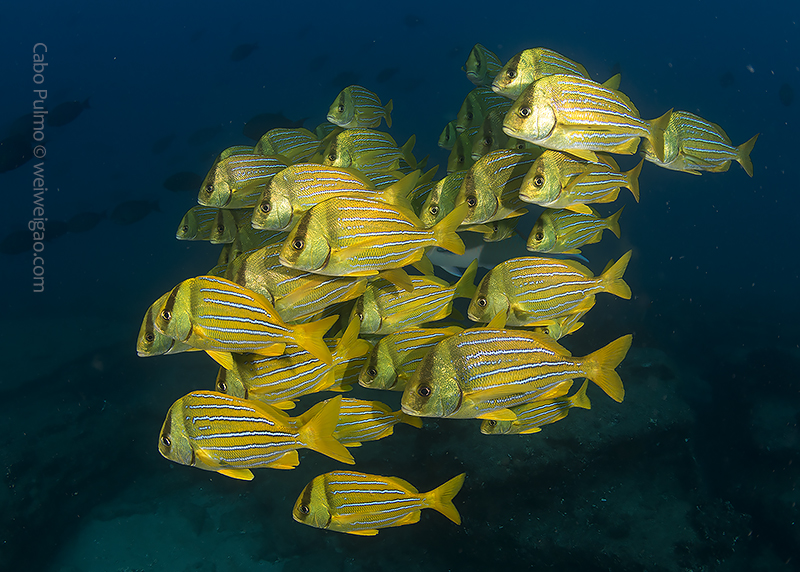
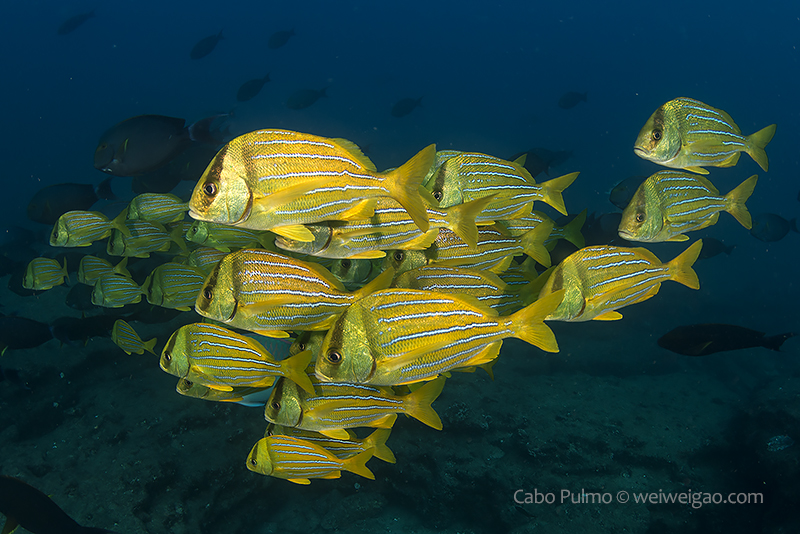
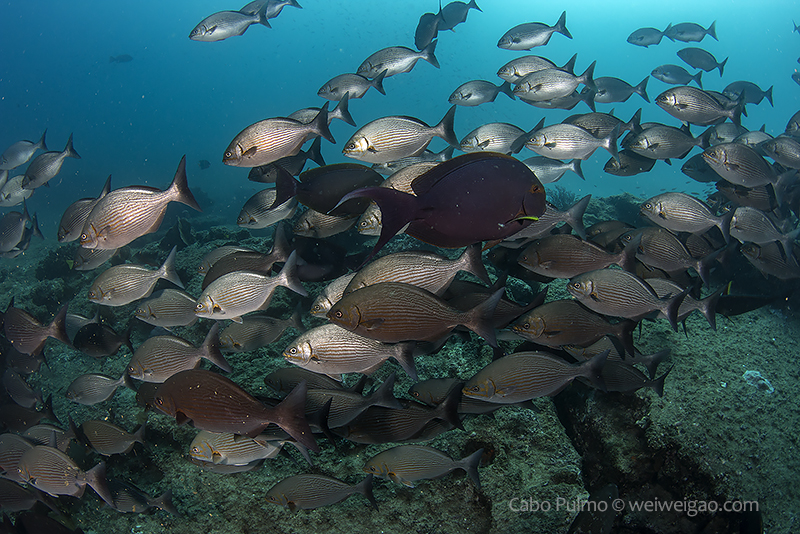
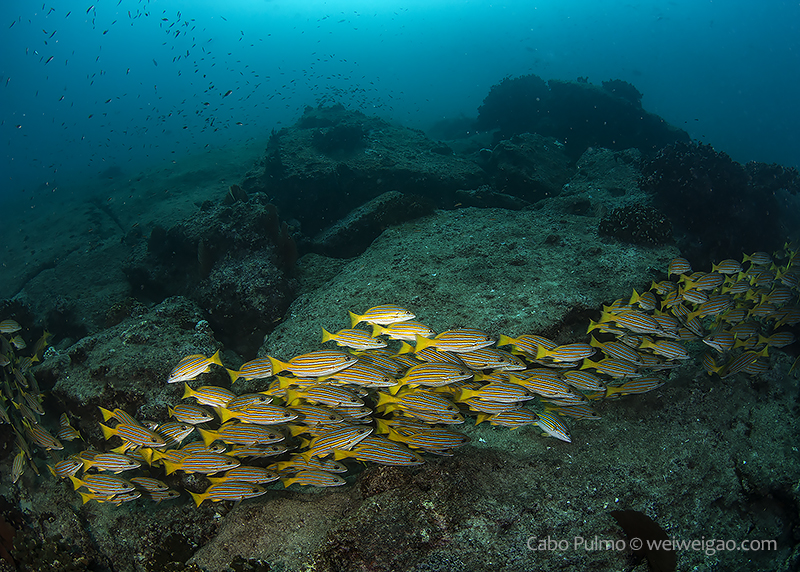
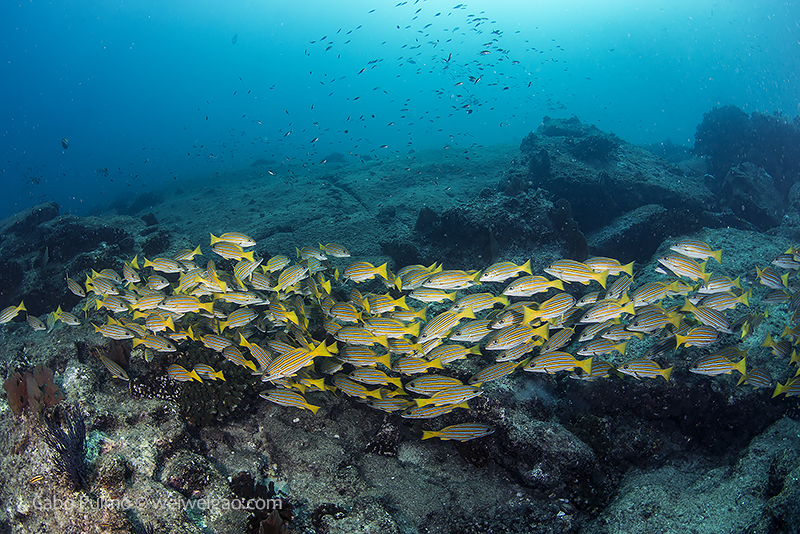
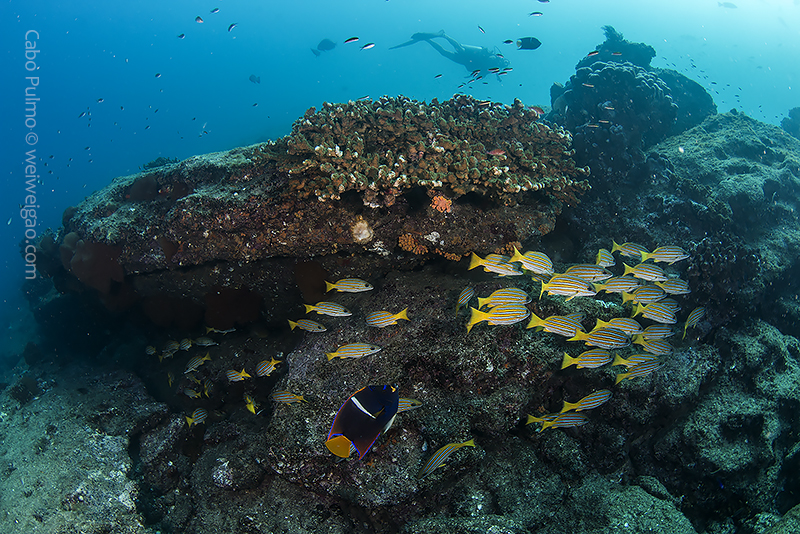
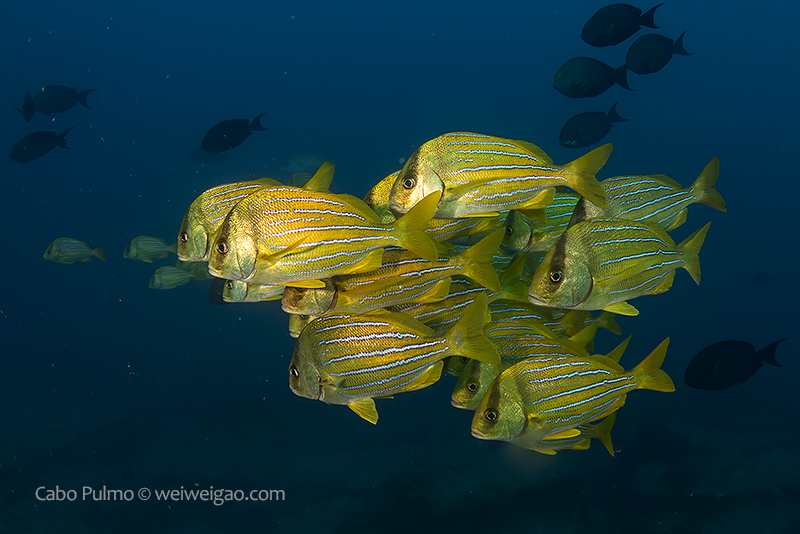
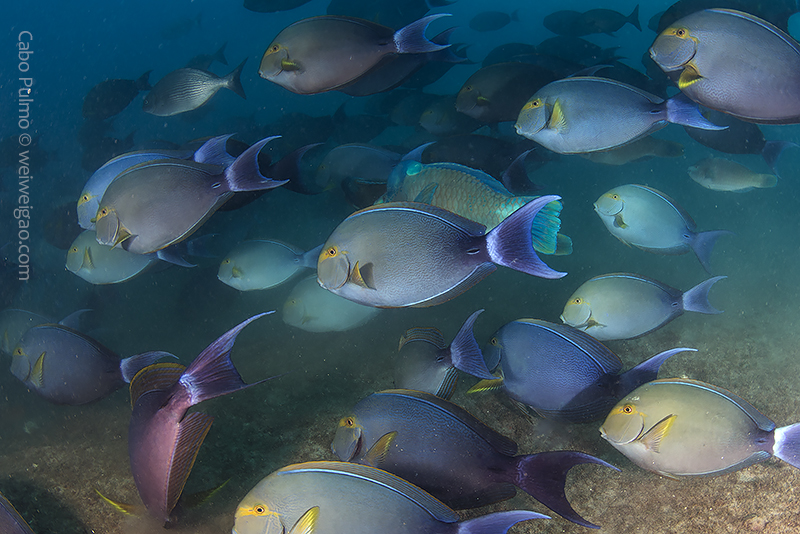
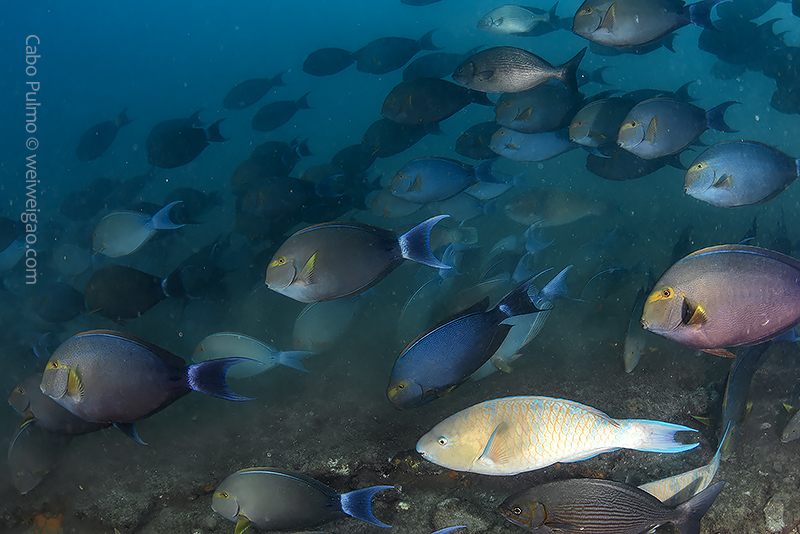
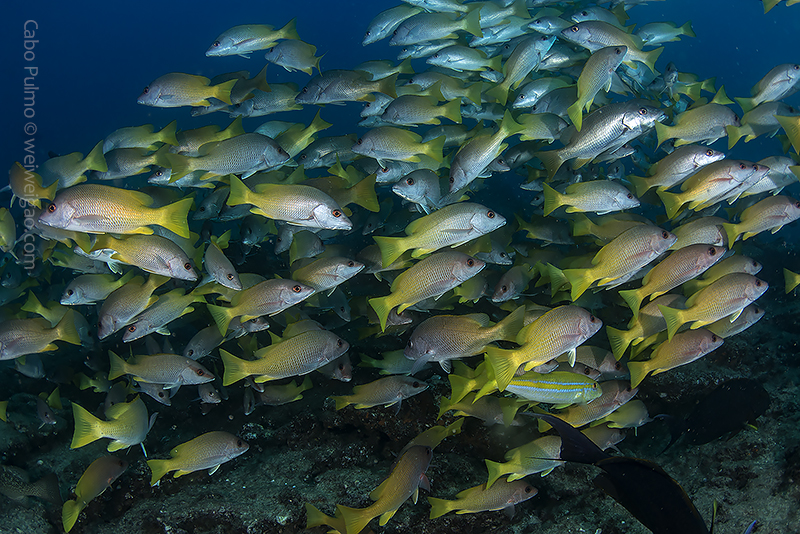
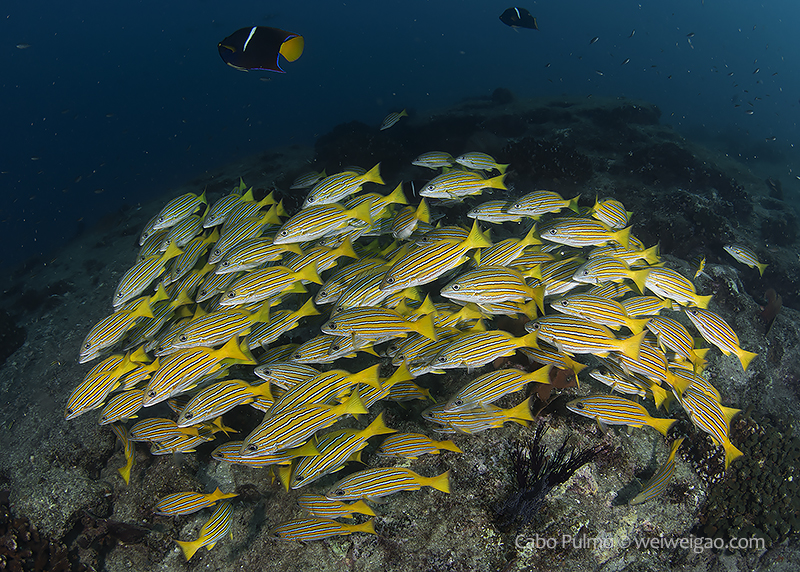
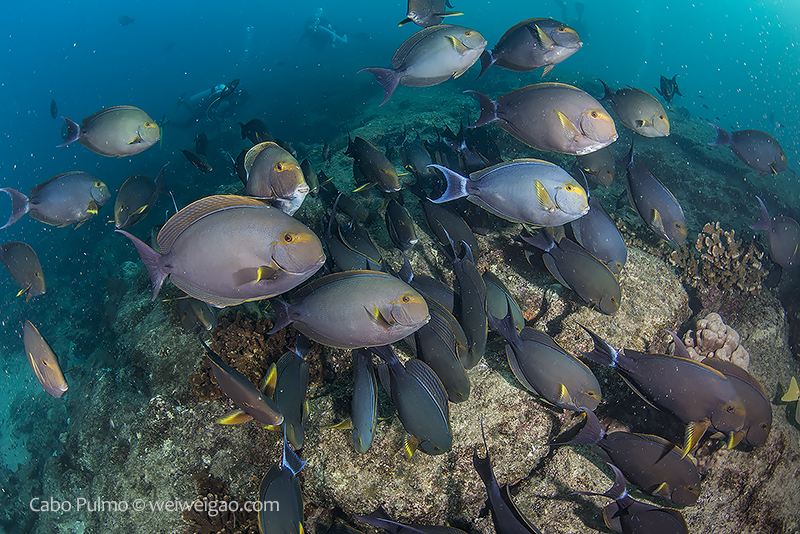
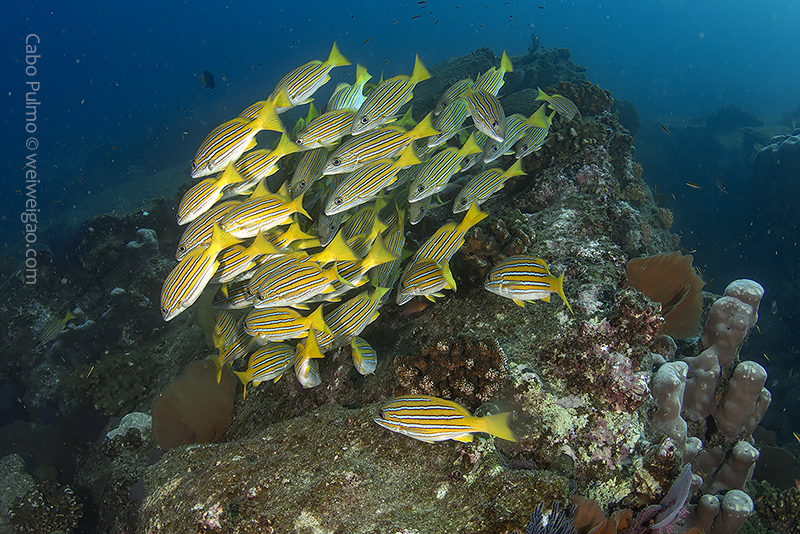
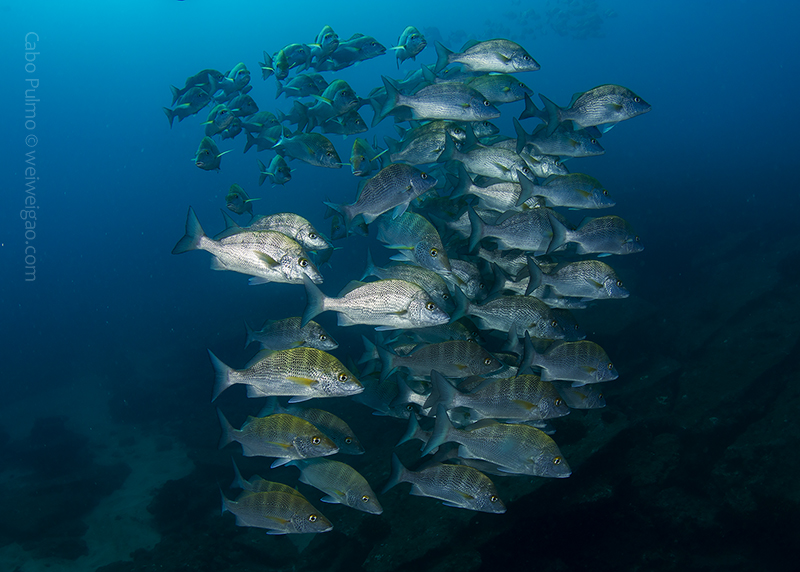
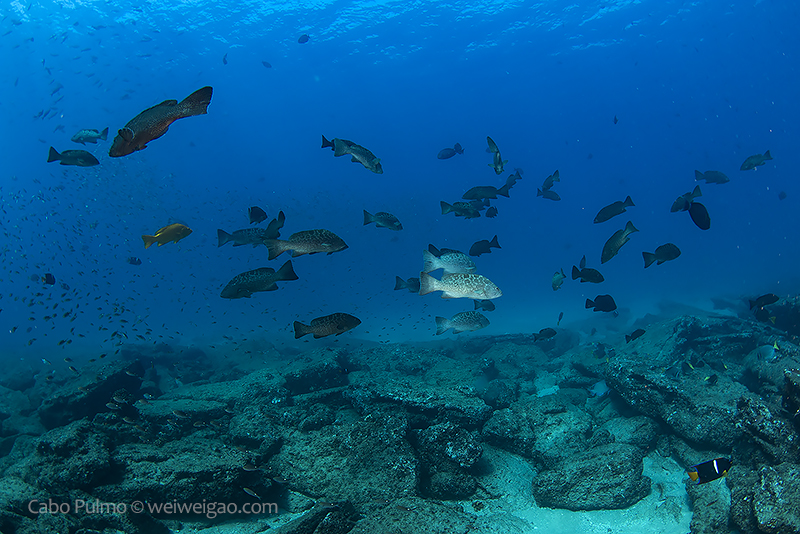
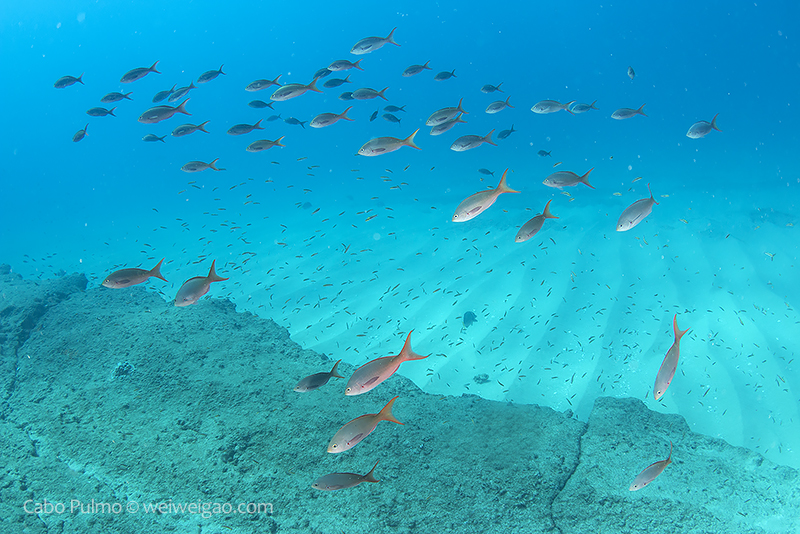
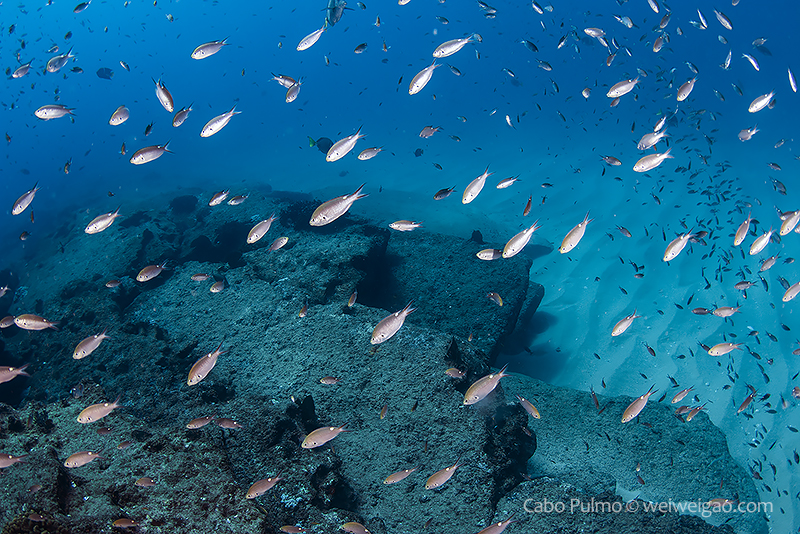
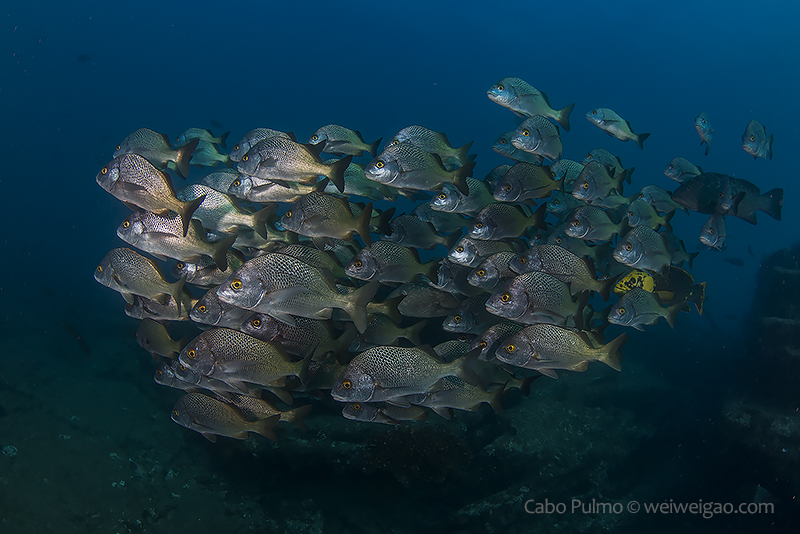
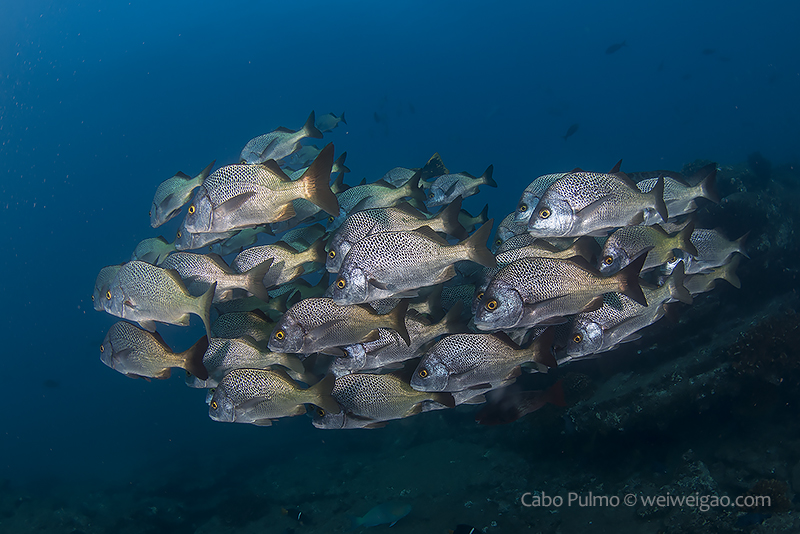
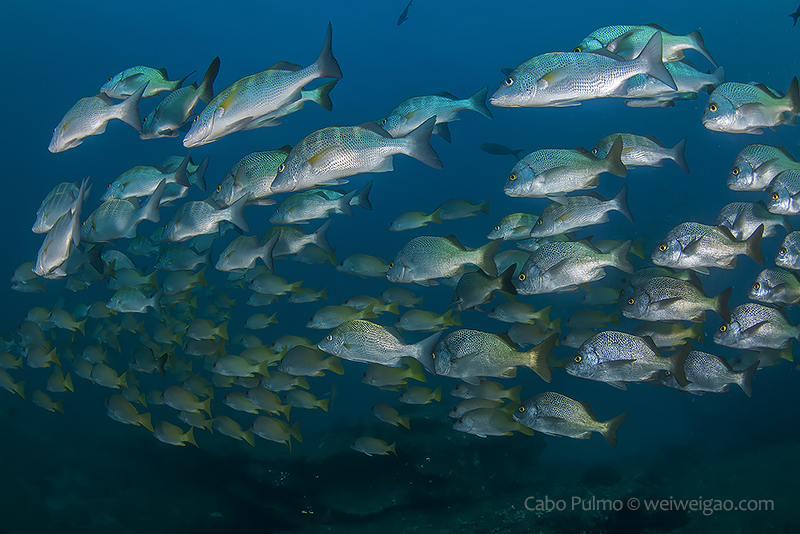
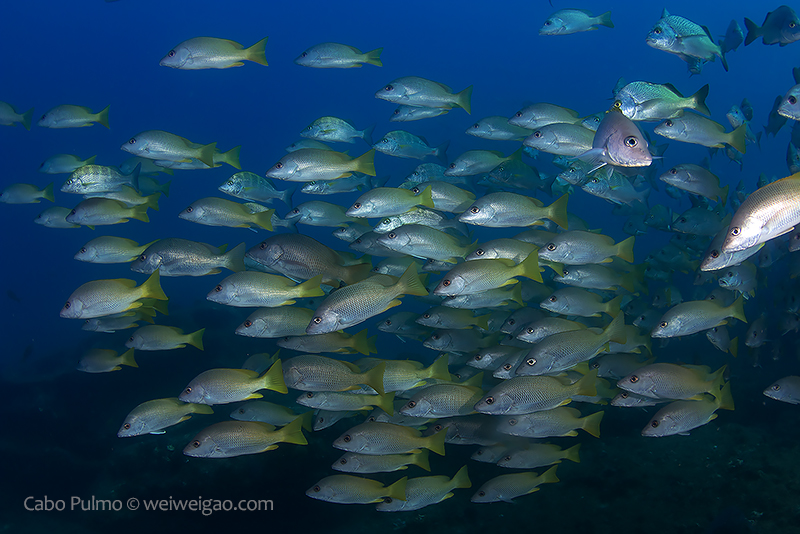
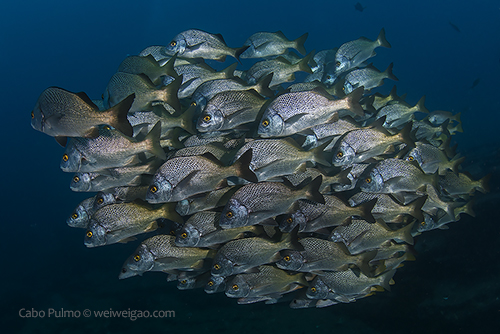
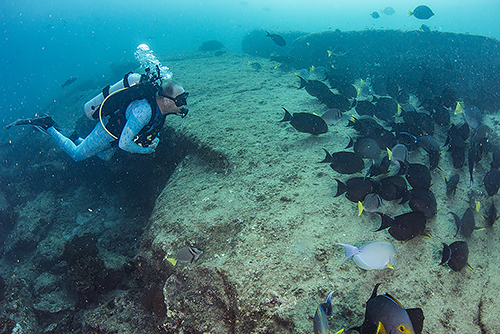
Between the pinnacles at the south and the playground of the jacks on the north were a few coral reefs teemed with life. My interests were drawn to all kinds of schooling fish. Swimming along the current on the reef felt like a safari. Yellow snappers were easy to spot as they liked to hold on to their terratory on the reef. Schools of panamic porkfish were also easy to see, as their bright yellow color contrasting strong agaist the ocean blue. Schools of grunts liked to stay high above the ocean bottom. I liked to come close and swim next to them. For a moment the fish looked like birds and I was flying high with them up in the air. Then there were schools of surgeonfish, always on transient. Their emergency hardly had any notification and they would disappear just as fast. Each school followed its own course, guided by some true compass wired to their instinct. As a visitor, I was happy that my course intercepted with theirs and for a moment to become one of them. [Gallery: schooling fish]
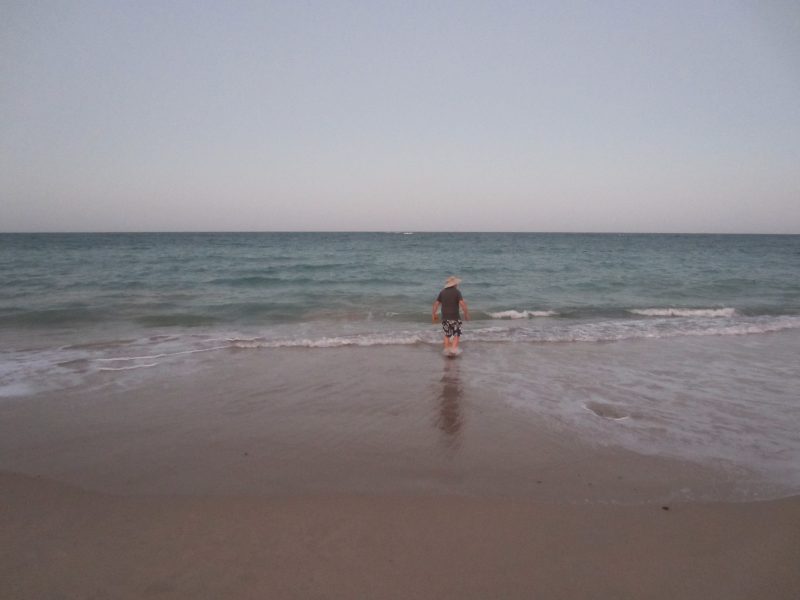
Cabo Pulmo was once devastated by unregulated fishing. For the past twenty five years, this part of ocean had been strictly protected. Our diving was heavily regulated. The number of divers, the time, and the depth were all carefully monitored by the park. The water and the beach were kept spotless. Years of hard work resulted in the come back of extraordinary marine life. During my time there, after each breath-taking encounter, it was a soothing feeling of knowing that all the fish were protected in a safe home. As Cabo Pulmo is telling a story with its vast wilderness, it also gives hope for a bright future of our planet. But the success of conservation here also reflects the dire state of other parts of ocean where the fish population kept on dwindling and the marine life is continually struggling. I only wish all the ocean could be protected just like Cabo Pulmo, so their wilderness would one day also make a comeback. ♦
Additional Trip Information
Getting there
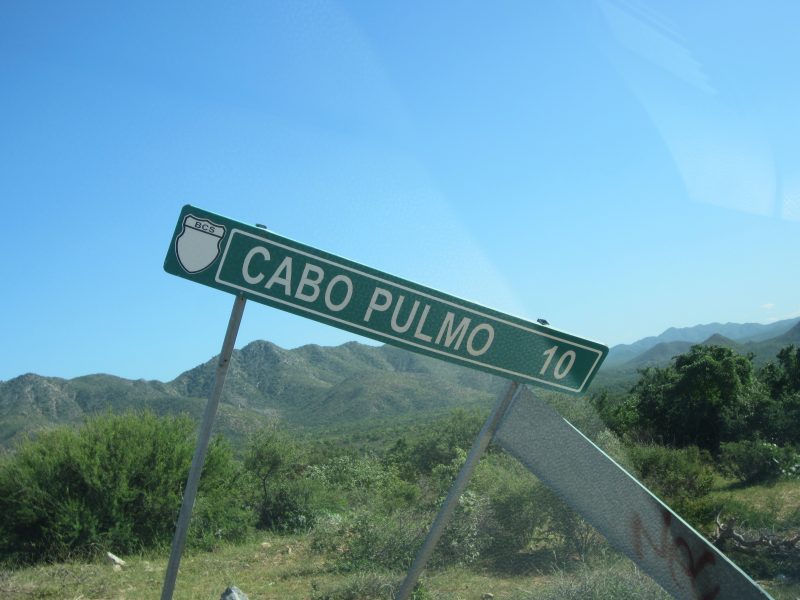
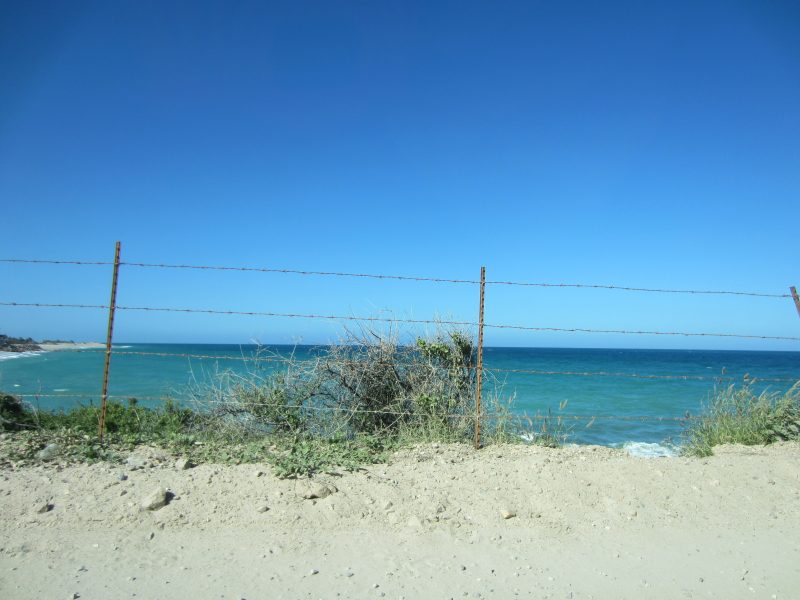
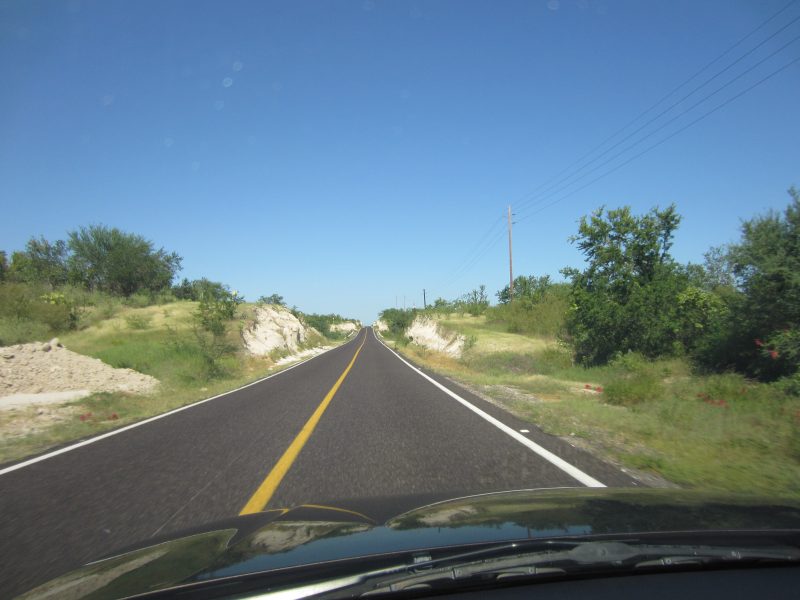
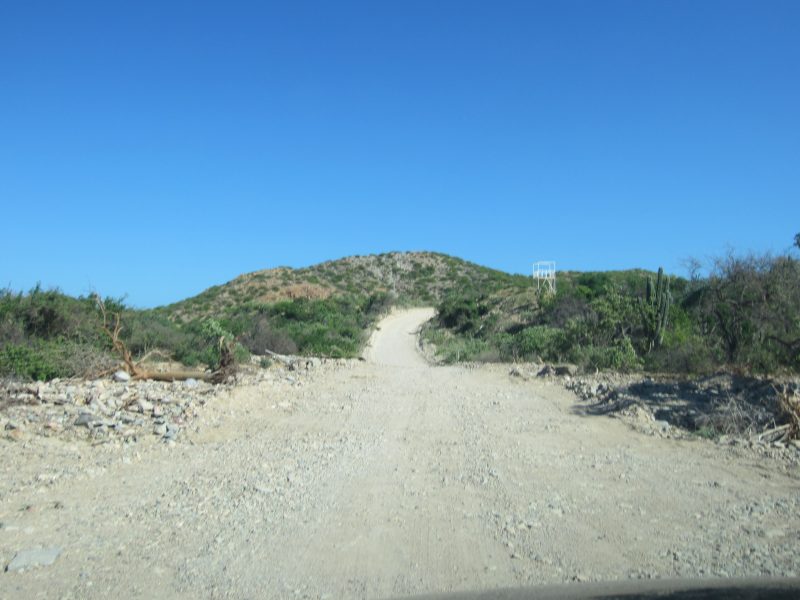
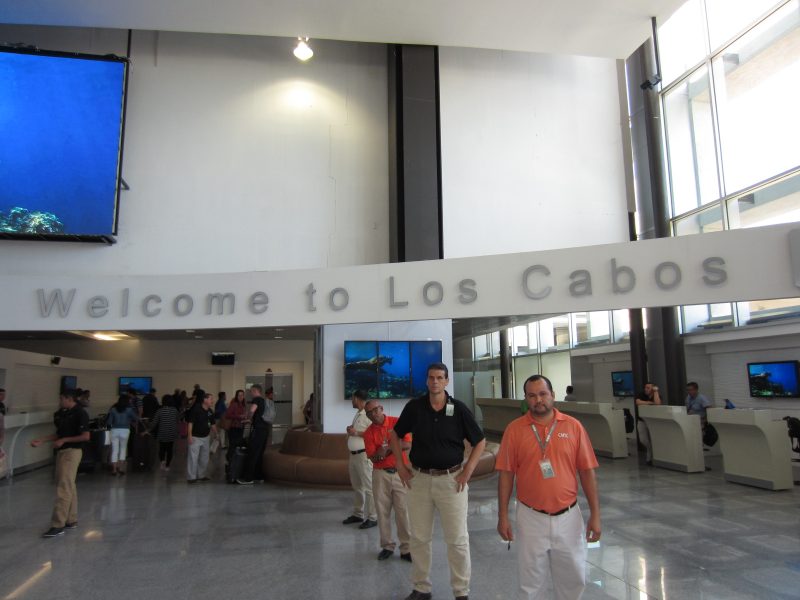
It took me about 2.5 hours to fly from San Diego to San José del Cabo (SJD). (1) Avoid budget airlines such as Spirit, which charges more with checked bags. I used Southwest, very economic choice that allows for two checked bags and a carry on. (2) Be careful of the car rental in Mexico. Most car rental companies hide the real charges during online booking. The car rental company I used was Canctus Car Rental. They provided me with a final quote without any hidden charges. (3) Driving from SJD to Cabo Pulmo was much easier than I had thought. The majority of the road is very well paved. Drive slow on the unpaved road. The signs to Cabo Pulmo is very clear. I had concerns of navigation. So I downloaded an offline map from Google map and used GPS on my iphone, although I didn’t have any cellular or Wifi signals. It worked very well.

Diving
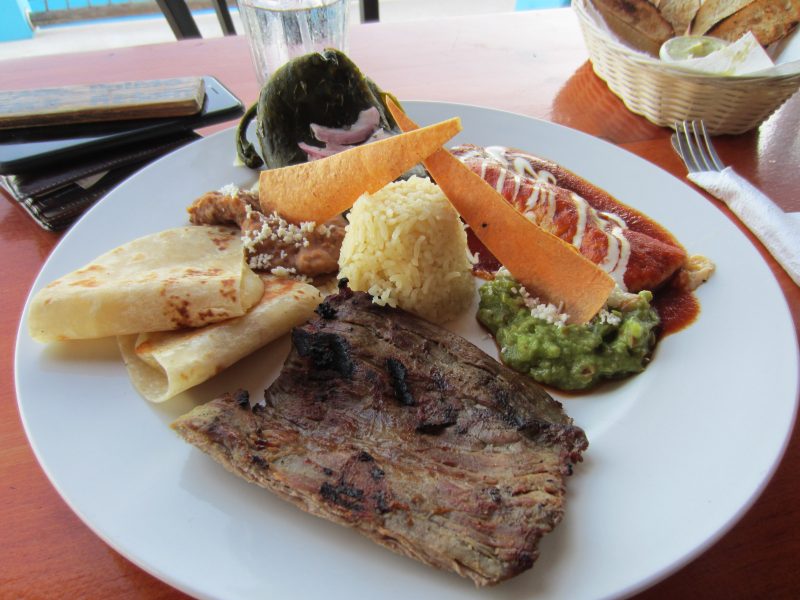
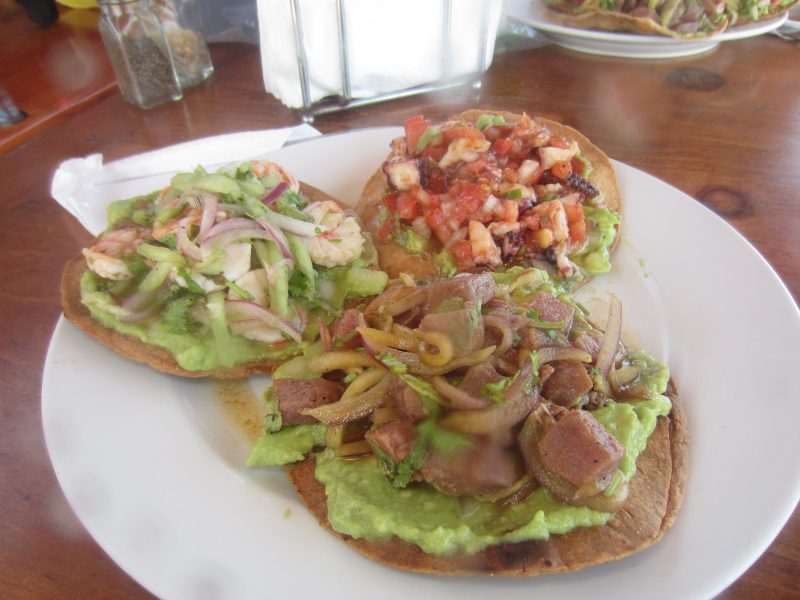
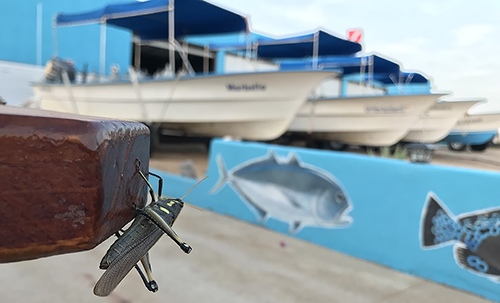
Ed and I used Cabo Pulmo Beach Resort owned and operated by Cole. (1) They offered an ‘eat, dive, and sleep’ package. With all the meals included plus 20% off the diving. We signed up since we didn’t have interests of any other activities. It turned out to be a great deal. Each meal we had was delicious. We had a great time. (2) Each boat has a max of 6 people, which leaves a lot of room. Park regulation limits dive time no longer than 45 minutes. Time interval between two dive boats has to be longer than 20 minutes so we never had too many divers in the water. Everyone followed the rule. We were amazed at how well the dives were organized. (3) Water temperature was 80-82 F, very warm and comfortable. (4) All the people we met, the staff and other divers, were extraordinarily nice. We made quite a lot of friends.
On Land and Getting Around
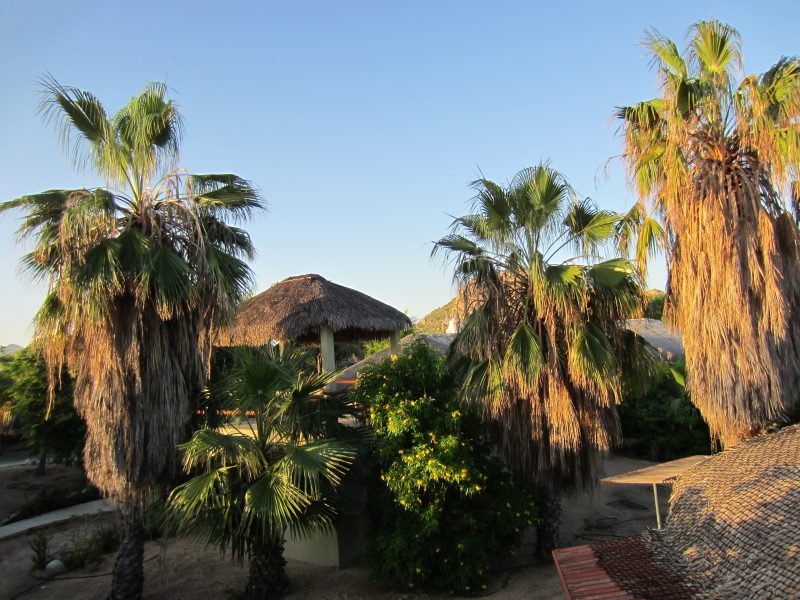
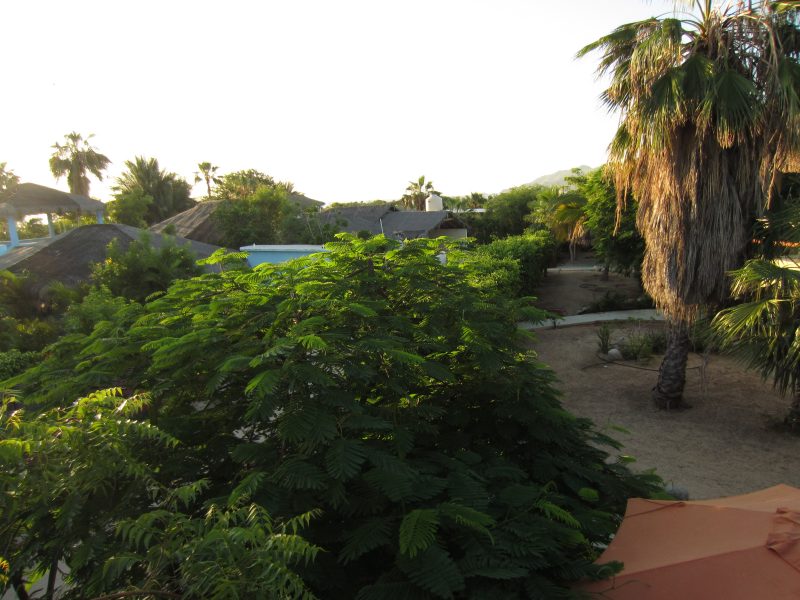
The room we booked did not have AC. It was hot during the day but cooled down quite a bit at night. AC would be a bit too much, especially the whole village is very environmentally conscious. A lot of bugs and mosquitoes. I would not survival without the repellent from Ed.
Acknowledgement
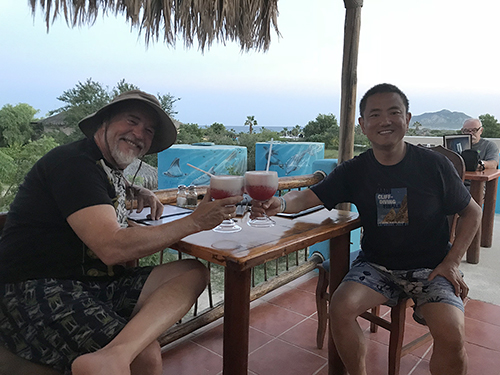
Finally, I want to thank Captain Ed for joining the trip. Despite having a severe cold and coughing, Ed did all the planned and added more together with me.
Ed’s curiosity to nature and love of diving are truly inspiring. Without Ed, the trip would not even have half of the fun. Thank you Captain Ed!
Galleries
Gallery: Jack Tornado [back to the article] [back to the gallery TOC]

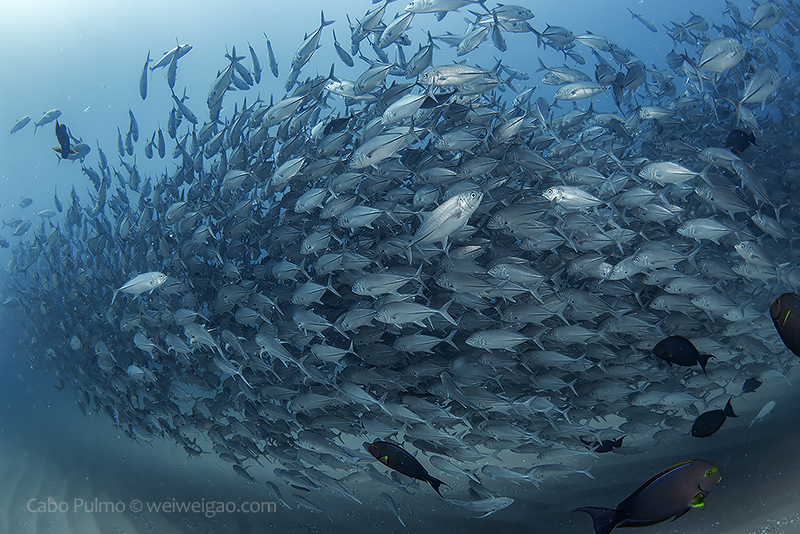
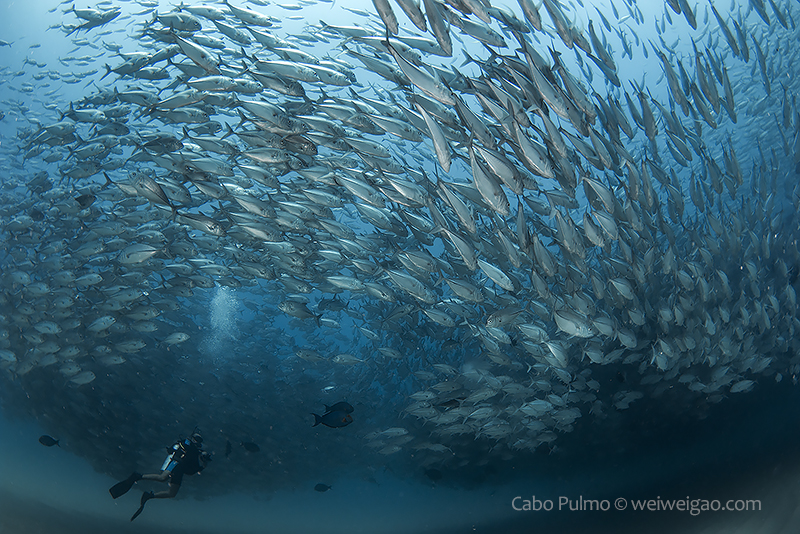
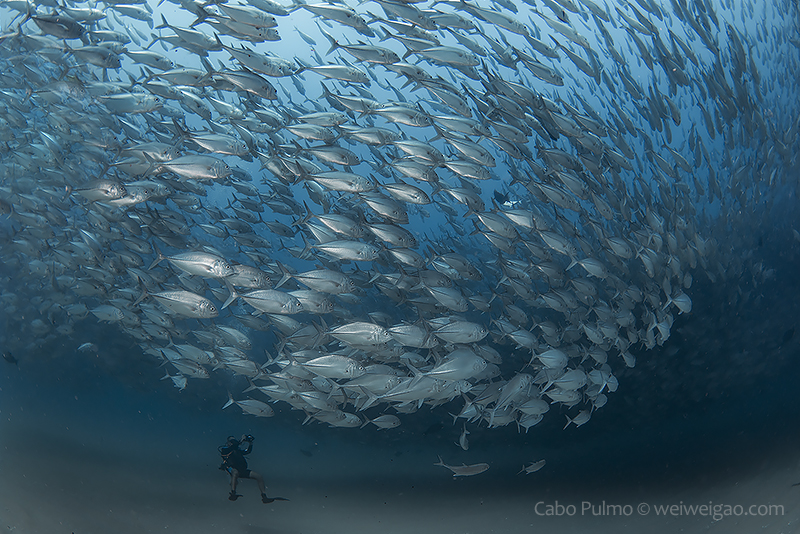
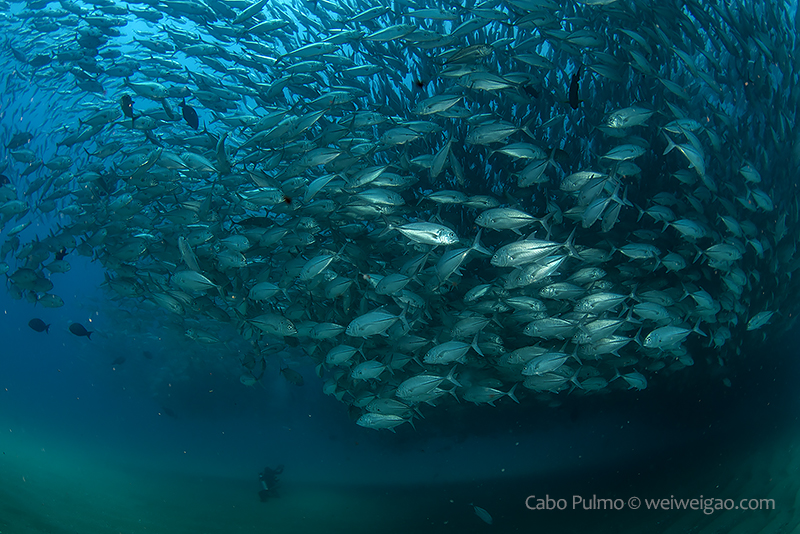
Gallery: Feeding frenzy of jack [back to the article] [back to the gallery TOC]
Gallery: Sardines at El Islote [Back to the article] [back to the gallery TOC]
Gallery: Schooling Fish [back to the article] [back to the gallery TOC]